Moon Cactus
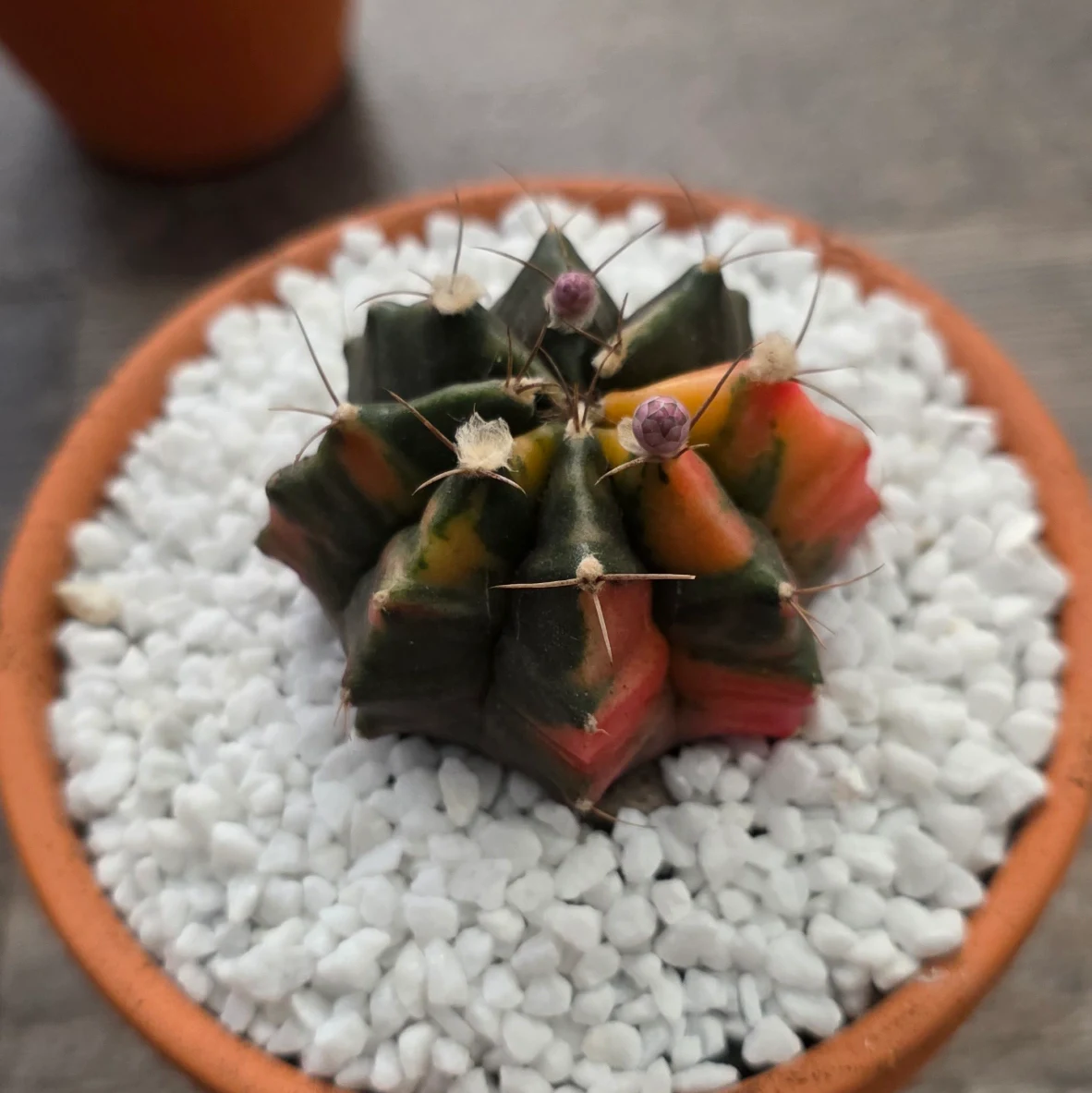
Gymnocalycium
mihanovichii 'Variegata'
Common NameMoon Cactus
Growth & Physical Traits
Plant Type
Cactus, Houseplant, Succulent
Growth Habit
Succulent, Cactus
Growing MediumCactus mix with perlite/pumice top dressing
Lifecycle & Reproduction
Propagation Method
Offset / Pup
Care & Requirements
Watering Needs
Low Water Needs
Temperature Range
Warm Temperate (50–80°F / 10–27°C)
Humidity Range
Low Humidity Tolerant (20–40%)
Light Needs
Bright Indirect Light
Origin & Source
Natural Habitat LocationParaguay
Collection Context
Quantity
1
Added Details
Family: Cactaceae. This is a variegated specimen showing red, orange, and yellow pigments. Unlike the fully chlorophyll-deficient 'Hibotan' cultivars, this variegated form can survive on its own roots because it retains green sections for photosynthesis.
Gymnocalycium
mihanovichii 'Variegata'
Common NameMoon Cactus
Added Details
Family: Cactaceae. This is a variegated specimen showing red, orange, and yellow pigments. Unlike the fully chlorophyll-deficient 'Hibotan' cultivars, this variegated form can survive on its own roots because it retains green sections for photosynthesis.
Growth & Physical Traits
Plant Type
Cactus, Houseplant, Succulent
Growth Habit
Succulent, Cactus
Growing MediumCactus mix with perlite/pumice top dressing
Lifecycle & Reproduction
Propagation Method
Offset / Pup
Care & Requirements
Watering Needs
Low Water Needs
Temperature Range
Warm Temperate (50–80°F / 10–27°C)
Humidity Range
Low Humidity Tolerant (20–40%)
Light Needs
Bright Indirect Light
Origin & Source
Natural Habitat LocationParaguay
Collection Context
Quantity
1