Platycerium bifurcatum
Owned by Stephanie Torres (@StephanieT34).
See more collectors growing Platycerium bifurcatum.
Notes
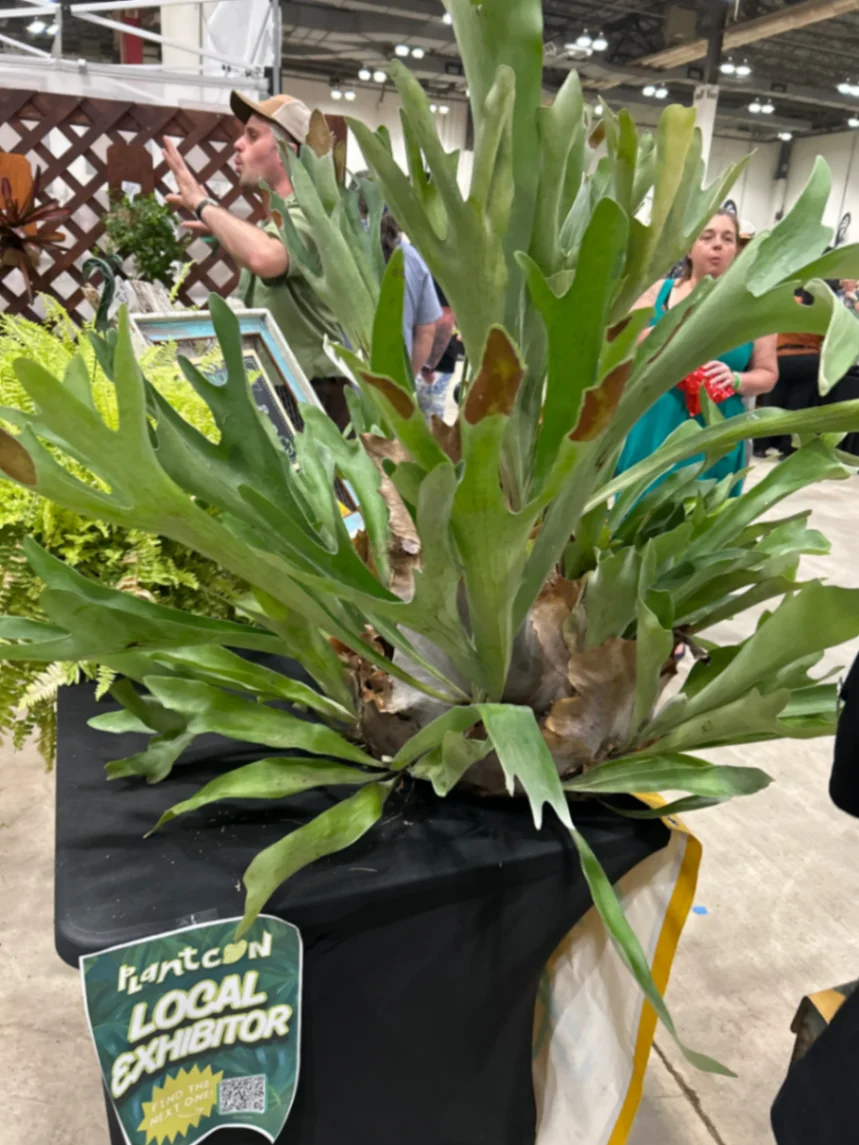
Family: Polypodiaceae. Non-toxic to cats and dogs. It features two distinct types of fronds: basal sterile shield fronds and fertile antler-like fronds.
Details
Identity & Classification
- Common Name
- Staghorn Fern
Growth & Physical Traits
- Plant Type
- Epiphyte, Fern / Pteridophyte, Houseplant, Tropical Plant
- Growing Medium
- Sphagnum moss or orchid bark
- Growth Habit
- Epiphyte, Clumping
Lifecycle & Reproduction
- Propagation Method
- Offset / Pup
Care & Requirements
- Watering Needs
- Medium Water Needs
- Temperature Range
- Warm Temperate (50–80°F / 10–27°C)
- Humidity Range
- High Humidity (60–80%)
- Light Needs
- Bright Indirect Light
Origin & Source
- Natural Habitat Location
- Java, New Guinea, and eastern Australia
Collection Context
- Quantity
- 1
- Added Details
- Family: Polypodiaceae. Non-toxic to cats and dogs. It features two distinct types of fronds: basal sterile shield fronds and fertile antler-like fronds.
Staghorn Fern
Platycerium
bifurcatum
Common NameStaghorn Fern
Growth & Physical Traits
Plant Type
Epiphyte, Fern / Pteridophyte, Houseplant, Tropical Plant
Growth Habit
Epiphyte, Clumping
Growing MediumSphagnum moss or orchid bark
Lifecycle & Reproduction
Propagation Method
Offset / Pup
Care & Requirements
Watering Needs
Medium Water Needs
Temperature Range
Warm Temperate (50–80°F / 10–27°C)
Humidity Range
High Humidity (60–80%)
Light Needs
Bright Indirect Light
Origin & Source
Natural Habitat LocationJava, New Guinea, and eastern Australia
Collection Context
Quantity
1
Added Details
Family: Polypodiaceae. Non-toxic to cats and dogs. It features two distinct types of fronds: basal sterile shield fronds and fertile antler-like fronds.
Platycerium
bifurcatum
Common NameStaghorn Fern
Added Details
Family: Polypodiaceae. Non-toxic to cats and dogs. It features two distinct types of fronds: basal sterile shield fronds and fertile antler-like fronds.
Growth & Physical Traits
Plant Type
Epiphyte, Fern / Pteridophyte, Houseplant, Tropical Plant
Growth Habit
Epiphyte, Clumping
Growing MediumSphagnum moss or orchid bark
Lifecycle & Reproduction
Propagation Method
Offset / Pup
Care & Requirements
Watering Needs
Medium Water Needs
Temperature Range
Warm Temperate (50–80°F / 10–27°C)
Humidity Range
High Humidity (60–80%)
Light Needs
Bright Indirect Light
Origin & Source
Natural Habitat LocationJava, New Guinea, and eastern Australia
Collection Context
Quantity
1