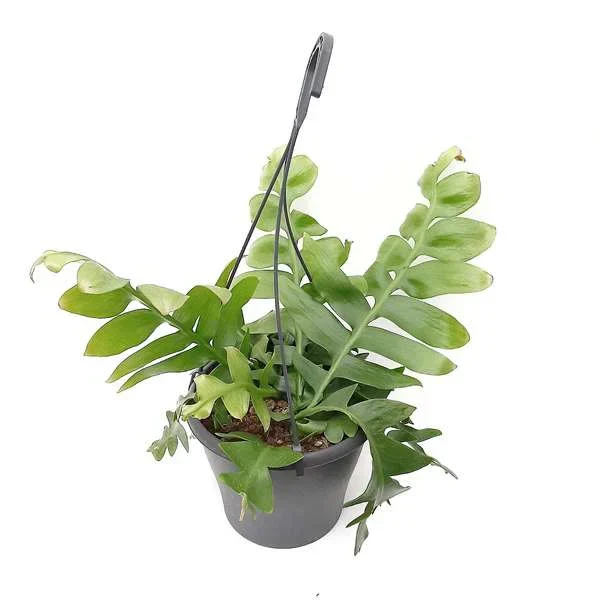
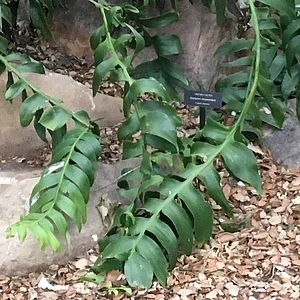
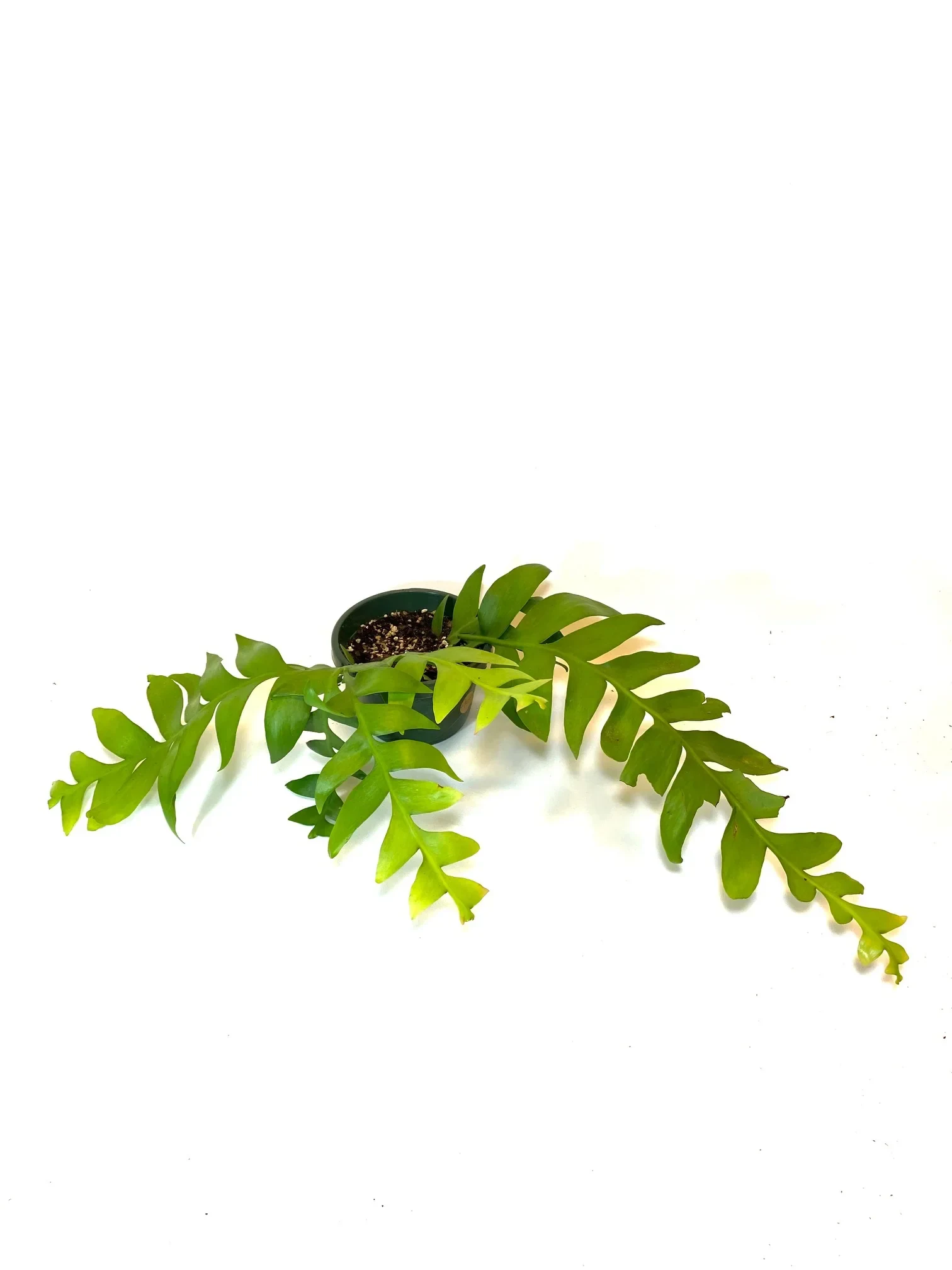
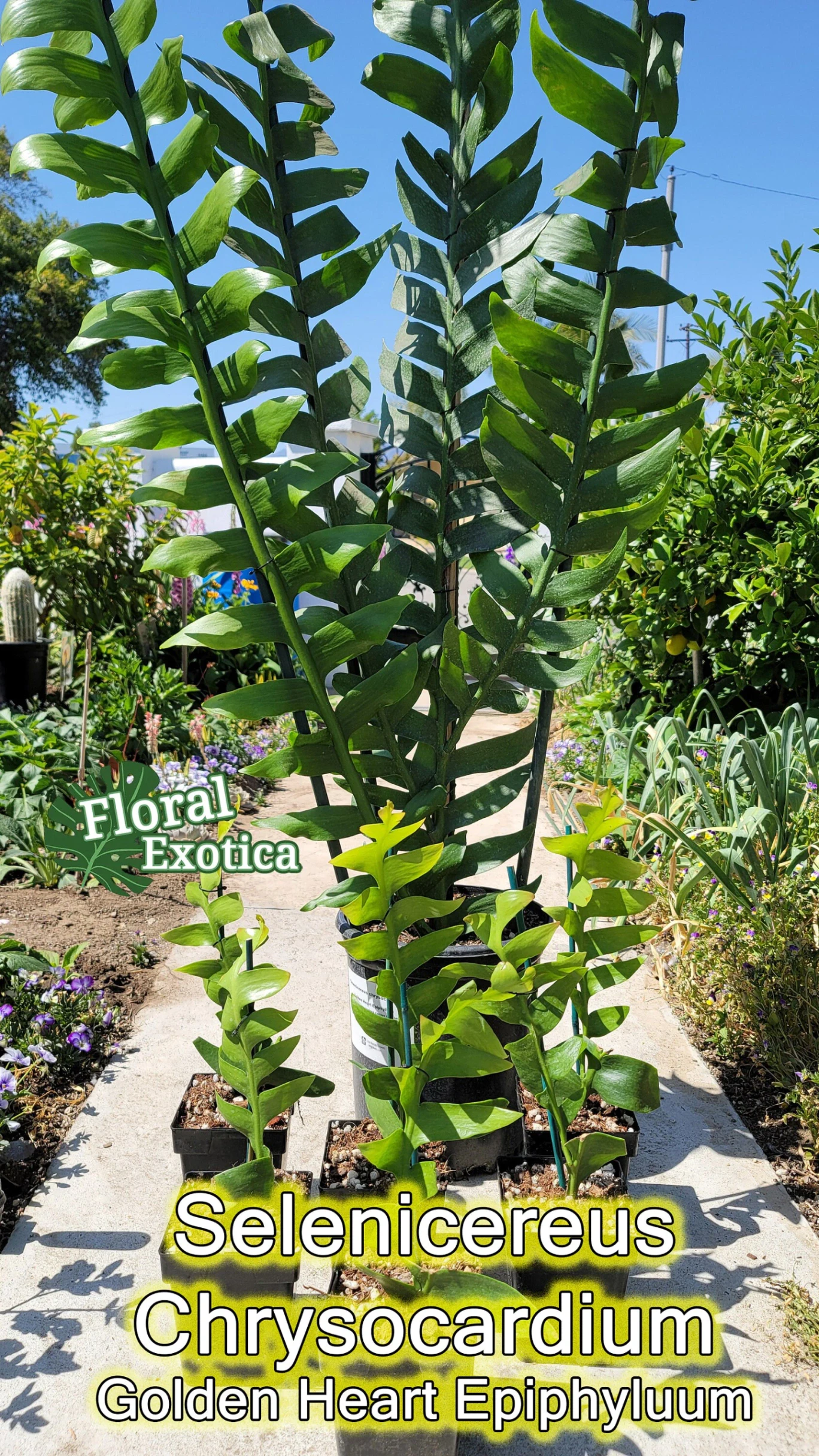
Fern Leaf Cactus
Selenicereus
Chrysocardium
Common NameFern Leaf Cactus
Growth & Physical Traits
Plant Type
Cactus, Epiphyte, Houseplant, Succulent
Growth Habit
Epiphyte, Succulent
Growing MediumWell-draining cactus mix
Lifecycle & Reproduction
Propagation Method
Cutting
Care & Requirements
Watering Needs
Medium Water Needs
Temperature Range
Warm Temperate (50–80°F / 10–27°C)
Humidity Range
High Humidity (60–80%)
Light Needs
Bright Indirect Light
Origin & Source
Date Acquired
May 31, 2017
Acquisition SourcePlant Rescue from Tansy
Natural Habitat LocationMexico
Collection Context
Quantity
1
Added Details
Family: Cactaceae. Also known as Epiphyllum chrysocardium. This plant is generally non-toxic to pets, but its large size and zig-zag stems can be physically delicate.
Selenicereus
Chrysocardium
Common NameFern Leaf Cactus
Added Details
Family: Cactaceae. Also known as Epiphyllum chrysocardium. This plant is generally non-toxic to pets, but its large size and zig-zag stems can be physically delicate.
Growth & Physical Traits
Plant Type
Cactus, Epiphyte, Houseplant, Succulent
Growth Habit
Epiphyte, Succulent
Growing MediumWell-draining cactus mix
Lifecycle & Reproduction
Propagation Method
Cutting
Care & Requirements
Watering Needs
Medium Water Needs
Temperature Range
Warm Temperate (50–80°F / 10–27°C)
Humidity Range
High Humidity (60–80%)
Light Needs
Bright Indirect Light
Origin & Source
Date Acquired
May 31, 2017
Acquisition SourcePlant Rescue from Tansy
Natural Habitat LocationMexico
Collection Context
Quantity
1