The short version#
The ultimate field encounters are defined not by high secondary market values, but by extreme geographic isolation, cryptic behaviors, and severely restricted natural habitats.
- Little Spotted Kiwi
- Nuthatch-Vanga
- Gurney's Eagle
- Eastern Chat-Tanager
- Blue-crowned Racquet-tail
- Black-breasted Buttonquail
- Purus Jacamar
- Unspotted Saw-whet Owl
- Tanimbar Megapode
- Red-fronted Coua
For those of us who spend our lives scanning the canopy, listening for a faint rustle in the understory, or studying topographical maps late into the night, the true measure of a prize has nothing to do with secondary market values or auction records. In the world of birding and field observation, the ultimate encounter cannot be bought. Its worth is forged entirely by the sheer difficulty of the pursuit. The absolute holy grails of the avian world demand something far more precious than currency: immense patience, endless travel to the margins of the map, and a willingness to sit silently in leech-infested rainforests or subalpine mist for days on end just to catch a fleeting glimpse of a silhouette.
What makes a species nearly impossible to add to a life list? It is rarely a single factor, but rather a perfect storm of environmental and evolutionary circumstances. Extreme geographic isolation plays a massive role, as many of these elusive birds are confined to tiny, remote islands or singular, inaccessible mountain ridges. Others possess cryptic behaviors honed over millennia to evade detection, blending seamlessly into the leaf litter or emerging only in the deepest dead of night. Furthermore, many face severely restricted natural habitats, surviving only in delicate ecological niches that grow smaller by the year.
To seek these birds is to engage in a profound form of field collecting, where the acquisitions are memories, logbook entries, and the quiet triumph of a long-sought field mark finally revealed. Whether you are an experienced ornithologist or a passionate naturalist dreaming of your next expedition, the pursuit of these hidden creatures represents the pinnacle of field observation. The ten species detailed below represent some of the most formidable challenges you can encounter in the wild, each offering a masterclass in subtlety, rarity, and raw geographical defiance.
| # | Item | Set / Year | Rarity |
|---|---|---|---|
| 1 | Little Spotted Kiwi | — | — |
| 2 | Nuthatch-Vanga | — | — |
| 3 | Gurney's Eagle | — | — |
| 4 | Eastern Chat-Tanager | — | — |
| 5 | Blue-crowned Racquet-tail | — | — |
| 6 | Black-breasted Buttonquail | — | — |
| 7 | Purus Jacamar | — | — |
| 8 | Unspotted Saw-whet Owl | — | — |
| 9 | Tanimbar Megapode | — | — |
| 10 | Red-fronted Coua | — | — |
10. Red-fronted Coua#
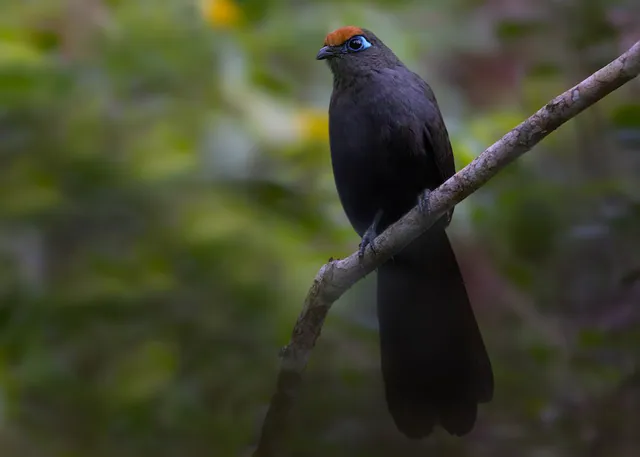 Red-fronted CouaSee it on collecto.rs
A sudden shift in the leaf litter catches your eye, but by the time your eyes adjust to the emerald dimness of the Malagasy forest, the shadow is already gone. Searching for the Red-fronted Coua is an exercise in quiet patience. Endemic to Madagascar, this ground-dwelling cuckoo prefers the dense, tangle-filled understory where sunlight barely penetrates. It does not soar grandly above the canopy or call out from exposed perches; instead, it slips silently through the brush, relying on its striking blue facial skin and rusty brow to blend seamlessly into the dappled shade. For field observers and dedicated birders, locating one requires hours of motionless waiting in humid, difficult terrain.
What elevates the Red-fronted Coua to our list is not mere geographic isolation, but the sheer difficulty of spotting an animal that actively uses its habitat as an invisibility cloak. While birds like the Tanimbar Megapode present a challenge rooted in reaching a remote, highly restricted island ecosystem, the coua presents a behavioral puzzle. Even when you stand in the heart of its known range, the bird can be mere feet away and remain entirely invisible behind a screen of low foliage.
This elusive nature makes any verified sighting a prized entry in a field collector's log. It serves as a reminder that scarcity in the natural world isn't always about vanishingly small global populations; sometimes, it is about the extraordinary skill a species possesses in avoiding our gaze. To track down the Red-fronted Coua is to earn a masterclass in reading the subtle shifts of the forest floor, making it a fitting entry to kick off our ten most challenging pursuits.
9. Tanimbar Megapode#
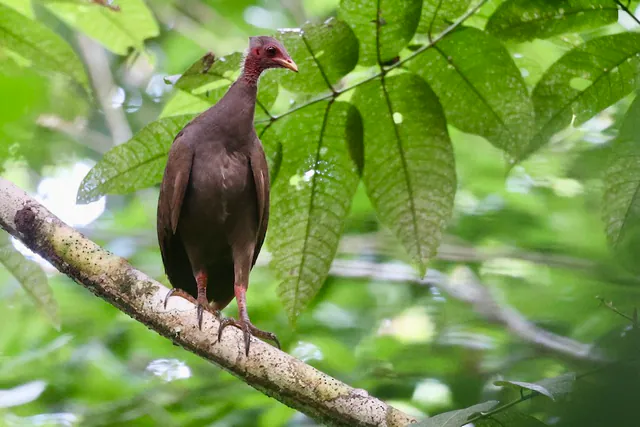 Tanimbar MegapodeSee it on collecto.rs
A mere handful of remote, heavily forested archipelagos in eastern Indonesia hold the entire world population of the Tanimbar Megapode. For field ornithologists and life-list collectors, this singular geographical constraint turns a routine expedition into a high-stakes search. Unlike elusive species that conceal themselves within vast continental ranges, this mound-building bird is restricted to a fraction of a percent of the Earth's landmass. The challenge here is not simply navigating dense cover, but gaining access to the tiny, isolated island ecosystems that dictate its very existence.
While trackers seeking Madagascar's Red-fronted Coua must untangle the dense, shadowy forest understory of a massive landmass, those pursuing the megapode face an entirely different barrier before even setting foot in the habitat: pure oceanic isolation. The species relies on thermal mounds of decaying vegetation and volcanic soil to incubate its eggs, nesting in very specific microhabitats within its tiny oceanic footprint. Because these nesting sites are highly localized, missing a single known patch of suitable coastal or lowland forest often means missing the species entirely for the duration of a trip.
Observing the Tanimbar Megapode requires navigating complex regional travel logistics, unpredictable local sea crossings, and dense, humid island scrub. It is a classic example of how strict endemism creates true avian scarcity. The bird itself is quietly fascinating, but its true status as a holy grail for collectors stems from its hyper-restricted range. You cannot simply wait for a vagrant to blow off course; you must travel precisely to its secluded sanctuary, making any confirmed sighting a rare badge of persistence.
8. Unspotted Saw-whet Owl#
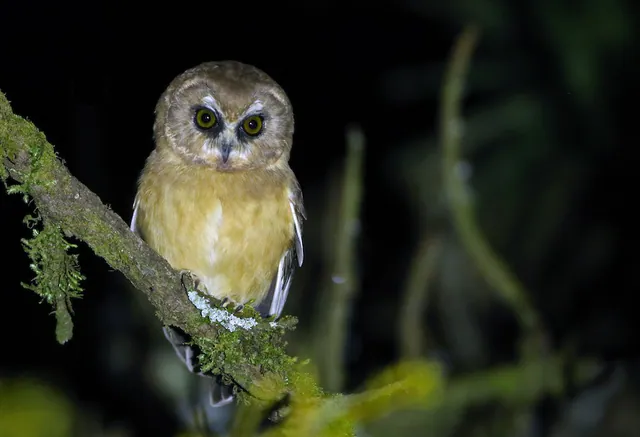 Unspotted Saw-whet OwlSee it on collecto.rs
While the Purus Jacamar demands grueling river journeys into the heart of the Amazon basin, the Unspotted Saw-whet Owl presents a completely different flavor of field challenge. It does not require thousands of miles of river travel, but it demands an extraordinary patience in the dark, cold heights of Central American cloud forests. Where the jacamar is at least visible along the sunlit banks during the day, this elusive little owl remains almost entirely unseen, tucked away in dense canopy foliage until nightfall completely consumes the mountain slopes.
What makes this species such a holy grail for field collectors and avian enthusiasts is not sheer geographic isolation, but an absolute mastery of stealth paired with hyper-specific habitat needs. Restricted to high-altitude oak and cloud forests from southern Mexico down through Costa Rica and Panama, it lives in a perpetual mist. It is strictly nocturnal, perching motionless near the trunks of moss-draped trees. Because it rarely vocalizes outside of a brief breeding window, traditional acoustic surveys often fail entirely. You can stand five feet from a roosting individual in the dim light of dawn and never register its presence.
This is a pursuit defined by environmental friction rather than mere logistical distance. To add the Unspotted Saw-whet Owl to a life list, one must navigate steep, slippery mountain terrain in total darkness, listening for a faint, rhythmic whistle that might only last a few seconds before vanishing into the foggy canopy. It remains one of the ultimate tests of fieldcraft, earned not by checking off remote coordinates, but by enduring the freezing nocturnal damp of the high tropics for a fleeting glimpse of two bright yellow eyes.
7. Purus Jacamar#
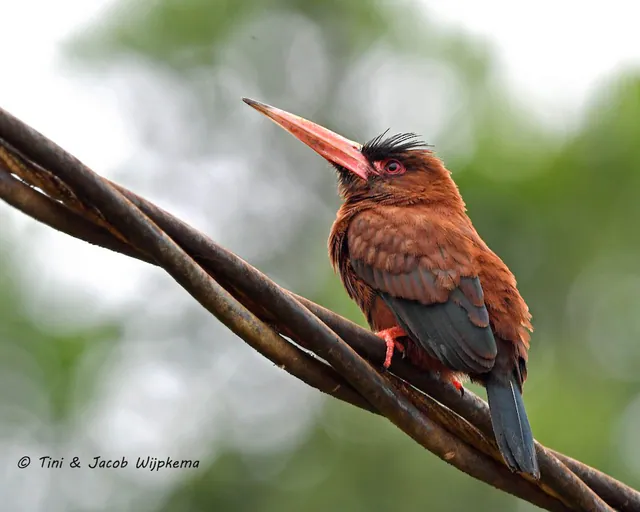 Purus JacamarSee it on collecto.rs
Have you ever considered how much of a bird's elusive nature comes down to simple geography? For the Purus Jacamar, its scarcity is not a matter of night camouflage or secretive ground movements, but rather the sheer logistical trial of reaching its home. Tucked deep within the southwest Amazon basin, this striking insectivore relies almost entirely on specialized riverine habitats, perching along the edges of seasonally flooded forests and silt-laden waterways. To even stand a chance of glimpsing one, a seeker must undertake extensive travel along remote river systems, navigating tributaries that few travelers ever see.
While species like the Black-breasted Buttonquail test a field observer's patience through subtle plumage and deep leaf-litter concealment, the Purus Jacamar demands an entirely different kind of endurance. Its bright, iridescent sheen and slender silhouette are actually quite distinct once spotted, but the true barrier is access. It occupies narrow, fragile eco-zones along dynamic riverbanks that are constantly reshaped by seasonal rains. Because it refuses to wander far from these specific water margins, its overall range remains fragmented and remarkably difficult to map.
Searching for this bird requires slow, deliberate boat journeys through dense, humid corridors where the forest canopy arches tightly overhead. Success depends far less on luck and much more on deep local knowledge, timing the water levels correctly, and scanning the exposed perches where the bird waits to sally out after flying insects. It remains a crowning prize for those who track avian rarities, embodying the untamed, inaccessible spirit of the deep Amazon. Reaching its territory is a monumental effort, making every brief, shimmering sighting feel entirely earned.
6. Black-breasted Buttonquail#
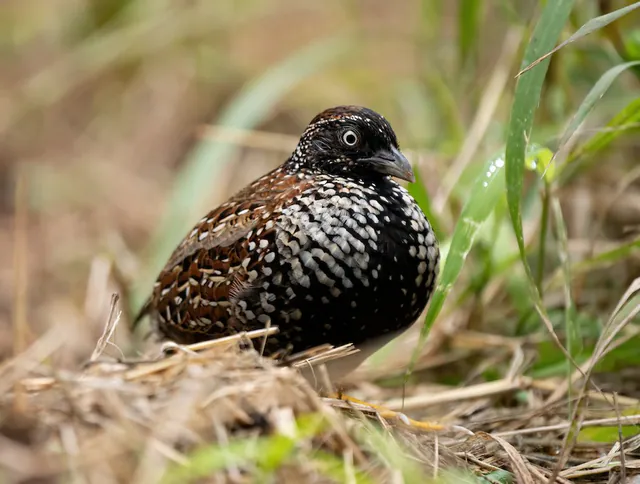 Black-breasted ButtonquailSee it on collecto.rs
You can stand less than ten feet from a Black-breasted Buttonquail and see nothing more than the dappled patterns of fallen leaves. It is only when the damp ground begins to vibrate with a distinct, circular scratching motion—the bird's characteristic 'plate-scratching' feeding technique—that a mottled form resolves out of the shadows. Finding one is less about sweeping the horizon with binoculars and more about intense, static observation of a single patch of subtropical rainforest floor.
Endemic to the dwindling coastal vine thickets of eastern Australia, this terrestrial specialist has perfected the art of disappearing in plain sight. Its striking black, white, and chestnut plumage acts as a masterclass in disruptive camouflage, breaking up the bird's outline beneath the dense canopy. While the Purus Jacamar forces searchers to navigate endless Amazonian waterways in pursuit of a visible perching insectivore, the buttonquail presents a stationary puzzle. It does not sit prominently above the riverbanks; it remains entirely merged with the soil, requiring hours of motionless waiting in humid underbrush just to register a single movement.
What makes this species such a holy grail for field spotters is not merely its scarcity, but its absolute refusal to cooperate with traditional observation methods. They rarely take flight, preferring to freeze or slip silently through the debris when approached. To record one requires a profound shift in mindset: you must abandon the urge to cover ground and instead learn to read the subtle disruptions in the leaf litter, trusting that patience will eventually reveal what your eyes initially missed.
5. Blue-crowned Racquet-tail#
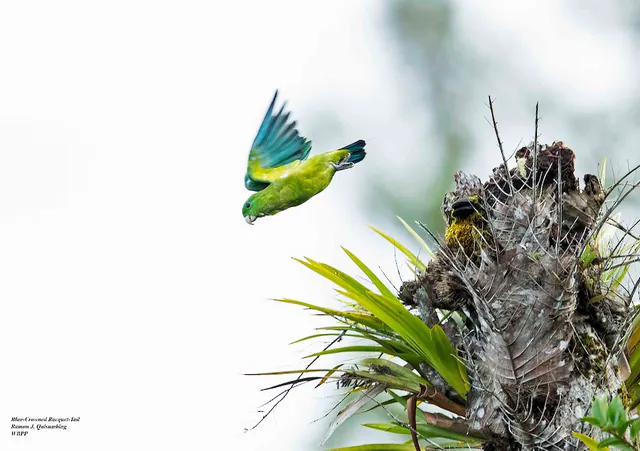 Blue-crowned Racquet-tailSee it on collecto.rs
You might assume that a parrot boasting vibrant green plumage and remarkable spatulate tail feathers would practically announce its presence against the forest backdrop. In reality, the Blue-crowned Racquet-tail turns its vivid coloration into the ultimate camouflage. Native to the Philippines, this canopy-dwelling species spends its life high in the misty, cloud-shrouded montane forests of its island home, blending seamlessly into the dense upper foliage. Seeking one out requires scanning the high canopy through drifting mist, where their silent foraging habits make them almost entirely invisible to observers on the ground.
While the Black-breasted Buttonquail tests a field collector’s patience by melting into the shadowy leaf litter of the forest floor, the racquet-tail presents the exact opposite dilemma by vanishing into the skyward canopy. Both species demand immense field discipline, but tracking a canopy specialist adds the physical strain of constant, vertical scanning through thick humidity and shifting cloud cover. The bird's signature tail racquets, which seem so distinct in illustration, offer almost no visual advantage when obscured by the intricate layers of epiphytes and drenched leaves that define island mist forests.
What makes this bird such a legendary chase for avian enthusiasts is not sheer low population numbers alone, but this frustrating habit of spatial seclusion. They move swiftly between fruiting trees, often passing overhead as little more than a fleeting silhouette before disappearing back into the mountain fog. To cross paths with a Blue-crowned Racquet-tail, you must learn to read the subtle movements of the uppermost branches and listen for their muffled calls over the constant drip of rain. It remains one of the ultimate rewards of Southeast Asian birding, proving that true scarcity is often a matter of perspective, altitude, and patience.
4. Eastern Chat-Tanager#
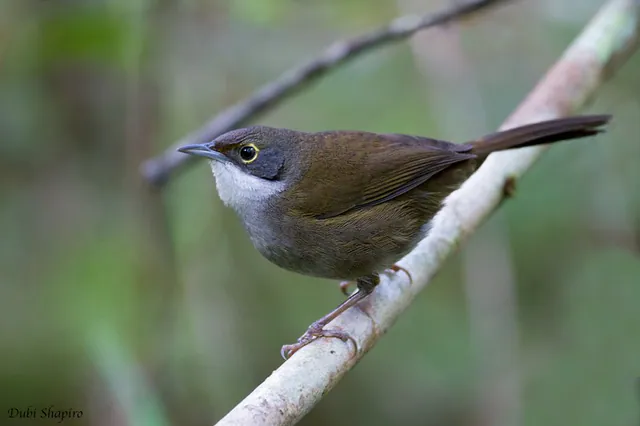 Eastern Chat-TanagerSee it on collecto.rs
Thick mountain mist rolls over the rugged ridges of Hispaniola, wrapping the twisted, moss-draped branches of the Caribbean cloud forest in a dense gray blanket. Somewhere in this damp, tangled understory skulks the Eastern Chat-Tanager, a species whose entire existence is anchored to these precarious high-elevation havens. Finding one requires navigating steep, unforgiving terrain where trails are non-existent and the weather can turn treacherous in minutes. It is a quest that tests a field collector’s physical endurance just as much as their patience.
Unlike the canopy-dwelling Blue-crowned Racquet-tail, which evades detection by melting into the sunlit foliage high above the forest floor, the Eastern Chat-Tanager relies on the absolute isolation of its habitat. It is a strict mountain ridge endemic, restricted to a dwindling network of fragile, high-altitude ecosystems. Because these cloud forests are geographically isolated like islands in the sky, the bird’s total population is naturally fractured and small. Human encroachment and habitat degradation have further squeezed these refuges, making an encounter with this secretive songbird an increasingly rare privilege.
For those who track avian rarities, the challenge lies in the bird's deliberate, cryptic behavior within an already inaccessible environment. It stays low in the dense thickets, moving cautiously through the damp brush and rarely venturing into the open. Chasing a sighting demands early mornings, long treks into protected reserves, and the willingness to spend hours listening for a single sharp call note echoing through the fog. The Eastern Chat-Tanager is not simply expensive to pursue; it is genuine scarcity defined by geography, habitat specificity, and the sheer difficulty of reaching its misty, remote home.
3. Gurney's Eagle#
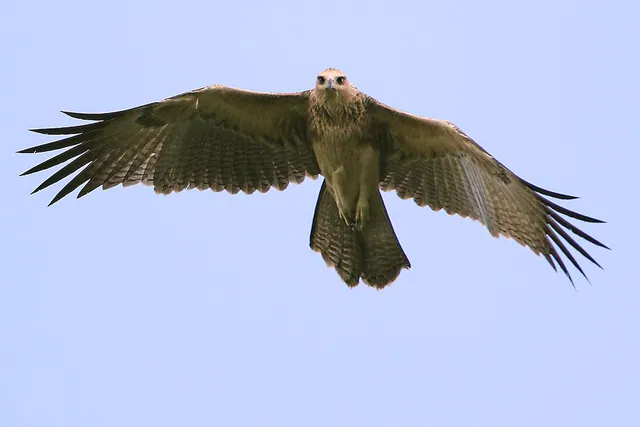 Gurney's EagleSee it on collecto.rs
Fewer than two thousand mature individuals are estimated to exist across the entire expanse of New Guinea and its surrounding islands. For the field enthusiast tracing the world's apex raptors, that figure translates to a sobering reality on the ground. Gurney's Eagle does not hide in the secretive canopy layer like the smaller Nuthatch-Vanga, which at least rewards careful observers by sticking to predictable trunk-foraging corridors. Instead, this magnificent dark raptor commands immense territories, patrolling hundreds of square miles of lowland tropical forest where its presence is spread impossibly thin.
Sighting one is less a matter of mastering a specific microhabitat and more an exercise in sheer endurance. The species maintains exceptionally low population densities, meaning even in pristine, undisturbed rainforest, a birder could spend weeks scanning the sky without catching a glimpse of its broad, rounded wings. It effortlessly glides over vast, unbroken stretches of wilderness, appearing for a few brief moments above the tree line before vanishing back into the green interior. Because these raptors require such massive home ranges to support a single breeding pair, no single reserve or lookout point can guarantee an encounter.
What makes this pursuit so tantalizing for dedicated life-listers is the utter unpredictability of the search. Unlike island endemics whose ranges are geographically constrained to a single valley or peak, Gurney's Eagle is theoretically present across a massive region, yet practically absent from any given acre at any given moment. Adding this formidable bird to your life record demands patience, sharp optics, and a great deal of luck, making a definitive sighting one of the most rewarding triumphs in international birding.
2. Nuthatch-Vanga#
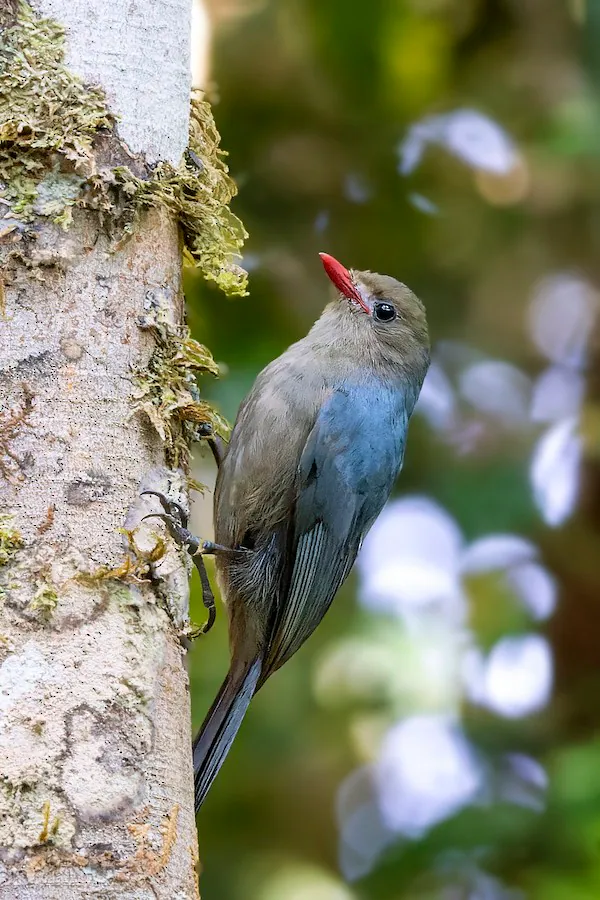 Nuthatch-VangaSee it on collecto.rs
Unlike large forest raptors such as Gurney's Eagle, which demand endless patience as they soar unpredictably over immense stretches of canopy, the Nuthatch-Vanga tests your observation skills on a micro scale. Finding this bizarre, highly specialized creature requires searching the intimate, textured surfaces of individual tree trunks within the dry, deciduous woodlands of northwestern Madagascar. Rather than scanning distant horizons, you are forced to dissect every patch of bark, looking for a small, acrobatic passerine that moves with erratic, mouse-like precision.
This species represents one of the most remarkable evolutionary adaptations within the vanga family. Possessing a stout, chisel-like bill and unusually strong feet, it behaves almost identically to a true nuthatch, creeping up, down, and around thick limbs in search of concealed invertebrates. Yet its strict habitat preference makes it profoundly difficult to locate. It relies heavily on old-growth forest patches rich in decaying wood and structural complexity, environments that have suffered severe fragmentation across its native range. Because it rarely vocalizes outside the brief breeding window, even a birder standing beneath an occupied tree can easily overlook its presence.
What makes this sighting so prized among field enthusiasts is not merely the logistical headache of reaching its isolated habitat, but the sheer visual discipline required to spot one. The bird’s subtle slate and white plumage dissolves effortlessly into the dappled light and lichen-encrusted bark of the sun-bleached canopy. Tracking one requires a sharp eye for tiny, mechanical movements against a complex, motionless background. Securing a clear view of this master of niche foraging offers a deep sense of accomplishment, marking a milestone that few field observers will ever achieve.
1. Little Spotted Kiwi#
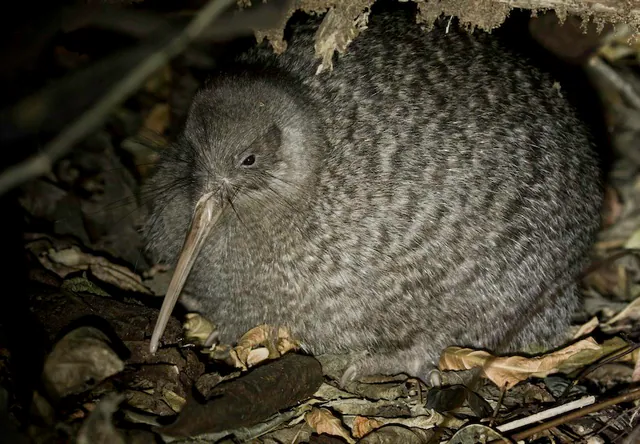 Little Spotted KiwiSee it on collecto.rs
Standing on a windswept ridge on Kapiti Island at midnight, you listen intently as a high-pitched, whistle-like call pierces the darkness, answered moments later by a lower, raspy reply. You click on a faint red torch, casting a low glow across the damp moss, but the caller has already slipped beneath the thick tussock grass without leaving a trace. This is the realm of the Little Spotted Kiwi, the smallest of all kiwi species and arguably the most difficult to witness in the wild. Entirely flightless and strictly nocturnal, this vulnerable bird offers no fleeting flashes of canopy movement to reward a patient observer.
What elevates this kiwi to the top spot on our list is not merely its secretive nature, but the formidable logistical barriers required to reach its habitat. Having been completely eradicated from the New Zealand mainland by introduced mammalian predators, the remaining populations survive almost exclusively within heavily protected, predator-free offshore sanctuaries and strictly managed fenced reserves. Access to these refuges demands special permits, biosecurity checks, and overnight stays on remote islands where visitor numbers are rigorously controlled.
While the Nuthatch-Vanga challenges observers with its specialized trunk-foraging behavior high in Madagascar's forest canopies, the Little Spotted Kiwi demands a completely different set of field skills, requiring you to navigate pitch-black, tangled understory terrain purely by ear. Finding one isn't a matter of scanning the skies or mastering canopy optics, but rather surviving the grueling logistics of island sanctuary access and learning to read the subtle rustle of leaf litter under the cover of total darkness. For the dedicated field enthusiast, securing a legitimate sighting of this elusive icon remains the ultimate birding achievement.
tracking down these incredibly elusive species reminds us why we fall in love with field observation in the first place. It is not about crossing items off a checklist as quickly as possible, nor is it about asserting dominance over the natural world. It is about the quiet discipline of stepping into an ecosystem on its own terms, adjusting your senses to the subtle rhythm of a distant forest, and accepting that nature yields its greatest secrets only to those willing to wait.
Every bird on this list demands respect for the fragile, isolated environments it calls home. Their extreme scarcity and secretive habits serve as a vital reminder of how delicate our planet's biodiversity truly is. Many of these species persist in tiny, fragmented pockets of wilderness where a single storm or habitat shift could alter their trajectory forever. Protecting these remote strongholds ensures that future generations of naturalists will still have wild, untamed corners of the world to dream about.
As you plan your future travels and refine your field goals, remember that the true joy of the hunt lies in the journey itself. The long hikes through dense terrain, the early mornings spent waiting in the cold damp air, and the shared camaraderie with fellow observers all contribute to the richness of the experience. Keep your field glasses ready, honor the habitats you visit, and may your time in the field always be rewarded with moments of quiet wonder.
Frequently asked questions#
What makes a bird species genuinely hard to find?#
Difficulty in finding a bird typically stems from localized geographic ranges, secretive canopy or understory behaviors, nocturnal habits, and low overall population densities. Species residing on remote oceanic islands or deep within dense tropical cloud forests present immense logistical hurdles that sheer financial spending cannot resolve.
How do field observation challenges differ from specimen rarity?#
Field observation challenges center on living behavior, active camouflage, and geographic remoteness in the wild. Specimen rarity often reflects historical collection patterns, archival preservation states, and surviving documentation in public or private study collections.
Why are island species often overrepresented among elusive birds?#
Islands create isolated evolutionary niches with tiny geographic footprints. When populations are confined to specific mountain ridges or fragmented forest patches on remote islands, locating them requires complex travel, precise timing, and extreme field patience.