The short version#
CDs credited to Various are often overlooked as filler, but the best ones serve as sharp historical snapshots, regional preservation efforts, or hyper-specific cultural artifacts that single-artist releases rarely capture.
- Trois-Rivières Metalfest VI
- Jeymes Samuel's Spaghetti Western Collection
- Java - Pays Sunda (L'Art Du Gamelan Degung) = Sunda Country (The Art Of The Gamelan Degung)
- Virginia Traditions - Virginia Work Songs
- 祭囃子〜ゲームトリビュート = 20th Anniversary A Tribute To Game-Sounds For Music-CD
- My Name's Bruce Too: Laughing Outlaw Records Artists Celebrate The Songs of Bruce Springsteen
- Vandemonian - Black Metal Compilation Of Van Diemans Land
- The Virginia & West Virginia Box - 1950s & 1960s Oddball Labels
- Henssler Mucke - 17 Liebings-Hits von Steffen Inklusive Rezeptbuch Mit 17 Neuen, Schnellen Rezepten
- Voorwaarde # 21 Vanaf Vandaag Zijn We Glashelder
The plastic jewel case has a specific weight when it holds a Various Artists CD. Usually, it sits in a bargain bin at a thrift store, missing its front insert or cracked down the center of the tray lid. Most people slide past them to find a clean spine from a single band. The assumption is simple: a compilation is a quick cash-in, a budget label sampler, or a lazy playlist burned to disc before playlists existed.
That assumption misses the entire point of the format. A single-artist album is a statement of intent from one room, one lineup, one afternoon in a studio. A Various Artists CD is an ecosystem. At their best, these releases do things an individual band cannot do. They capture a regional scene right before the venues close. They archive songs preserved only on decaying field cassettes. They document a three-day festival in a town that rarely makes the music press, catching bands at the exact height of their volume.
When a compiler gets it right, the CD becomes an anchor. You hear the room tone change between tracks. You hear how two bands from the same zip code, using the exact same guitar pedals, arrive at entirely different sounds. You get hyper-specific moments: a tribute album curated by a single fanatic, a snapshot of sound design for arcades, or traditional gamelan recorded live in Java with a stereo pair of microphones.
These discs demand a different kind of listening. You are not following one singer's career over forty minutes. You are listening to a curator attempt to solve a problem: how to take a sprawling, messy subculture and press it into 700 megabytes of polycarbonate. The ten CDs below skip the radio hits and the major-label samplers. They are deliberate, strange, and entirely singular.
| # | Item | Set / Year | Rarity |
|---|---|---|---|
| 1 | Trois-Rivières Metalfest VI | Various | — |
| 2 | Jeymes Samuel's Spaghetti Western Collection | Various | — |
| 3 | Java - Pays Sunda (L'Art Du Gamelan Degung) = Sunda Country (The Art Of The Gamelan Degung) | Various | — |
| 4 | Virginia Traditions - Virginia Work Songs | Various | — |
| 5 | 祭囃子〜ゲームトリビュート = 20th Anniversary A Tribute To Game-Sounds For Music-CD | Various | — |
| 6 | My Name's Bruce Too: Laughing Outlaw Records Artists Celebrate The Songs of Bruce Springsteen | Various | — |
| 7 | Vandemonian - Black Metal Compilation Of Van Diemans Land | Various | — |
| 8 | The Virginia & West Virginia Box - 1950s & 1960s Oddball Labels | Various | — |
| 9 | Henssler Mucke - 17 Liebings-Hits von Steffen Inklusive Rezeptbuch Mit 17 Neuen, Schnellen Rezepten | Various | — |
| 10 | Voorwaarde # 21 Vanaf Vandaag Zijn We Glashelder | Various | — |
10. Voorwaarde # 21 Vanaf Vandaag Zijn We Glashelder#
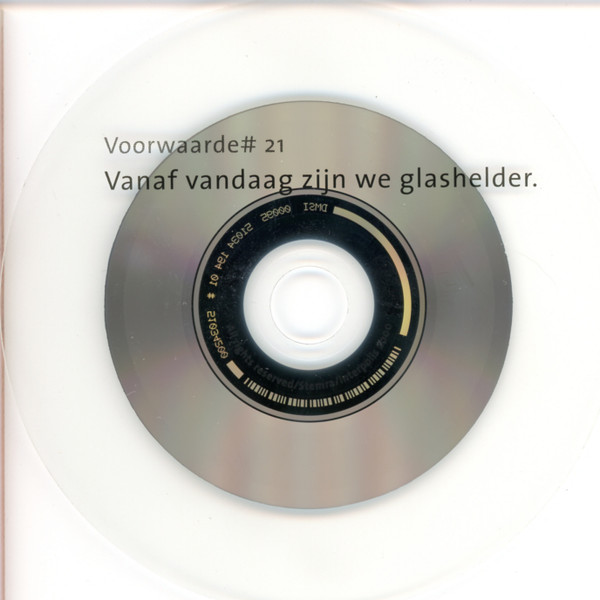 Voorwaarde # 21 Vanaf Vandaag Zijn We GlashelderSee it on collecto.rs
One Dutch insurance company. One promotional compact disc. Zero commercial distribution.
Corporate promotional CDs capture hyper-specific cultural moments that traditional record labels never touch. In 2000, Interpolis Verzekeringen released Voorwaarde # 21 Vanaf Vandaag Zijn We Glashelder, a nine-track compilation handed out to policyholders in the Netherlands. It exists at the intersection of corporate rebranding and late-era Dutch electronic music. You will not find these tracks on standard label samplers from the same period, because the entire release was designed as a physical extension of an advertising campaign about transparency.
While something like Henssler Mucke uses the CD format as a vehicle for a television chef's lifestyle brand, this Interpolis disc shows how financial institutions used music to soften administrative shifts. The music itself leans into ambient and light electronic textures, meant to evoke clarity. The packaging mimics a policy document, complete with corporate disclaimers printed where liner notes usually sit. It is a precise artifact of turn-of-the-millennium corporate communication, preserved entirely because compact discs were cheap enough to print as disposable marketing collateral.
Major labels spent the year 2000 fighting digital distribution. Corporate marketing departments simply printed another run of jewel cases. That divide makes utility compilations worth a second look. They capture what a specific company thought the year 2000 sounded like, unmediated by record store buyers or radio playlists.
If you keep odd promotional pressings like this on your shelves, track them on collecto.rs. You can log the catalog numbers, upload high-resolution scans of the corporate liner notes, and export your complete catalog whenever you want.
9. Henssler Mucke#
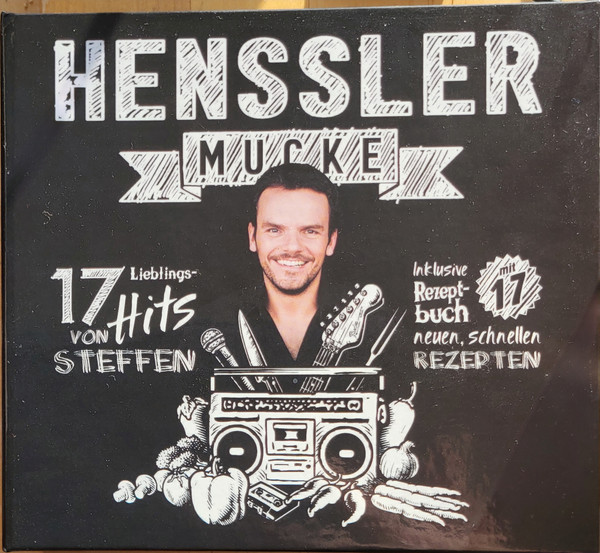 Henssler Mucke - 17 Liebings-Hits von Steffen Inklusive Rezeptbuch Mit 17 Neuen, Schnellen RezeptenSee it on collecto.rs
You are standing in a German kitchen in 2016, wiping olive oil off a CD jewel case so you can read the back of the booklet. Steffen Henssler, a celebrity chef, has just bundled seventeen cooking tracks with a companion cookbook of quick recipes. The music is listed simply as rock. The label is Henssler Mucke GbR, created specifically to put this object into your hands.
In the mid-2010s, compact discs had long surrendered their monopoly on standard album distribution. Instead, the format became a cheap, physical vessel for utility packaging. It was a durable medium for cross-promotion that could be shrink-wrapped to almost anything. Where corporate promotional discs like Voorwaarde # 21 Vanaf Vandaag Zijn We Glashelder used the format to immortalize a hyper-specific internal corporate moment, this package turns the disc into kitchen hardware. It asks the laser pickup to sit alongside the chef's knife and the cutting board.
It is easy to dismiss cooking-adjacent rock samplers as gimmicks. Yet items like this record a very specific shift in how physical media survived the digital decade. When streaming made standard jewel cases redundant on shop shelves, niche markets found that a stamped piece of polycarbonate still held tactile value. The music itself serves a purpose, but the physical bundle is the actual release. The booklet provides seventeen fast recipes, and the disc provides the backdrop while you chop onions.
As a collector, holding this disc is a reminder that the story of the CD is not just about major labels and chart hits. It is about how a format adapts when it is no longer the default way to hear a song. collecto.rs lets you document these oddities with all their weird context intact, so you can track how utility media earned its spot in your racks.
8. The Virginia & West Virginia Box#
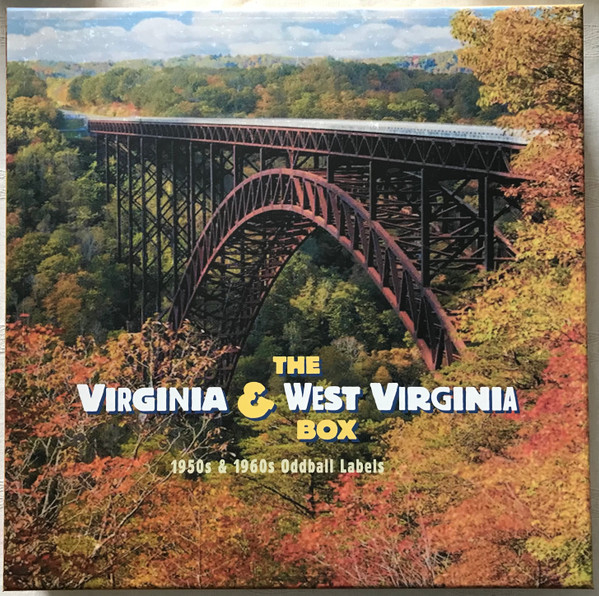 The Virginia & West Virginia Box - 1950s & 1960s Oddball LabelsSee it on collecto.rs
In the mid-1960s, four teenagers in Roanoke rented two hours of studio time, pressed three hundred copies of a single on a regional vanity label, and sold forty of them out of the trunk of a Chevy. The rest went into a closet, then a basement, then a landfill. That is how most hyper-local American rock and roll vanished. It took a boutique German label four decades later to dig up the surviving acetate, digitize the tape hiss, and package the results for anyone outside the Blue Ridge Mountains to hear.
That preservation work is what makes The Virginia & West Virginia Box worth your time. Be! Sharp Records built a four-disc set out of regional singles that had no business surviving. You get fuzz pedals recorded through blown-out amp speakers, teenage vocals cracking on the high notes, and room acoustics that sound like an empty gym. Nothing here made the Billboard charts. Most of it barely made the local radio station past midnight. Yet the performances carry an unvarnished energy that polished studio albums from the same era entirely lack.
While something like Vandemonian captures an isolated metal scene bound by shared geographic extreme, this set documents a brief moment before national distribution homogenized regional music. Garage bands in Wheeling and Lynchburg were trying to copy British Invasion riffs they heard on transistor radios, but they ended up creating something completely original through sheer isolation and technical limitation. The CD format handles this material perfectly, preserving the raw, uncompressed grit of the original pressings without adding artificial sheen.
We built collecto.rs so you can document sets like this alongside the rest of your shelves. You can log the label, tag the region, and export your data whenever you want.
7. Vandemonian - Black Metal Compilation Of Van Diemans Land#
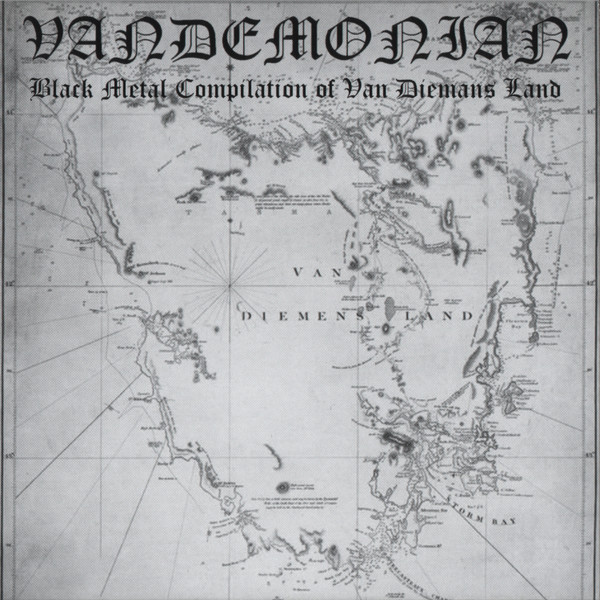 Vandemonian - Black Metal Compilation Of Van Diemans LandSee it on collecto.rs
Most compilations survey a genre by casting a wide net across continents. This 2007 CD from Asgard Musik does the opposite by shrinking the map to a single island. Tasmania sits isolated at the edge of the Southern Ocean, cut off from Australia's mainland capitals by hundreds of miles of water. That kind of geographic distance strips away the noise of surrounding musical trends. What remains is a dense, highly concentrated pocket of musicians working in total isolation, documented here across an extraordinary set of tracks.
While archival sets like The Virginia & West Virginia Box rescue obscure garage rock from disappearing entirely, Vandemonian captures a living micro-scene at a specific point in time. It brings together black metal projects that shared rehearsal spaces, tape recorders, and harsh winters, yet rarely toured beyond their own coastline. Heavy music relies on physical proximity to build a scene, but extreme isolation often produces the most distinct regional sounds. The music here feels untethered from European tropes of the era, carved out instead by artists reacting purely to their immediate landscape.
Asgard Musik pressed this compilation in Australia during a period when physical CDs were the only reliable vector for underground distribution. Today, finding a copy means holding a precise snapshot of a regional community that existed almost entirely offline. For anyone cataloging regional heavy metal, this release demonstrates how deep a micro-scene can run when left to incubate on its own terms. You can add this piece to your collection, organize its artwork and liner notes, and export your entire archive whenever you choose.
6. My Name's Bruce Too#
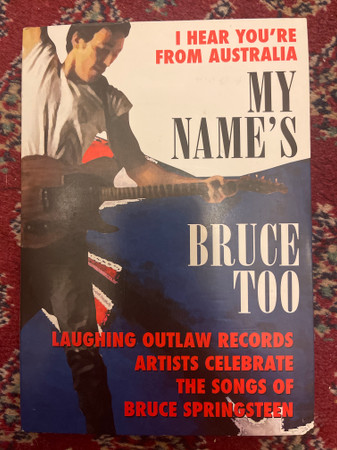 My Name's Bruce Too: Laughing Outlaw Records Artists Celebrate The Songs of Bruce SpringsteenSee it on collecto.rs
What happens when you hand a stack of New Jersey street anthems to twenty independent Australian bands? You get a total reset of how those songs breathe. Tribute compilations are usually cash-ins or vanity projects. This one works because it treats Bruce Springsteen as a folk archivist rather than an arena act, stripping away the stadium reverb to find the dirt underneath.
Laughing Outlaw Records put this together in Sydney, pulling from the country's garage rock and alt-country fringes. The tracks do not try to out-sing the original takes. Instead, they lean into the acoustic bones of the songwriting. Drums sound like wooden floors. Guitars sound slightly out of tune in the way live rooms actually sound. A track like Darkness on the Edge of Town turns into a quiet, sun-baked ballad that feels entirely native to the New South Wales coast.
While the Vandemonian compilation uses geographic isolation to sharpen the edges of Tasmanian black metal, this release uses that same distance to relax around the source material. Australian bands on an indie budget in the early two-thousands had no reason to imitate a American icon. That distance gave them room to play the songs straight, without the weight of the Boss persona hanging over the microphone.
It is an essential document for anyone tracing how American roots music mutated across the Pacific. You hear a working scene taking another writer's catalog and treating it like public domain traditional music. Track details like this belong in your collection data alongside the catalog numbers and matrix codes. When you catalog this CD on collecto.rs, you can export your entire database at any point, keeping your credits, notes, and pressings in your own hands.
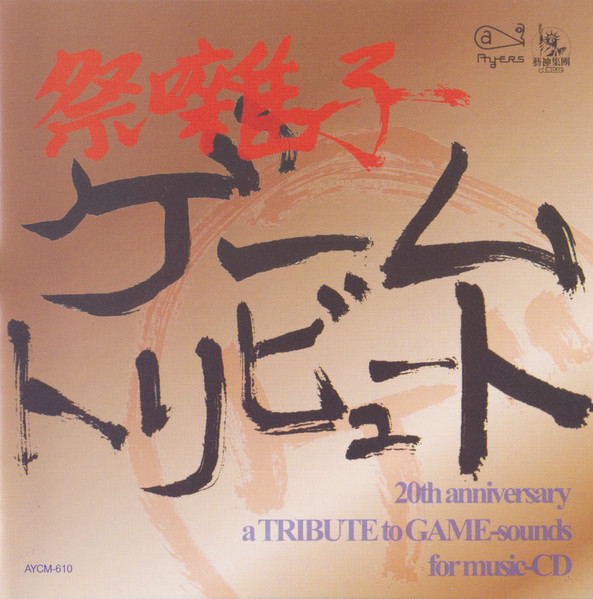
5. 祭囃子〜ゲームトリビュート = 20th Anniversary A Tribute To Game-Sounds For Music-CD#
 祭囃子〜ゲームトリビュート = 20th Anniversary A Tribute To Game-Sounds For Music-CDSee it on collecto.rs
You would be forgiven for assuming this is just another chiptune collection. It is not. Released in Japan by Ayers Inc., this compilation marks two decades of video game audio by pulling game music out of the background and handing it to working musicians.
Instead of dumping original 8-bit sound files onto a disc, the album acts as a bridge between early sound chips and physical media culture. Artists take iconic arcade and console themes, reinterpreting them through live instrumentation, funk arrangements, and early digital synthesis. It captures a specific moment in Japanese music history when game scores stopped being treated as software disposable and started being archived as stand-alone compositions. The physical package reflects that shift. Japanese compilations from this era treated game music with the same archival care that folk archivists gave to regional field recordings. Where a project like Virginia Work Songs documents oral traditions before they disappear, this release documents a digital subculture at the exact moment it recognized its own history.
That care shows up in the disc's sequence. Dense, polyphonic synth arrangements sit beside stripped-down acoustic takes. The producers treatFM synthesis algorithms not as technical limitations of old hardware, but as distinct musical instruments worth preserving.
For anyone building a Stage & Screen collection, the disc marks the turn where game audio became its own canon. You can track down the release on collecto.rs, log the Ayers Inc. catalog number, and keep your Japanese imports sorted alongside the rest of your media library.
4. Virginia Traditions - Virginia Work Songs#
 Virginia Traditions - Virginia Work SongsSee it on collecto.rs
Eighty-five minutes of audio recorded between 1936 and 1978 in prisons, quarries, and coastal packing houses. Virginia Traditions - Virginia Work Songs does not function like a standard commercial release. Released by Global Village Music in the United States, this compilation sits firmly within the blues genre, though it bears little resemblance to the polished studio sessions that dominated retail racks in the late CD era. It serves as primary historical documentation. These tracks capture voice and rhythm used as functional tools for physical labour, preserved directly from field tapes rather than reconstructed for an audience.
While an ethnomusicological release like Java - Pays Sunda brings the complex structure of gamelan degung into living rooms through pristine studio tracking, this collection preserves the environmental grit of its original spaces. You hear the thud of axes, the rhythmic scrape of shovels, and the natural acoustics of outdoor workspaces. The audio quality fluctuates because the historical record fluctuates. The label chose to leave those raw edges intact instead of scrubbing them away with digital noise reduction.
The CD format allowed Global Village Music to compile these disparate archival recordings into a single, durable document with comprehensive liner notes that contextualize every singer and site. It is not an album designed for background listening. It demands the same focused attention you might bring to a box of original archival photographs or a stack of local pressings. Having a physical copy means you hold the audio alongside the context, ensuring the names and locations attached to these voices stay connected to the sound itself. It is a quiet, vital piece of media that preserves a history that was never meant for a soundstage.
3. Java - Pays Sunda (L'Art Du Gamelan Degung)#
%20%3D%20Sunda%20Country%20(The%20Art%20Of%20The%20Gamelan%20Degung)) Java - Pays Sunda (L'Art Du Gamelan Degung) = Sunda Country (The Art Of The Gamelan Degung)See it on collecto.rs
Java - Pays Sunda (L'Art Du Gamelan Degung) = Sunda Country (The Art Of The Gamelan Degung)See it on collecto.rs
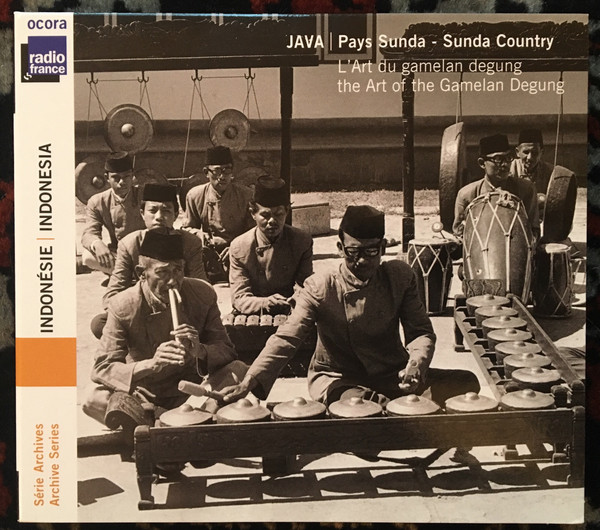
You pull a heavy jewel case from a crate in a damp basement, wipe the sleeve against your knee, and find the silver foil stamp of Radio France embossed on the back. That mark belongs to Ocora, a French label that treated field recordings not as sound effects, but as high art. In 1972, their engineers brought portable stereo recorders into the highland sanctuaries of West Java. They captured gamelan degung—the refined, intimate chamber music of the Sundanese aristocracy—with the same acoustic clarity usually reserved for Western classical orchestras.
While Virginia Traditions treated field tapes as historical documentation to preserve working-class struggle, Ocora approached this Sundanese repertoire as living classical music. The recording catches the exact decay of every bronze gongan gong and the subtle pitch-bending of the suling bamboo flute. You hear the room breathe between the strokes. It strips away the exoticism that plagued mid-century world music releases, presenting the complex modal systems of West Java with total precision.
For anyone building a shelf of global traditions, this French press remains a benchmark. Ocora proved that ethnomusicology could exist on a standard consumer format without compromising the source material. The audio quality holds up against modern digital remasters because the original microphone placement was absurdly good. If your collection tracks how traditional sound moved across borders during the CD era, this disc marks the moment field recording became serious hi-fi audio. When you want to document a release with this level of regional detail, collecto.rs gives you a clean place to store the label history, matrix numbers, and master notes without clutter.
2. Jeymes Samuel's Spaghetti Western Collection#
 Jeymes Samuel's Spaghetti Western CollectionSee it on collecto.rs
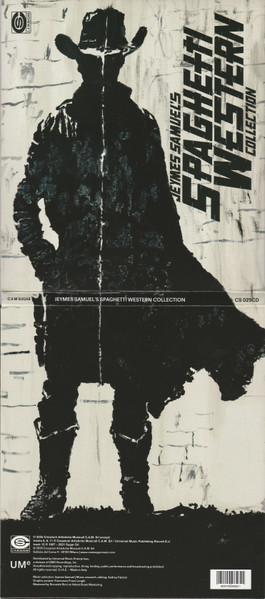
Most compilations document a scene after it happens. Jeymes Samuel built an entire film around music that did not exist yet, then filled the gaps with the Italian masters who invented the language he was borrowing. This collection sits on Cam Sugar, a label out of Italy that spends its days restoring original master tapes from mid-century film archives. Instead of leaning on the obvious Ennio Morricone cues everyone knows by heart, the sequencing pulls from the dusty corners of Roman scoring stages in 1968. Heavy brass hits sit next to dry acoustic guitars, whistling, and low organ drones that sound like they were tracked in a vacant church.
Where Java - Pays Sunda mapped a preserved traditional art for Western listeners across two clean discs, Samuel treats these vintage Italian stems as active building blocks for hip-hop production. You can hear the exact moments where a sixties horn section gets chopped to create space for a modern drum kit. It is less about film history and more about how specific studio room sounds from sixty years ago refuse to go away.
Cam Sugar pressed this CD with the kind of physical care that makes you hold the digipak by its edges. The remastering lets the tape hiss breathe without flattening the dynamic shifts between quiet acoustic passages and sudden orchestral blasts. If your shelf holds beat tapes on one end and vintage soundtracks on the other, this sits directly in the gap between them. You can add it to your catalog on collecto.rs alongside your original screen pressings, tag the Italian pressings separately, and keep track of how the production credits connect back to your older library releases.
1. Trois-Rivières Metalfest VI#
 Trois-Rivières Metalfest VISee it on collecto.rs
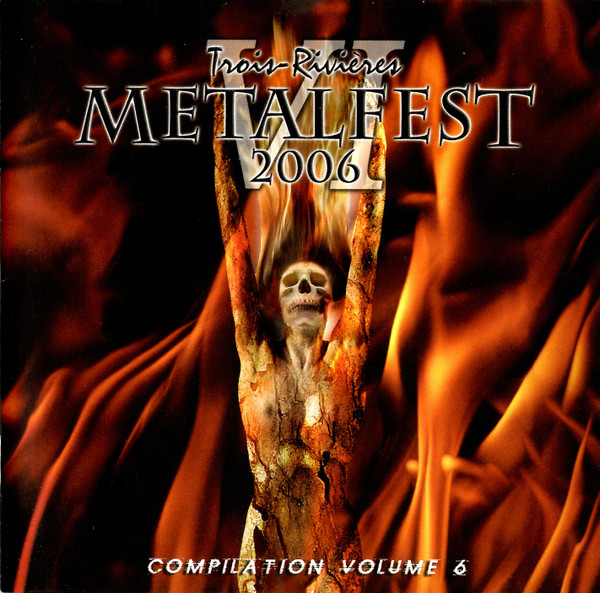
In November 2006, a crowd packed the Bâtisse industrielle in Trois-Rivières, Quebec, for two nights of heavy music. You walked out with sweat on your coat and a compilation CD wrapped in cheap shrinkwrap. Galy Records put out this sampler for the festival's sixth year, capturing a snapshot of the French-Canadian metal scene right when regional live communities were reaching peak momentum.
Most festival samplers get tossed on a floorboard after the drive home. This one earned a permanent spot on the shelf because it tracks the real evolution of a scene over decades. Galy Records knew exactly what they were doing. They packed the tracklist with local acts who played the weekend alongside bigger touring names, giving regional bands a physical record that outlasted the weekend setlists. Unlike Jeymes Samuel's Spaghetti Western Collection, which looks backward to pull vintage cinematic sounds into modern production, the Trois-Rivières sampler operates entirely in the present tense. It documents a specific room, in a specific town, on a specific weekend in Canada.
Compilations attributed simply to Various often get lost in digital libraries. A sampler like this needs a catalog system that respects local pressings and small-label runs, preserving the exact date and regional context without flattening the entry into generic search results. On collecto.rs, you can log this disc with its Galy Records lineage intact, alongside every other festival sampler taking up space in your shelf. Your collection stays organized, full data export remains free, and the history of a Quebec metal hall stays right where you can find it.
A collection of Various Artists CDs takes up real physical space. It fills shelf feet with odd typography, mismatched mastering levels, and liner notes written by people who were clearly there on the night in question. When you catalog these discs, you realize they resist neat organization. They do not fit neatly into an alphabetical run of a single artist's discography. They sit on the edge, connecting different corners of your shelves.
That friction is why they matter. A good compilation forces you to listen sideways, following a side musician to their next project or hunting down a self-released cassette mentioned only in the fine print of a booklet.
If your own shelves are holding a stack of these oddities, collecto.rs gives you a place to document them properly. You can track the obscure matrix numbers, scan the back covers, and keep your notes on who played bass on track seven. Your data stays yours, exportable whenever you want it. Take a look at the compilations sitting near the bottom of your rack. The right one is usually worth a second spin.
Frequently asked questions#
Why do so many CDs list Various as the artist?#
Record labels and databases use Various when a release features tracks by multiple different performers. This is standard practice for movie soundtracks, tribute albums, regional scene samplers, and multi-artist holiday collections where no single musician dominates the tracklist.
Are compilation CDs worth cataloging in a personal collection?#
Yes. Many compilation CDs contain exclusive remixes, rare live recordings, or tracks from obscure bands that never released a standalone album. They often document a specific scene or moment in musical history better than any single-artist LP can.
How should I organize CDs by Various on collecto.rs?#
You can group them under the Various artist tag, create custom tags for specific sub-genres or regional scenes, or group them by label. The platform lets you structure your catalog however it makes sense to your own sorting system.