The short version#
Scarcity is rarely planned. The titles collectors spend years tracking down were delayed by bankruptcy, locked in licensing disputes, or produced in single regional batches that vanished instantly.
- BattleLore
- Cavum
- Goldland
- Maka Bana
- Barbarossa
- partaka
- multicolor turtle
- Masonic shogi
- Chessboard and chess pieces used by Napoleon and his entourage at Longwood, Saint Helena
Publishers rarely set out to make an impossible game. They print a run, ship the boxes to distributors, and hope to clear warehouse space before the next quarter. The scarcity happens later, quietly, after the accountants have moved on.
Most board games vanish because nobody bought them. The ones on this list vanished for the opposite reason: people wanted them, but the machinery that creates physical objects broke down. A licensor went under. A designer bought back their own rights and put the files in a drawer. A publisher merged, lost the original art assets in a server migration, and realized re-printing would require drawing every tile from scratch.
Then there are the manufacturing runs that were never meant to leave a single zip code. A local contest prize in Essen. A promo expansion handed out to forty people at a trade show in 1998. A wooden prototype played at a kitchen table that somehow ended up in a catalog.
When a game becomes hard to find, the secondary market invents a story about its genius. The truth is usually more bureaucratic. Copyright law creates more phantom titles than low print runs ever could. When three corporate entities own different slices of a single rulebook, no one signs the paperwork to start the printer.
Tracking these boxes down requires a specific kind of patience. You spend months monitoring auction alerts for a specific misprinted box cover. You translate forum posts from twenty years ago to figure out if a regional edition actually contained the extra wooden markers. You learn to recognize the exact shade of sun-bleached spine on a shelf photo taken from six feet away.
These ten games are difficult to locate not because they were born legendary, but because the world made it very hard for them to keep existing in cardboard and plastic.
| # | Item | Set / Year | Rarity |
|---|---|---|---|
| 1 | BattleLore | Days of Wonder | — |
| 2 | Cavum | — | — |
| 3 | Goldland | Goldsieber | — |
| 4 | Maka Bana | Tilsit Éditions | — |
| 5 | Barbarossa | Franckh-Kosmos | — |
| 6 | partaka | — | — |
| 7 | multicolor turtle | — | — |
| 8 | Masonic shogi | — | — |
| 9 | Chessboard and chess pieces used by Napoleon and his entourage at Longwood, Saint Helena | — | — |
9. Napoleon's Longwood Chess Set#
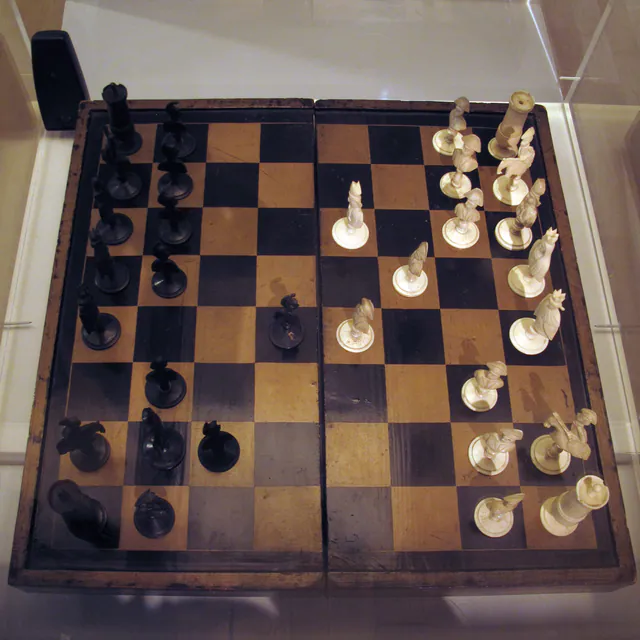 Chessboard and chess pieces used by Napoleon and his entourage at Longwood, Saint HelenaSee it on collecto.rs
A damp stone cottage on a South Atlantic island, four thousand miles from Europe. Rain hits the roof at Longwood House while a former emperor reaches for a wooden piece. Napoleon Bonaparte played hundreds of games of chess during his exile on Saint Helena. He used a few different sets during those six years, some brought with him and others sent by admirers. This particular board and its pieces stayed in his inner circle, handled by the officers and companions who shared his final years.
Most items on this list are hard to find because a publisher printed too few copies or because children threw them away. This chess set sits at a completely different extreme. It is not a commercial product that became rare over time. It is a single historical artifact, tied to one room in 1816.
Finding a game like this does not mean setting a saved search on an auction site or trading with other enthusiasts. You do not hunt for it in the usual sense. It moves between high-end auction houses and private estates once every few decades, if it moves at all. When it does surface, it exists as much in the realm of military history as board game history.
That tension makes single-instance items fascinating to record. A set like this forces you to decide what your collection actually is. Is it a library of playable designs, or a record of human hands touching wood? If you track historical sets in collecto.rs, you can document the provenance, the material details, and the location data alongside the rules. The game itself is standard chess. The story around it is impossible to replicate.
8. Masonic Shogi#
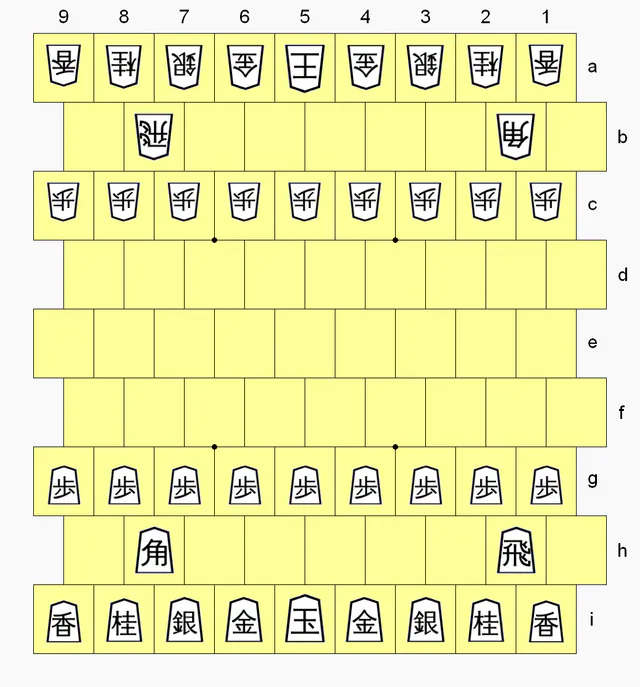 Masonic shogiSee it on collecto.rs
Most board games shrink the world down to a square you can fold in half. Masonic shogi takes a traditional Japanese game of territory and war, then skews the entire grid off-centre. It is a 9×9 shogi variant, but the rows are staggered. Pieces do not sit face-to-face across neat lines. They rest in the offsets, changing how lines of sight and capture paths work across the board.
That geometric tweak makes for a fascinating tactical problem, but the real difficulty is finding a set. Like the multicolor turtle, Masonic shogi leaves almost no commercial paper trail. Where traditional hand-carved sets rely on local timber and natural pigments that never hit a catalog, this variant exists in tiny, localized batches tied to specific fraternal lodges and private printing runs. They were made for a specific room of people, used on specific evenings, and tucked into local cupboards when the night ended. They were never packed into shipping crates or shipped across borders to game shops.
When a niche variant like this leaves its original circle, it rarely enters modern resale channels with a clear name. It shows up in estate clear-outs or regional auctions listed simply as an odd chess set or a broken wooden grid. Identifying one requires knowing what you are looking at before the seller does. There is no official publisher archive to check, no ISBN, and no record of how many boards were carved or printed.
Chasing one is not a matter of outbidding other collectors on an open market. It is a slow process of watching small regional sales, monitoring obscure forum threads, and recognizing a staggered grid in a blurry photograph. The game survived because a few people kept it in a drawer, not because a company kept it in print.
7. Multicolor Turtle#
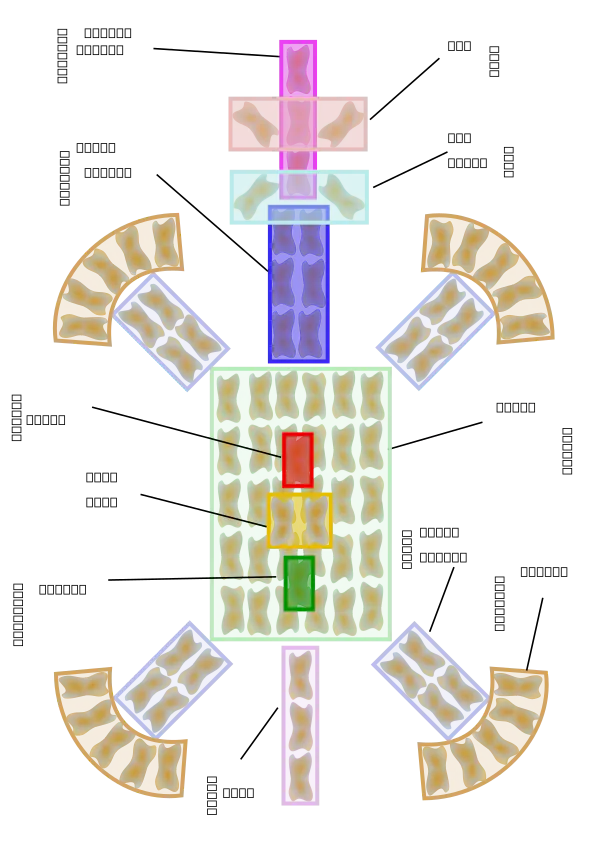 multicolor turtleSee it on collecto.rs
Have you ever tried tracing a board game that never saw a print run, a box, or a factory floor? Mongolian multicolor turtle is built from sheep knucklebones, arranged on a felt mat to form the body, limbs, and shell of a sacred reptile. Players roll dice or additional bones to capture pieces from the frame. It is a traditional game of skill and chance, crafted by hand from natural materials that wear down, get repurposed, or return to the earth. That organic cycle leaves almost no commercial archive or digital footprint behind for modern collectors to follow.
While niche variants like Masonic shogi were at least manufactured in localized batches by small workshops, traditional bone sets belong to an entirely uncentered tradition. No publisher assigned an ISBN. No catalog listed the contents. A set usually exists because a family kept it, or a traveler brought it home in a trunk. When one does surface in an estate sale or an international auction, it rarely carries a maker mark or a recorded year of production. You are looking at aged astragalus bones, hand-dyed in muted pigments, with no paper trail to verify where they spent the last century.
Finding a complete set requires shifting how you search. You are not checking secondary board game marketplaces or waiting for a forum alert to pop up. You are combing through ethnographic auctions, regional folk art listings, and estate collections that might simply label the set as carved bone gaming pieces. The scarcity is not artificial. Nobody retired the dies or let a trademark expire. The pieces were made one by one, played until they scattered, and preserved only by accident or devotion. That makes finding a preserved set less about budget and far more about patience.
6. Partaka#
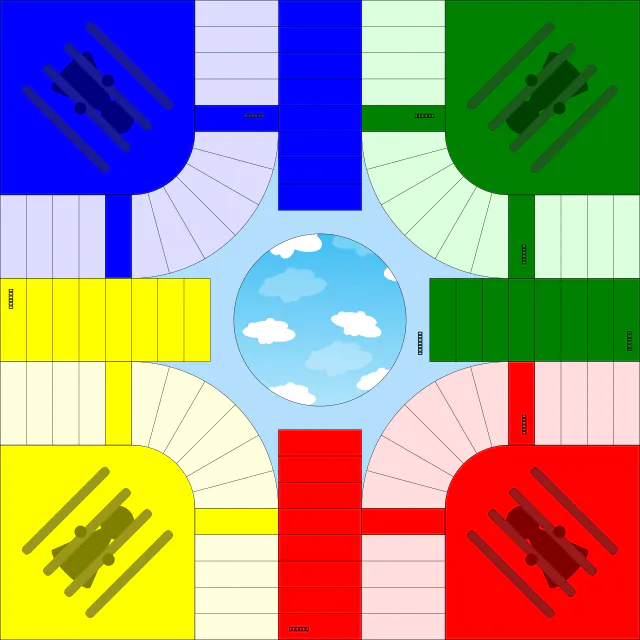 partakaSee it on collecto.rs
A Bogota street vendor sells a wooden board wrapped in newsprint, hand-lettered ink resting under a coat of clear varnish. No distributor listed the run, no trade show hosted the debut, and no rulebook made it to an online PDF archive. Someone bought it, played it on a kitchen table, and tucked it into a closet. Decades later, a collector finding Partaka is looking at a complete blank spot in global tabletop documentation.
Most regional titles never cross an ocean. They circulate through local markets, pass between neighbors, and vanish when a household clears out an attic. Partaka represents the hardest category of board game to track down: the entirely undocumented local release. It does not carry the prestige of an early Klaus Teuber landmark like Barbarossa, which at least left a trail of German publisher catalogs and award nominations. Partaka left almost nothing. To find one outside Colombia requires tracking personal histories rather than auction histories.
Scarcity here is not about short print runs or high manufacturing costs. It is about geography and institutional neglect. Major gaming databases grew out of North American and European hobby circles, leaving vast regions of tabletop history unrecorded. A Colombian game from a small regional run might have sold a few hundred copies, but because none entered the western collector pipeline, it remains functionally invisible to the broader world.
When a copy surfaces, the challenge shifts from finding the box to preserving the context. You are often translating rules from handwritten notes, identifying missing tokens from faint wear patterns on the cardboard, and piece-by-piece reconstructing how the game actually played. You can log your copy on collecto.rs to back up those photos and notes, keeping the record safe even if the physical ink continues to fade.
5. Barbarossa#
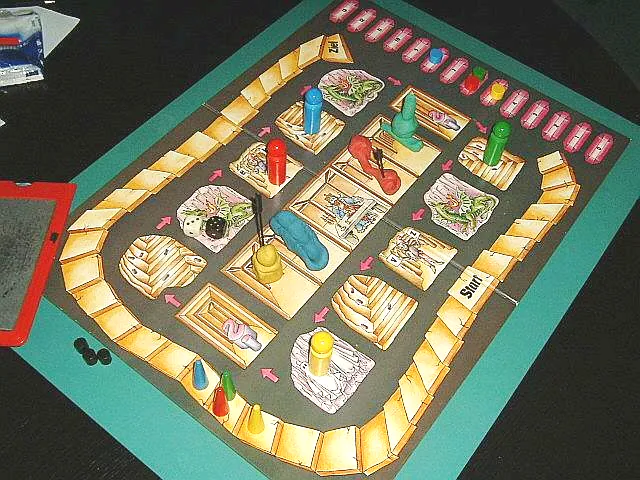 BarbarossaSee it on collecto.rs
You probably think the board game market began in 1995 when Settlers of Catan arrived. It did not. Klaus Teuber was making remarkable things well before that, and his 1988 Spiel des Jahres winner Barbarossa is the precise point where modern Eurogame design found its footing. Franckh-Kosmos published it in Germany with a box cover featuring sculpted clay figures, which was entirely apt. The game asked players to model secret objects out of actual plasticine, then riddle each other about what they had built.
Finding an intact early Franckh-Kosmos printing today is a quiet exercise in frustration. Clay dries out. Tiny wooden tokens migrate into rug fibers. Boxes crushed under the weight of newer acquisitions in family attics rarely survived forty years intact. Unlike Maka Bana, which vanished because a publisher folded and left the rights stranded in court, Barbarossa simply eroded away through decades of actual play. People loved it, played it to pieces, and threw the dried remnants out.
That creates a specific kind of scarcity. Copies exist on secondary markets, but finding one with pliable original clay, complete wooden bits, and a square box lid is a different task entirely. European collectors hold onto pristine copies because they mark the start of Teuber's golden era. They belong in the vault next to early editions of his later masterpieces.
When you finally track down a complete set, you need a record of what is actually inside the box. You can log the condition of the clay, photograph the original wooden pieces, and note the printing year in your collecto.rs account. It keeps the history clear, and you can export your data whenever you want.
4. Maka Bana#
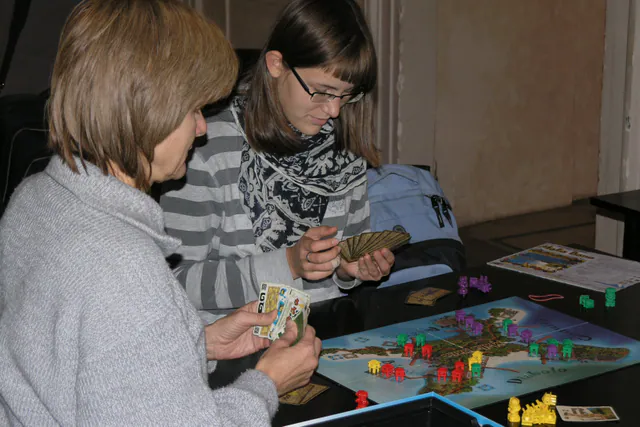 Maka BanaSee it on collecto.rs
A warehouse in France locks its doors for the last time, and three thousand cardboard huts sit in the dark behind them. Tilsit Éditions published Maka Bana in 2003, right at the cusp of the modern board game boom. Within a few years, the publisher vanished. Its catalog went into legal limbo, leaving an exceptionally sharp game of bluffing and island development stranded in the out-of-print wilderness.
Plenty of games become scarce because nobody bought them. Maka Bana became scarce because the company behind it ceased to exist before the rest of the world caught on. Unlike Goldland, where a small European print run created an immediate bottleneck at retail, Maka Bana actually sat on store shelves for a brief window. The trap opened later. Once those initial copies dispersed across Europe, there was no parent company left to order a second printing. Rights reverted to the designer, licensing stalled, and the original physical components became the only ones that would ever exist.
The game itself relies on a stack of painted wooden huts and a set of printed cards used to claim territory on a shared board. Those simple wood and paper pieces are surprisingly vulnerable to time. Cards get lost, wooden markers roll under couches, and boxes split at the corners. Finding a copy with every tropical resort tile and player marker intact takes months of saved searches on secondary market forums.
When you track down an original Tilsit printing, you are holding a specific moment in European publishing history. It represents that mid-2000s era when brilliant mechanical designs could simply evaporate overnight due to corporate liquidation. If you have a complete copy sitting on your shelf, you can log every card and wooden hut in collecto.rs right now. Your data stays yours, and you can export the full inventory whenever you want.
3. Goldland#
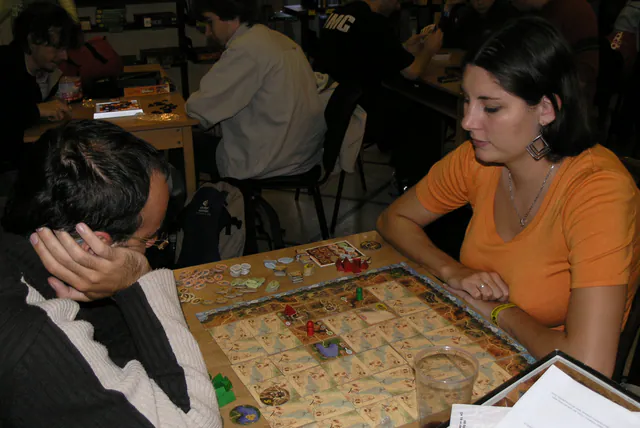 GoldlandSee it on collecto.rs
Three hundred copies or three thousand, the wall is the same once a small German publisher quietly closes its doors. Goldsieber published Wolfgang Kramer's Goldland in 2002, right before the imprint vanished into the larger landscape of European toy conglomerates. The game itself is a modular expedition race where players flip tiles to explore an unknown continent, managing gear and stamina while the map takes shape underfoot. It was built well, packed into a heavy square box, and distributed mostly within Central Europe before disappearing from retail shelves for good.
That brief distribution window created an immediate bottleneck. When a design relies on specific tile layouts and custom wooden markers, a dead publisher leaves no easy path for a second printing. Unlike Cavum, which stalled because its intricate plastic components made modern manufacturing runs financially absurd, Goldland simply ran out of paper and shelf space at the worst possible moment. The mechanics were sound, but the rights went dormant alongside the rest of Goldsieber's catalog, leaving the original print run as the only physical evidence of the design.
Finding a copy today usually means watching secondary markets in Germany or navigating older forum threads where regional collectors trade off duplicate inventory. Complete copies present their own challenge. The game includes dozens of small cardboard tokens and wooden expedition pieces that tend to migrate out of the box over two decades of moves. If you pick up a copy with every tile intact, you hold a clean snapshot of turn-of-the-century German board game design. When you add Goldland to your shelf on collecto.rs, you can mark every token and component present in your set, then export your inventory records whenever you want.
2. Cavum#
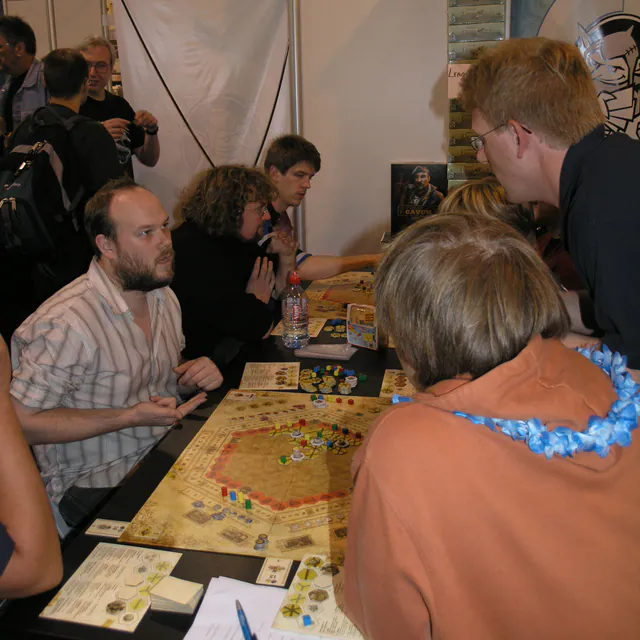 CavumSee it on collecto.rs
Some out-of-print games become expensive because thousands of people want a copy. Cavum is scarce because the factory floor itself stopped making sense. It is a spatial puzzle of underground mining shafts, heavy wooden tokens, and custom plastic connectors designed to track fragile underground networks. When a game relies on bespoke plastic components alongside thick card stock, a reprint is not just a matter of pressing print on a standard cardboard deck. It requires setting up dedicated injection molds and securing specific timber dimensions that modern board game publishers rarely fund for niche titles.
While games like BattleLore suffer when sprawling licensing rights change hands between giant publishers, Cavum faces a quieter, physical dead end. The tooling required to make its sprawling, multi-layered board pieces sits idle or destroyed. A publisher looking at the production costs of custom plastic connectors realizes the math does not work unless they print tens of thousands of units. So the original run sits alone in the wild, slowly migrating between private shelves.
Finding a copy means looking for complete sets where none of the small network pieces vanished during a move in 2008. The box itself is heavy, prone to shelf wear, and frequently missing the precise count of plastic links required to make the subterranean routes actually work. You are not just looking for cardboard that survived a cellar; you are hunting down a complete set of specific hardware components that no factory is ever going to cast again. If your copy is missing four connectors, you do not buy replacements from a web shop. You track down a second damaged box just to harvest the plastic.
1. BattleLore#
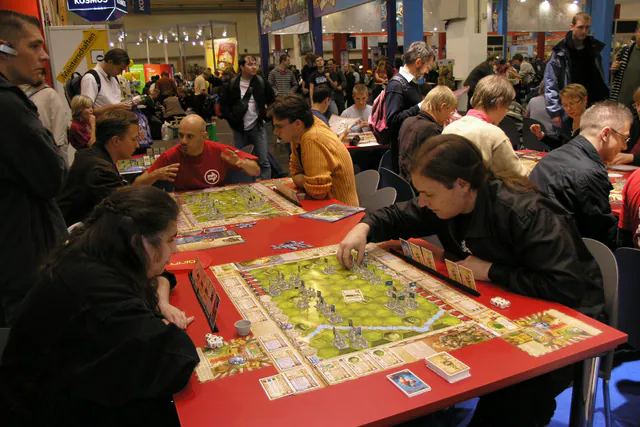 BattleLoreSee it on collecto.rs
Why does a game disappear when thousands of people actively want to play it? Days of Wonder published BattleLore in 2006, building a strategy board wargame around a flexible hex board and miniature armies fighting through a fantasy-tinged Hundred Years' War. The system relied on modular expansions, army packs, and specific terrain tiles that let players build distinct medieval battlefields. It was a massive, tangible ecosystem of plastic and card. Then the rights moved.
When a game line transfers between publishers, the legal handoff rarely includes the original tooling or production dies. Fantasy Flight Games took over the brand and later issued a second edition, but the original Days of Wonder system and its specific expansion continuity were left behind. The molds were retired, the rights fragmented, and the original printings became a closed set. Unlike Cavum, where custom wooden and plastic components simply cost too much for a publisher to re-run, BattleLore vanished because the corporate paperwork stopped matching the physical inventory. The demand never dropped. The legal bridge to make more simply burned down.
Finding a complete first-edition collection today means hunting down individual box sets across secondary markets, hoping a previous owner kept every command card and plastic banner intact. The base game turns up occasionally at estate sales or in forum trade threads, but the late-run expansion packs are far harder to spot. If you are trying to keep track of which expansion figures you own and which terrain packs you are still missing, you can log every box and variant in collecto.rs and export your list whenever you need it.
The impulse to hunt down these titles usually starts with a gap on a shelf or an empty entry in a spreadsheet. Then it becomes about the paper trail. You end up reading translation notes, tracing defunct German publishing houses through public registries, and messaging retired developers who are surprised anyone remembers their 2004 expansion.
That search is half the point. The box eventually arrives in the mail, taped up in second-hand bubble wrap, and you check the components against a hand-written manifest. Maybe the previous owner replaced a lost wooden cube with a plastic token from a different set entirely. That swap is part of the game's life cycle now.
When you finally find the missing piece, it needs a place to stay that outlasts the forum thread where you found it. We built collecto.rs so you can catalog the exact condition of what you tracked down, keep notes on missing parts, and export your data whenever you want.
Once a game enters your space, the hunting stops and the caretaking starts. Until the next alert hits your inbox.
Frequently asked questions#
Why do out-of-print board games become so rare?#
Publishers often lose rights to intellectual property, go out of business, or find reprinting financially unviable due to high component costs. When demand persists after the final print run sells out, secondary market availability shrinks quickly.
How can I tell if a board game is a original printing?#
Check the publisher logo, copyright year, and component materials inside the box. Early printings frequently use different rulebook layouts, punchboard thicknesses, or wooden tokens that changed in later editions.
Where is the best place to log my rare board games?#
Collecto.rs lets you catalog every title in your collection with custom notes, condition tracking, and high-resolution photos. The core features are free and your catalog data remains exportable at any time.