The short version#
True physical scarcity in cinema rarely comes down to price tag alone. These ten titles remain difficult to source because of tangled distribution rights, deliberate suppression, regional isolation, or master tapes that vanished into history.
- The Killer
- Red Beard
- Years of Macau
- El Mazaròl
- In Search of the Blind Eagle
- Friedrich - Ein deutscher König
- Who Killed Captain Alex?
- A Primeira Missa ou Tristes Tropeços, Enganos e Urucum
- Lukas' Child
- M.D. Geist II: Death Force
If you have enough money, you can buy almost any piece of cinema history by Friday. A pristine, original theatrical print of a mid-century classic will turn up at an auction house in London. A limited-run steelbook that sold out in four minutes on a boutique label's website usually exists on eBay for four times its retail price. That is a function of capital, not scarcity. True rarity in physical media is a different problem entirely. It happens when the chain of custody breaks. A film becomes nearly impossible to own when the studio that financed it goes under without selling its library, leaving the rights split between three competing liquidators. It vanishes when a director decides a project was an error and quietly buys back the original elements to prevent a digital transfer. Sometimes a movie exists on exactly one VHS format released exclusively in regional Brazil in 1994, and the magnetic tape inside those surviving shells is slowly degrading into dust. Finding these titles requires a fundamentally different set of tools than setting up a saved search on an auction site. You end up reading translation forums, messaging archivists who do not answer email on weekends, and waiting for estate sales in small towns halfway across the globe. You learn to accept bootlegs sourced from third-generation tape dupes recorded off late-night television broadcasts in the nineties, complete with foreign subtitles burned into the bottom third of the frame. The ten titles below represent this specific end of film collecting. They are difficult to acquire not because someone is holding out for a bigger payout, but because the physical artifacts themselves are clinging to existence by a thread.
| # | Item | Set / Year | Rarity |
|---|---|---|---|
| 1 | The Killer | — | — |
| 2 | Red Beard | — | — |
| 3 | Years of Macau | — | — |
| 4 | El Mazaròl | — | — |
| 5 | In Search of the Blind Eagle | — | — |
| 6 | Friedrich - Ein deutscher König | — | — |
| 7 | Who Killed Captain Alex? | — | — |
| 8 | A Primeira Missa ou Tristes Tropeços, Enganos e Urucum | — | — |
| 9 | Lukas' Child | — | — |
| 10 | M.D. Geist II: Death Force | — | — |
10. M.D. Geist II: Death Force#
 M.D. Geist II: Death ForceSee it on collecto.rs
Three hundred and sixty-five days. That is roughly how long Jerra had between the activation of the Death Force and the near-total extinction of its human population. It is also about as long as some of the smaller boutique anime licensors lasted during the peak of the North American home video boom. When those distributors folded, their master tapes went into vaults, bankruptcy sales, or industrial dumpsters. Most of the remaining humans on Jerra fled to Krauser’s fortress. Anime collectors had to settle for eBay alerts and dead forum threads.
Koichi Ohata’s 1996 sequel picks up with Geist methodically dismantling the apocalypse he started in the original Original Video Animation. Meanwhile, Krauser—designated MD-01—runs a haven using technology that hides his base from the wandering killer machines. The plot exists mainly to set up hyper-detailed mechanical violence, rendered with the precise, hand-drawn linework that made 1990s Japanese animation legendary among physical media archivists.
Finding a copy on tape or disc is not a matter of opening your wallet. Unlike Lukas’ Child, which lived and died on a single, ultra-low-budget VHS run with no optical transfer in sight, Geist II actually saw localized laserdisc and DVD pressings. The problem is the aftermath of those mid-1990s licensing collapse cascades. Rights lapsed. Companies dissolved overnight. Production runs stopped mid-shipment. You are not hunting down a film that nobody wanted; you are tracking a release that slipped through the cracks of a dying distribution model just as the industry shifted formats. When a copy appears in a wild tape stack, the cover art is usually sun-faded, but the magnetic tape inside holds a piece of animation history that digital streaming platforms completely forgot to preserve.
9. Lukas' Child#
 Lukas' ChildSee it on collecto.rs
A plastic clamshell sits under flickering fluorescent lights on the bottom shelf of a suburban video rental shop in 1994. The slipcover features a skull-faced producer named Lukas Armand, flanked by two gofers named Jason and Mad-Dog. The plot is standard direct-to-video fare: young actresses show up for an audition, get locked in the studio basement, and try to survive the night. The tape costs three dollars to rent for two nights. Almost no one rents it. Five years later, the shop closes, and the inventory ends up in a dumpster behind a strip mall.
That complete absence of cultural footprint is precisely why Lukas' Child is so difficult to locate today. While late-stage anime OVAs like M.D. Geist II: Death Force survived through boutique distributors before licensors folded, ultra-low-budget American horror often existed as a single, tiny magnetic tape press. There was no laserdisc release. No DVD distributor ever optioned the rights. No film print remains in a vault to be scanned at 4K resolution.
For home video collectors, this tier of scarcity requires a different kind of patience. You are not waiting for a listed copy to drop in price. You are looking through cardboard boxes under tables at regional swap meets, searching for a master tape that someone recorded over with a college football game. When a physical format dies, the vast majority of its catalog dies with it. Most micro-budget features from the VHS era never made the leap to digital media, leaving only a few hundred magnetic tapes degrading inside black plastic shells. If you find one, you hold onto it.
8. A Primeira Missa ou Tristes Tropeços, Enganos e Urucum#
 A Primeira Missa ou Tristes Tropeços, Enganos e UrucumSee it on collecto.rs
A direct-to-video horror tape from the nineties usually left a paper trail, even if it was just three hundred cassettes sent to rental shops in Ohio. Lukas' Child survived because a distributor packaged it, printed a sleeve, and shipped it out. A Primeira Missa ou Tristes Tropeços, Enganos e Urucum had no such safety net. It belonged to the ecosystem of South American festival cinema, where a film exists in projection booths for six months and then simply stops moving.
Ana Carolina's 2014 satire follows a film crew in the Atlantic Forest trying to reenact the first Catholic mass in Brazil. Mid-scene, three absurd authoritarian agents walk out of the trees, confiscate the camera negatives, and halt production entirely. The narrative mirrors the real-world friction of regional filmmaking. When a project relies on local cultural grants and festival circuits rather than international sales agents, a physical home release is rarely part of the budget. There was no foreign DVD distribution deal waiting at the end of its run. No boutique label picked up the master for an optical disc remaster, and no streaming platform quietly added it to a back catalogue.
That makes finding a physical copy an exercise in tracking down promotional DVD-Rs handed out to press at festival screenings or regional industry markets. These are not commercial products with barcodes and shrinkwrap; they are silver discs with marker on the front, stored in paper sleeves that sat in tote bags ten years ago. Finding one means looking past the usual online marketplaces and talking to people who actually attended those regional screenings. If you manage to catalogue one, you are holding a piece of media that bypassed the home video industry entirely.
7. Who Killed Captain Alex?#
 Who Killed Captain Alex?See it on collecto.rs
Ramon Film Productions burned every master copy of Who Killed Captain Alex? to make space on a single hard drive for their next feature. In 2010, the Kampala studio operated on a budget of roughly two hundred dollars. To recoup costs and clear room for new footage, director Nabwana Isaac Godfrey Geoffrey burned the movie onto blank Rewritable DVDs, walked into the local market, and sold them directly to anyone with a working player. Once a disc changed hands, the studio moved on.
That local disc distribution makes an original Ugandan press of the film nearly impossible to find today. Recognized as the country's first action movie, the story follows the chaotic aftermath of a Kampala police raid that leaves a captain dead. It is famous now as a triumph of DIY guerrilla cinema, edited on homemade computers and packed with practical squibs made from cow blood. Millions eventually watched a version uploaded online years later, complete with live commentary by Video Joker Emmie. But the original physical media remains rooted entirely in those first few dozen hand-sold DVDs.
Festival films like A Primeira Missa struggle with global release deals, but they usually leave a trail of promotional DVD-Rs in institutional archives. Who Killed Captain Alex? skipped the festival circuit and the archive entirely. The studio's entire economic model relied on immediate physical overwrite. If a collector holds an original 2010 disc, they own a piece of media that survived its creator's deliberate attempt to erase it for the next project.
If you own one of those early Ugandan market burns, collecto.rs gives you a place to document the sleeve, log the disc condition, and keep the record permanent.
6. Friedrich - Ein deutscher König#
 Friedrich - Ein deutscher KönigSee it on collecto.rs
You might expect a historical drama about Frederick the Great to sit on a quiet library shelf, easily accessible to anyone with a regional disc player. It isn't. European television productions operate under a different set of physical release rules than low-budget action flicks like Who Killed Captain Alex?. While guerrilla cinema often relies on a hundred home-burned discs handed out at a local screening, state-funded broadcast television relies on tight regional licensing windows. Once the broadcast cycle ends, the master files usually return to an archival vault, leaving the physical market with almost nothing.
Friedrich - Ein deutscher König centers on key moments in the Prussian king's life, from his harsh youth under a despotic father to his military rise. The production takes a deliberate casting risk: Katharina Thalbach plays the older king, while her daughter Anna Thalbach plays him as the young crown prince. It aired on German television to mark the king's three-hundredth birthday, received a brief local DVD run in a standard PAL encoding, and then quietly disappeared from distribution schedules.
That brief release is where the hunt begins. Outside Germany, the disc never received an NTSC conversion or an international distribution contract. If a PAL DVD shows up on a secondary market shelf, the listing usually lasts a few hours before a collector snaps it up. Tracking down a copy means navigating regional German secondhand media shops rather than standard international storefronts. You are looking for a specific, short-lived press run created for a single anniversary broadcast. When you finally log a copy in your catalog, you are holding a piece of broadcast history that the traditional international home video market entirely bypassed.
5. In Search of the Blind Eagle#
 In Search of the Blind EagleSee it on collecto.rs
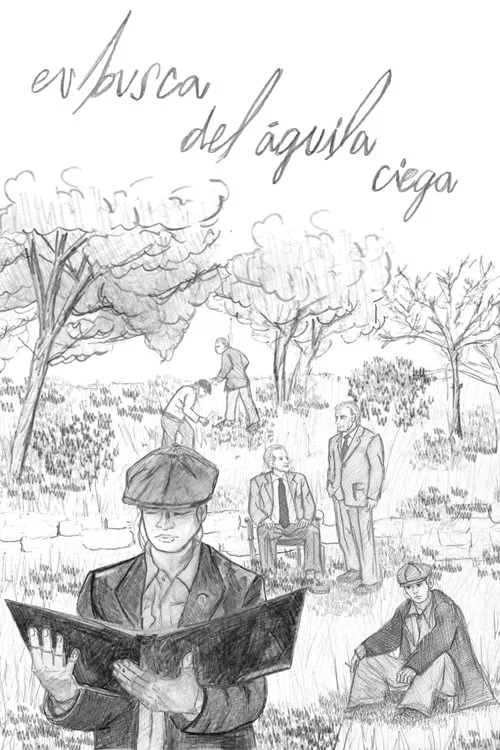
Where do you turn when a film never gets a physical release in the first place? Independent political dramas frequently linger without a distributor after their festival circuit wraps up. If no boutique label picks up the home video rights, the work exists only on a festival hard drive or a filmmaker's personal archive. That is the wall you hit with In Search of the Blind Eagle.
The narrative centers on three young activists who kidnap Juan José Pérez García, a former psychiatrist who used state-sanctioned science to justify political torture during the dictatorship. It is a tense, claustrophobic interrogation that relies entirely on performance and script. Films tackling recent historical trauma like this face an uphill battle for distribution. Mainstream channels view them as commercial risks, while smaller distributors often lack the capital to secure worldwide disc rights. Unlike Friedrich - Ein deutscher König, which at least benefited from a European television broadcast network before fading into obscurity, this title vanished almost entirely once the projector bulb cooled at its last screening.
Finding a copy means looking beyond standard retail channels. You are not scanning online auction sites or browsing estate sales for a factory-sealed DVD. Instead, the search leads to archival bootlegs, festival screener DVDs sent to press members, or obscure digital rips shared in private trade networks. Sometimes a work survives only because a festival programmer kept a promotional burn in a labeled paper sleeve.
When you track down a rare screener or an unreleased file, record every detail you can. Log the source, the audio transfer, the aspect ratio, and the provenance. If you use collecto.rs, you can document these elusive media formats alongside your commercial pressings, ensuring the record stays intact even when the physical media barely exists.
4. El Mazaròl#
 El MazaròlSee it on collecto.rs
A handwritten label on a blank VHS cassette sits in a cardboard box under a wooden table in a village hall outside Trento. No distributor logo. No barcode. Just a regional accent captured on magnetic tape, meant for the sixty people in the room that evening.
Some movies vanish because the studio went under. El Mazaròl stayed small on purpose. Set in early 1900s rural Trentino, the story follows Vanni and Agnese, whose quiet routines break when Luzia arrives carrying scars and a strange claim. She says she escaped the Mazaròl, the red-capped figure of local folklore that leads travelers astray and takes women into the woods. The film treats the legend not as a movie monster, but as a silent pressure on a isolated community.
Local cultural funds backed the production, printed a handful of tapes for community screenings, and moved on. While independent political dramas like In Search of the Blind Eagle often stall out looking for a national distributor after festival runs, regional folklore films like this one rarely attempt the leap in the first place. They are made for a specific valley, sold at local festivals, and stored in private closets nearby. The boundary isn't a legal dispute or a lost master print; it is geography.
Finding a copy means knowing someone whose uncle organized the original screening, or waiting for a local estate sale in the province. The tape rarely leaves the region because the people who own it have no reason to list it online. When you hunt for a film like this, you aren't fighting other collectors on bidding sites. You are asking permission to digitize a family heirloom that happened to be recorded on tape.
3. Years of Macau#
 Years of MacauSee it on collecto.rs
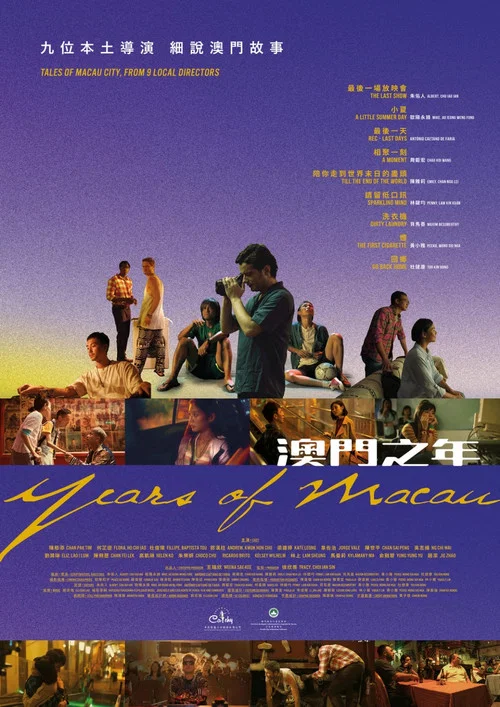
Nine shorts on one disc, pressed once, for a single city. When local cultural funds back an anthology project, the mission ends at the regional border. Global home media distribution is almost never part of the grant proposal. That makes Years of Macau fundamentally different from a title like Red Beard, where the scarcity comes from lapsing corporate rights between boutique labels. Here, the physical object was scarce on the day it left the manufacturer.
Nine local directors—most born and raised in Macau—each took a different era and location to document their changing city. The segments range from "The First Cigarette" and "Dirty Laundry" to "Till the End of World." They tell distinct stories, but together they form a single portrait of a place undergoing massive shift, captured by the people living through it. The filmmakers used the language of cinema to preserve personal histories that larger studio releases simply ignore.
Because the release served a specific civic moment, the physical pressing was tiny. Copies went to crew, local archives, and a handful of regional screenings. They were never packed into crates for overseas distributors or listed in international mail-order catalogues. Finding a copy today means tracking down someone who was in the room when the project launched, or monitoring regional secondary markets where a copy surfaces once every few years.
When a film relies entirely on municipal goodwill rather than commercial distribution, the disc itself becomes the only complete record of the project. If you manage to find one, tag the director names and the anthology title in your collecto.rs library so other film archivists can trace the provenance of the pressing.
2. Red Beard#
 Red BeardSee it on collecto.rs
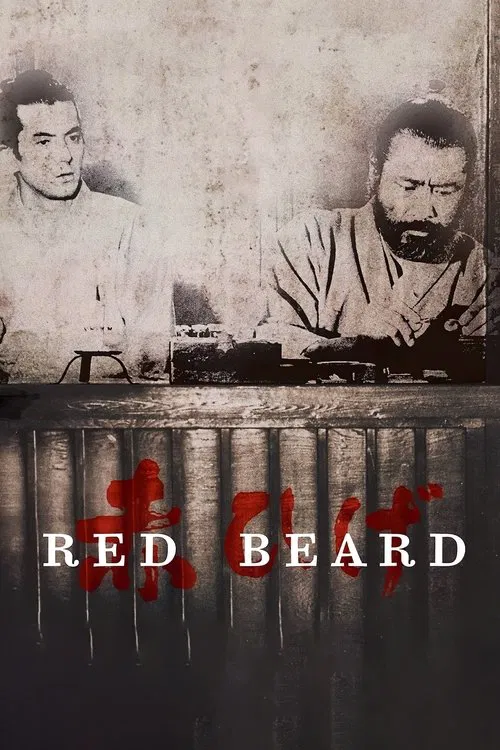
Akira Kurosawa is hardly an obscure director. You can walk into almost any physical media shop and find a dozen of his titles on pristine Blu-ray, backed by pristine transfers and exhaustive commentary tracks. Red Beard is the glaring exception.
His 1965 drama follows Noboru Yasumoto, a young doctor fresh out of medical school with grand ambitions of treating the city's wealthy elite. Instead, he gets posted to a impoverished rural clinic run by Kyōjo Niide, the formidable physician nicknamed Red Beard. Yasumoto rebels against the assignment, refusing to wear his uniform and sulking through his shifts. Niide simply responds with patience, handing his arrogant apprentice the unglamorous cases—including the rehabilitation of a traumatized young woman rescued from a local brothel.
It is a massive, compassionate epic, and Kurosawa's final collaboration with Toshiro Mifune. Yet unlike The Killer, which sits stranded in distribution hell because of lost master elements, Red Beard suffers from a far more mundane physical media trap: the slow lapse of boutique rights. The Criterion Collection issued a bare-bones DVD in 2002, but the disc went out of print as distribution contracts expired. While other Kurosawa classics received 4K restorations and high-definition upgrades, Red Beard quietly slipped off store shelves.
Finding a copy today means hunting down that early, non-anamorphic DVD or tracking down obscure international releases with questionable subtitle tracks. The film itself is a masterwork about the quiet work of healing. The irony for physical collectors is that the film itself needs a similar intervention—rescued from the purgatory of dead licensing agreements and brought back onto a modern disc.
1. The Killer#
 The KillerSee it on collecto.rs
A Hong Kong film director walks into a vault with his camera negative, hands it to a vault manager, and receives a receipt that becomes worthless ten years later when the studio goes bankrupt. John Woo's 1989 masterpiece The Killer did not vanish because people forgot it existed. It vanished because the legal chain of custody dissolved while the physical master elements degraded in a climate-controlled room nobody was paying to air-condition.
The story follows Jeffrey, a mob assassin who accidentally blinds a nightclub singer named Jennie during a job. He takes one last contract to pay for her eye surgery, gets betrayed by his handler, and forms an unlikely alliance with the detective hunting him down. It is the definitive heroic bloodshed picture, full of two-gun slide choreography and white doves. Yet finding a legitimate copy on a modern disc format requires an advanced degree in global distribution rights.
Unlike Red Beard, where you can at least stream a clean archival print while waiting for a boutique label to renew its license, The Killer sits in a rights bog. The original theatrical negative suffered severe damage decades ago. Subsequent DVD and Blu-ray releases relied on secondary broadcast masters or upscaled tape sources, often marred by heavy digital noise reduction or incorrect color grading. Then the home video rights fell into a complex corporate liquidation, effectively freezing any legitimate restoration effort in its tracks.
Collectors end up hunting down long-out-of-print laserdiscs or early Criterion DVDs just to get a transfer that respects the original film grain, even if it is locked in standard definition. When a physical format dies out, we usually lose the obscure B-sides first. Losing the crown jewel of an entire genre takes a specific cocktail of lost paper and lost film.
Collecting films like these forces you to accept a compromise between condition and existence. You rarely get the pristine four-K restoration from the original camera negative, color-corrected by the cinematographer and packaged with a sixty-page booklet. More often, you get a noisy audio track, blown-out highlights, and a video file hosted on a server that might be gone by next morning. The work of tracking them down is mostly invisible. It lives in spreadsheets, forum threads, and the slow process of verifying whether a stray disc listed on a local classifieds site is an official pressings or a burned DVD-R. Once you locate a copy, keeping track of where it came from and what version you actually hold becomes the real challenge. You need a place to log the lineage, note the region code, and document the audio tracks before the context slips away. That is why we built collecto.rs. It gives you a clean, structured home to record what you have, catalog the oddities in your collection, and back up your data whenever you want. The search for lost cinema is long and quiet. Having your shelf in order makes the hunt worth the effort.
Frequently asked questions#
Why do some physical movies become so hard to find?#
Physical releases go out of print for several practical reasons. Distribution rights expire or split between competing entities, boutique labels lose licenses, studio vaults get reorganized, or original camera negatives degrade. In extreme cases, regional releases never receive international distribution, leaving physical copies tied to specific geographic markets.
Are bootlegs or digital rips considered valid for a physical film collection?#
Every collector sets their own boundaries. Some accept fan restorations or VHS transfers when no official media exists, treating them as placeholders. Others stick strictly to licensed studio pressings, original tape stock, or official theatrical reels.
How can I check if a film has an official physical release?#
Look up regional distribution databases, check boutique home video label catalogs, or inspect distributor press releases. Comparing regional disc specifications usually reveals whether a legit master was ever pressed to disc or tape.