The short version#
Across two centuries of publishing, Routledge treats specialized scholarship not as niche footnotes, but as essential foundations for understanding history, language, and culture.
- The notebooks of Simone Weil
- A Modern English Grammar on Historical Principles, Part 4: Third volume (Otto Jespersen: Collected English Writings)
- Technological Choices
- Music and Performance in the Book of Hours
- Discourses of difference
- Teaching Malcolm X
- The Christopher Bollas Reader
- Cynics, Paul, and the Pauline churches
- Secret Agents: The Rosenberg Case, McCarthyism and Fifties America (CultureWork: A Book Series from the Center for Literary and Cultural Studies at Harvard)
- Roberto Busa, S. J. , and the Emergence of Humanities Computing
You can spot an academic press book from across a room. The trim size is slightly austere. The jacket avoids glossy persuasion. Inside, the type is set for endurance rather than speed, backed by apparatus built to survive decades of cross-referencing. For nearly two hundred years, Routledge has operated on a specific premise: scholarship does not exist to flatter popular taste, nor is it a dry footnote tucked away after the trade editions finish speaking. It is the groundwork.
George Routledge began publishing in London in 1836. His early business thrived on cheap railway reprints, but the firm evolved by steadily absorbing houses that took the humanities seriously. When Kegan Paul, Trench, Trübner & Co. joined the fold in the early twentieth century, the catalog gained a distinct weight. It became the English-language home for thinkers who dismantled and rebuilt how we talk about mind, language, and power. Sigmund Freud, Ludwig Wittgenstein, and Bertrand Russell appeared under these colophons, not as prestige ornaments, but as working texts for students and working scholars.
Collecting these volumes comes with a particular set of pleasures and headaches. Print runs are calibrated strictly for university libraries, which keeps production figures modest and makes surviving copies in fine cloth relatively uncommon. Stamped boards sit beneath utilitarian paper jackets that tear easily under heavy use. Many titles spent forty years circulating on university reserve shelves, accumulating date stamps and penciled marginalia from readers who were arguing with the text in real time.
Whether you collect early Kegan Paul bindings or modern critical theory paperbacks, the through-line is clear. These are books that treat deep specialization as essential cultural memory. They do not summarize ideas for easy consumption. They construct the tools that make the broader conversation possible in the first place. Here are ten titles that show what that commitment looks like on paper.
| # | Item | Set / Year | Rarity |
|---|---|---|---|
| 1 | The notebooks of Simone Weil | Routledge | — |
| 2 | A Modern English Grammar on Historical Principles, Part 4: Third volume (Otto Jespersen: Collected English Writings) | Routledge | — |
| 3 | Technological Choices | Routledge | — |
| 4 | Music and Performance in the Book of Hours | Routledge | — |
| 5 | Discourses of difference | Routledge | — |
| 6 | Teaching Malcolm X | Routledge | — |
| 7 | The Christopher Bollas Reader | Routledge | — |
| 8 | Cynics, Paul, and the Pauline churches | Routledge | — |
| 9 | Secret Agents: The Rosenberg Case, McCarthyism and Fifties America (CultureWork: A Book Series from the Center for Liter | Routledge | — |
| 10 | Roberto Busa, S. J. , and the Emergence of Humanities Computing | Routledge | — |
10. Roberto Busa, S.J., and the Emergence of Humanities Computing#
 Roberto Busa, S. J. , and the Emergence of Humanities ComputingSee it on collecto.rs
In 1949, an Italian Jesuit priest named Roberto Busa walked into the New York offices of Thomas J. Watson, the founder of IBM. Busa wanted to index every word written by Thomas Aquinas. That was eleven million words of medieval Latin. Watson told him machines could not process poetry or scripture. Busa picked up a promotional card from Watson's desk that read, "The difficult we do right away; the impossible takes a little longer." He handed it back to Watson. The machines were booked.
This Routledge volume documents that improbable intersection of punch cards and theology. Busa spent the next three decades feeding millions of paper slips into early mainframes. His work founded what we now call the digital humanities, long before the phrase had an academic department attached to it. Routledge publishes heavily across media history and technology studies, but this title stands apart because it treats digital methodology as an artifact of mid-century labor.
Where another entry on this list, Secret Agents, dissects the mid-century American surveillance state through political culture, Busa's story reveals the quieter technological machinery quietly taking shape in the exact same era. Both books reflect Routledge's appetite for archival grit over broad theory. While Secret Agents sifts through courtroom transcripts and ideological panic, this study looks at how a scholar taught vacuum tubes to parse syntax.
For a shelf focused on the history of the book, it is an essential piece of connective tissue. It tracks the exact hinge where print scholarship met algorithmic indexing. Busa's index was not an attempt to replace human reading. It was a tool built by someone who cared about Latin grammar enough to ask an engineer for help. Routledge preserved that specificity in print.
9. Secret Agents: The Rosenberg Case, McCarthyism and Fifties America#
 Secret Agents: The Rosenberg Case, McCarthyism and Fifties America (CultureWork: A Book Series from the Center for Literary and Cultural Studies at Harvard)See it on collecto.rs
Most accounts of the Cold War treat the red scare like weather. They treat it as a broad, ambient fog that settled over Washington and Hollywood alike. This collection works in the opposite direction. It builds its analysis from the ground up, pinning the era's ideological panic to specific courtroom transcripts, trial exhibits, and the media spectacle surrounding Julius and Ethel Rosenberg.
That granular approach sets it apart from earlier entries on this list. Where our look at Roberto Busa traced how institutional backing birthed digital humanities through punch cards, this volume shows how institutional paranoia fractured postwar American culture. It came out through CultureWork, a series from Harvard's Center for Literary and Cultural Studies. Routledge used that imprint to test how literary theory could dismantle political history. The contributors take the Rosenberg case not as an isolated tragedy, but as the raw material mid-century America used to define loyalty, gender, and domestic subversion.
For a print library focused on critical theory or twentieth-century politics, the physical book represents a distinct editorial era. In the 1990s, Routledge backed cultural studies projects that treated popular paranoia with archival rigor. The essays pull apart declassified memos and pop culture artifacts with equal care. They do not settle for tidy conclusions about innocence or guilt. Instead, they examine how the state constructed evidence and how the public consumed it.
Keeping track of specialized university series like CultureWork can get messy, especially when imprints shift between co-publishers. On collecto.rs, you can tag the series name directly in your metadata and note which volume numbers sit on your shelf. You can export those lists whenever you need a clean inventory of your academic press holdings.
8. Cynics, Paul, and the Pauline Churches#
 Cynics, Paul, and the Pauline churchesSee it on collecto.rs
What happens when early Christian correspondence collides with wandering street philosophers? F. Gerald Downing tackles that puzzle directly in this volume, setting Pauline texts right beside Hellenistic Cynic traditions. The pairing might look unusual on a shelf, yet it fits Routledge's editorial habits well. The press thrives when scholars place two distinct intellectual traditions in the same room. Rather than treating theology as a sealed archive, Downing reads Paul through the lens of Diogenes's intellectual heirs. The result strips away centuries of later church dogma to look at how first-century listeners heard these letters.
Where Secret Agents relies on public records to dismantle postwar political orthodoxies, this book works on classical antiquity with a similar archival curiosity. Both show Routledge favoring close textual scrutiny over sweep and sentiment. Downing tracks shared idioms, survival strategies, and shared social critiques. Cynics questioned societal norms with coarse public gestures. Early Christians rejected civic religious obligations with their own stubborn rituals. Downing maps those overlaps without pretending the two groups were identical.
Academic monographs of this sort rarely stay in print as trade paperbacks. They appear in modest initial runs, heavily footnoted, meant for research libraries and specialized shelves. On a physical bookshelf, the Routledge spine signals that specific intersection: rigorous classicism meeting early church history. If your shelves skew toward religious studies, Hellenistic philosophy, or the history of ideas, this title bridges those sections neatly. You can log it in your collecto.rs catalog under early Christianity or Greco-Roman philosophy, and either placement makes sense. It is the sort of academic study that sharpens your reading of an entire shelf, quietly redefining where religious history ends and ancient philosophy begins.
7. The Christopher Bollas Reader#
 The Christopher Bollas ReaderSee it on collecto.rs
A consulting room in London holds two chairs and a low table between them. Outside, rain hits the sash window, but inside, the work is about what people carry without knowing the words for it yet. Christopher Bollas spent decades listening in rooms like that. When Routledge gathered his key essays into a single volume, they preserved that specific, quiet atmosphere alongside the clinical theory.
Routledge has long served as a primary home for British psychoanalytic literature. The press builds reference formats meant to survive daily consulting rooms and crowded seminar desks alike. Where Cynics, Paul, and the Pauline churches turns the press's focus outward across ancient philosophical disputes, this collection looks inward at the mechanics of the self. Bollas writes about idiom, character, and what he termed the unthought known: the things we feel deeply before we can articulate them. His prose reads with an uncommon lucidity that resists dry jargon.
The volume sits well on a shelf dedicated to psychological history. Routledge designs these trade paperbacks for heavy pencil notes, marginal tabs, and dog-eared corners. You see the binding hold up after years of opening flat on a desk, which matters when an author writes sentences you need to reread three times. If you track twentieth-century psychoanalytic theory or just appreciate how an independent imprint constructs durable intellectual archives, this volume does the heavy lifting. You can log it in your collecto.rs library under a custom tag for independent theory imprints, then export the citation data whenever you want to compare publication runs.
6. Teaching Malcolm X#
 Teaching Malcolm XSee it on collecto.rs
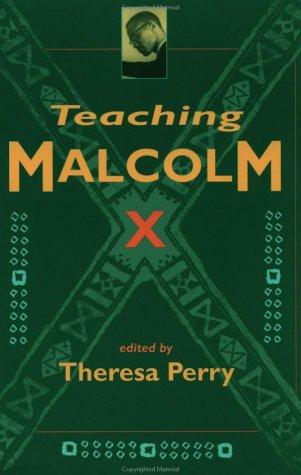
Six hundred pages of lesson plans, primary source analyses, and critical essays make up this volume, edited by Theresa Perry in 1996. It appeared at a distinct moment in academic publishing. Spike Lee's film had reignited wide public debate four years earlier, yet secondary school and university curricula still struggled to treat Malcolm X as anything more than a foil to Martin Luther King Jr. Routledge took a different path. Instead of issuing another standard biography or a quick anthology of speeches, the press released a pedagogical handbook meant to alter how teachers handled radical Black political thought in daily classroom practice.
That choice reflects a specific current in Routledge's modern history. Where Discourses of Difference approached contested cultural terrain through the detached apparatus of postcolonial theory, Teaching Malcolm X aimed directly at the chalkboard. The book gathers contributions from historians, secondary teachers, and community activists. They examine the Autobiography, the speeches from the final year of his life, and the persistent media distortions that followed him. It provides actual course outlines alongside tough assessments of student resistance. Routledge printed it in their standard trade paperback format of the era: high-bulk cream paper, a stark cover graphic, and a durable glued binding designed to survive a school year inside an overstuffed shoulder bag.
Academic collectors often neglect pedagogical titles in favor of pure monographs or prestigious critical readers. That impulse misses how ideas actually travel. Presses rarely sustain high theory without the steady machinery of classroom texts that translate abstract debates into routine teaching. This book captures the publisher doing precisely that ground-level work during the mid-1990s multiculturalism debates. If your shelves hold the theoretical side of Black studies from this period, adding the books that guided the actual teaching gives the whole run a clearer context.
5. Discourses of Difference#
 Discourses of differenceSee it on collecto.rs
Travel writing was never an innocent record of scenery. For decades, readers treated Victorian women travelers as eccentric outliers who simply packed sketchbooks, tea tins, and petticoats to escape domestic boredom. Sara Mills dismantled that polite fiction in 1991. Her text examined how figures like Mary Kingsley, Alexandra David-Néel, and Nina Mazuchelli wrote within an empire that welcomed their reports while constantly limiting their authority. They were neither uncomplicated imperial agents nor pure rebels. They operated inside the friction between colonial power and gender restrictions, and their prose reflected every seam of that compromise.
This title showcases Routledge at the moment it helped assemble modern postcolonial critique and feminist geography. The press did not just publish safe overviews. It pushed critical theory into specific textual archives. Where Teaching Malcolm X takes contested modern history into the room where people learn, Discourses of Difference focuses on the language on the page, showing how imperial authority was narrated, questioned, and quietly reinforced through syntax and tone.
Collectors who trace academic publishing know the distinct feel of Routledge volumes from the early nineties. The stark covers, the purposeful typography, and the sheer intellectual confidence of the cultural studies list define an era when literary analysis expanded its remit. A copy on the shelf sits at a turning point. It marks the transition where colonial memoirs ceased to be dusty curiosities and became primary evidence of how language exercises power. If you track critical theory or Victorian history, this book belongs next to your primary travel accounts as an essential key to how those expeditions were built and remembered.
4. Music and Performance in the Book of Hours#
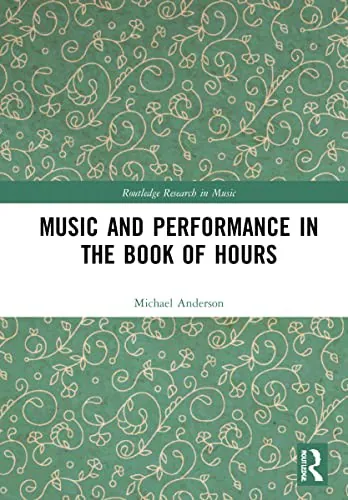 Music and Performance in the Book of HoursSee it on collecto.rs
Gold leaf catches candlelight across parchment, but the page was never meant to be silent. While a Book of Hours fits comfortably in one hand as a private devotional manual, its margins hum with lutes, bells, and choir stalls. This Routledge study peels back the visual polish of late medieval prayer books to retrieve the acoustic environments that shaped them. The authors do not just look at miniatures. They listen to the liturgy painted into the borders, reconstructing how readers chanted, gestured, and moved through daily devotions.
That attention to physical use connects directly to Technological Choices, which examined artifacts through archaeological action rather than passive design. Here, Routledge treats illuminated vellum as sound technology. A painted hymn served as notation, prompt, and memory aid all at once. The press excels when it commits to this kind of granular forensic work. It avoids broad generalities about medieval piety in favor of how specific fingers turned decorated leaves to cue sung prayers.
For anyone holding academic monographs on paper, Routledge’s specialized editions carry a quiet weight. They are built for longevity, often bound in plain black cloth with foil-stamped spines that sit upright on study shelves. You find them cited across musicology and codicology alike because they resolve an old split between art history and audio history. The scholarship refuses to treat sacred illustration as an art gallery trapped on sheepskin.
If you track medieval manuscripts, liturgical music, or specialized humanities runs on collecto.rs, this title belongs near your source material. It bridges visual culture and vanished acoustics in a way few monographs manage. It reminds us that reading in the fifteenth century was often a noisy, bodily trade.
3. Technological Choices#
 Technological ChoicesSee it on collecto.rs
Most histories of engineering treat tools as inevitable solutions to practical problems. Pierre Lemonnier’s edited volume treats them as social arguments. Instead of tracking progress along a tidy timeline, the contributors pull metallurgy, pottery, and hunting gear into the mess of human choice. A technique survives not because it works best in the abstract, but because a specific group of people decided it fit their world.
That perspective makes the book an essential pivot in Routledge’s archaeology and anthropology lists. The volume gathers fieldwork from Papua New Guinea, sub-Saharan Africa, and industrial workshops to ask why societies refuse efficient options or cling to cumbersome ones. It replaces mechanical determinism with material culture. Where Otto Jespersen’s grammar volumes approach syntax by assembling thousands of empirical specimens into an ironclad reference work, this collection uses fragmented physical remains to show how arbitrary human habits actually are.
Routledge backed this interdisciplinary shift when the boundaries between material culture, sociology, and archaeology were still heavily policed. The contributors share an insistence on examining the physical artifact alongside the gesture that produced it. You read about the exact angle a potter holds their hands, followed by how that gesture ties directly to kinship rules or ritual law.
For collectors of academic monographs, this title holds its value through method rather than sheer exhaustiveness. It marked a point where technology studies stopped belonging exclusively to historians of science. Finding a copy in good condition takes some patience, particularly with intact bindings from the early library runs. If you track academic imprints across the late twentieth century, this belongs on the shelf between anthropology monographs and the sociology of technique.
2. A Modern English Grammar on Historical Principles, Part 4#
 A Modern English Grammar on Historical Principles, Part 4: Third volume (Otto Jespersen: Collected English Writings)See it on collecto.rs
Why spend seven dense volumes mapping every shift in English syntax from the Middle Ages to the twentieth century? Because Otto Jespersen understood that a living tongue resists neat rules imposed from above. Part four of his monument, titled Syntax (Third Volume), zeroes in on the architecture of modern speech. It traces time, tense, and aspect not as abstract schoolroom decrees, but as choices made by actual speakers across centuries. Where Pierre Lemonnier's Technological Choices approaches innovation through the physical lens of potsherds and hand tools, Jespersen treats every subordinate clause as its own handmade artifact. Language here is practical machinery, built and rebuilt by human hands.
Routledge gathered these writings together under its Collected English Writings imprint, keeping Jespersen's vast archive accessible to anyone tracking the roots of contemporary idioms. The Danish linguist had an astonishing ear for vernacular quirks. He pulled his evidence straight from stage comedies, courtroom records, and kitchen-table letters. For anyone building a shelf of classic scholarship, having a single constituent volume like this one opens up a distinct problem: does it sit alone as a masterclass in syntactic theory, or do you start hunting down the other six parts to complete the run?
That tension makes individual volumes of large reference works compelling to hold. Jespersen did not write dry reference books meant to sit behind glass. His prose remains quick, curious, and remarkably conversational, arguing with dead grammarians while dusting off forgotten seventeenth-century phrases. Routledge kept that conversational energy intact across hundreds of pages of intricate comparative tables. You end up with a working manual of how we came to say what we say, captured mid-stride by one of the sharpest observers the discipline ever had.
1. The Notebooks of Simone Weil#
 The notebooks of Simone WeilSee it on collecto.rs
Before leaving France for America in 1942, Simone Weil entrusted her notebooks to the philosopher Gustave Thibon with explicit instructions to do as he saw fit with them. She was thirty-three, suffering from severe exhaustion, and entirely unconcerned with safeguarding a literary legacy. She never saw the notebooks again. When Routledge published the English translation in two dense volumes, it did not present a polished philosophical treatise. It printed the actual texture of a human mind working in solitude: sudden aphorisms, geometric sketches, Sanskrit transcriptions, and raw moral inquiries jotted down between factory shifts and exile.
Where Otto Jespersen’s multi-volume grammar on our list represents Routledge as an architect of systematized scholarship, Weil’s notebooks show the publisher doing something far more radical. They committed substantial resources to thought that refused polish. There are no safe conclusions here. Weil writes about attention, affliction, and gravity with an uncompromising intensity that dismantles academic detachedness. Reading them feels less like consulting an authority and more like standing next to someone thinking on paper in an empty room.
For readers who value intellectual paper trails, this publication anchors twentieth-century moral philosophy by showing its scaffolding. You can see her test an idea, abandon it mid-sentence, and return three pages later from a completely different angle. The physical editions reflect this honesty. They demand space on a shelf, not because they offer tidy answers, but because they preserve the working tools of an exceptional intellect. Cataloging a work like this on collecto.rs is a practical way to keep track of its specific editions, translations, and printing histories alongside your broader philosophy shelf. It belongs at the top of this list because Routledge chose to preserve the process, not just the product.
A shelf of university press titles can feel imposing. The spines are uniform, the titles are uncompromising, and the indexes take their jobs seriously. Yet living with these books changes how you read the wider culture. An argument made in a modest three-hundred-page monograph often spends twenty years quietly diffusing into mainstream journalism, school curricula, and everyday vocabulary. By the time a concept feels familiar, the book that mapped it out has usually been sitting on a library shelf for a generation.
Collecting this material is fundamentally an exercise in preservation. Because many of these print runs were split between university libraries and specialist departments, clean copies without institutional stamps or defaced endpapers are genuinely hard to find. The cloth wears thin at the head of the spine. The early jacket paper was rarely treated for longevity. When you track down a sound copy, you are keeping a physical record of how a field learned to think about itself.
If your own shelves are starting to fill with critical readers, grammatical surveys, or post-war cultural studies, keep track of them. You can log publication dates, variant imprints, and jacket condition on collecto.rs. The basic tools are free, your data exports whenever you want it, and the system is built to handle detailed bibliographic records without flattening them into generic book data. These titles earned their place through rigorous work. They deserve a catalog that pays the same attention to detail.
Frequently asked questions#
Why do collectors seek out Routledge publications?#
Routledge has operated since 1836, building a reputation for foundational works in the humanities, social sciences, and linguistics. Collectors look to Routledge for comprehensive multi-volume studies, authoritative source translations, and critical editions that define whole academic disciplines. Their editorial standard makes them durable reference pieces.
What makes academic press titles appealing to book collectors?#
Academic press editions typically feature low print runs, high editorial scrutiny, and specialized focus. Unlike mass-market bestsellers, scholarly volumes often serve as the sole printed authority on a specific subject for decades. They hold real utility on a shelf alongside historical significance.
How should I catalog scholarly editions and multi-volume sets?#
Track the publication date, specific volume number, series title, and printing state. Many academic titles receive later paperbacks or print-on-demand reprints. Recording the exact hardcover printing or series entry on collecto.rs ensures you maintain a clean, accurate inventory.