The short version#
True scarcity comes from fragile production runs, niche technical printings, and low initial distribution rather than famous author names.
- Dass die Musik nicht ohne Wahrheit leben kann: Theater in Berlin nach 1945 - Musiktheater. Museum Nicolaihaus, 30. November 2001 bis 1. April 2002
- Das Messiasgeheimnis in den Evangelien
- Apparatus Biblicus
- Where in the World Is Carmen Sandiego?
- A guide to equine acute laminitis
- Bobby Fischer Teaches Chess
- Alberto García-Alix, 1978-1983
- Typographic Knitting
- Dornier 335
- Resin-treated, laminated, compressed wood
The hardest books to find do not usually have famous names on the spine. They are rarely the canonical first editions that show up in auction house press releases or behind museum glass. Those books are expensive, but expense and scarcity are different problems. If you have the capital, you can buy a first printing of The Great Gatsby by next Tuesday. The transaction requires money, not hunting.
True scarcity lives in the blind spots of the publishing industry. It happens when a book was never meant for a general audience, or when the physical materials used to make it were doomed from the start. A technical manual for a single wartime aircraft fuselage, printed in a run of four hundred copies on cheap paper, is fundamentally harder to locate than a signed 19th-century novel. The novel was preserved because someone thought it was art. The manual was thrown in a crate, used with greasy hands, and left in a damp hangar.
Publishers create scarcity through indifference. They print three hundred copies of a translation about 1st-century biblical scholarship because three hundred scholars asked for it. They issue trade paperbacks through door-to-door school book fairs with bindings made of glue that dries out and turns to powder in fifteen years. They bind reference works in laminated wood treatments that warp when the humidity shifts, destroying the spine from the inside out.
When a book exists in single digits across private shelves, it usually survived by accident. Someone kept it because it was too specific to throw away, or because it sat on the bottom shelf of a university department library that forgot to clear its inventory. Finding these objects requires looking past the curated canon and tracking down the strange, fragile runs that slipped through the cracks.
| # | Item | Set / Year | Rarity |
|---|---|---|---|
| 1 | Dass die Musik nicht ohne Wahrheit leben kann: Theater in Berlin nach 1945 - Musiktheater. Museum Nicolaihaus, 30. Novem | Henschel Verlag in der Dornier Medienholding | — |
| 2 | Das Messiasgeheimnis in den Evangelien | Vandenhoeck & Ruprecht | — |
| 3 | Apparatus Biblicus | printed by James Bettenham: and sold by James and John Knapton; Robert Gosling and Thomas Woodward; and John Clarke | — |
| 4 | Where in the World Is Carmen Sandiego? | Troll Communications | — |
| 5 | A guide to equine acute laminitis | Veterinary Learning Systems | — |
| 6 | Bobby Fischer Teaches Chess | Xerox Learning Systems | — |
| 7 | Alberto García-Alix, 1978-1983 | Ardora Ediciones | — |
| 8 | Typographic Knitting | Princeton Architectural Press | — |
| 9 | Dornier 335 | Monogram Aviation Publications | — |
| 10 | Resin-treated, laminated, compressed wood | U.S. Dept. of Agriculture, Forest Service, Forest Products Laboratory | — |
10. Resin-Treated, Laminated, Compressed Wood#
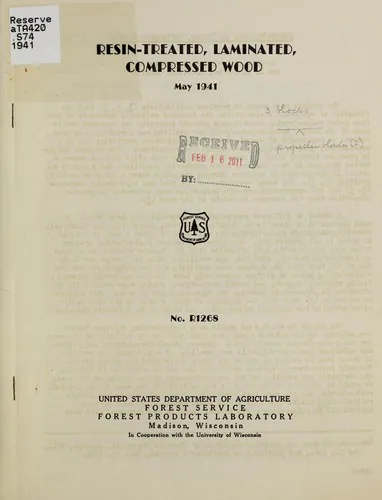 Resin-treated, laminated, compressed woodSee it on collecto.rs
Zero library systems cataloged it upon release in 1943. The U.S. Forest Service published this technical bulletin as a working document for wartime manufacturing, not a book for shelf storage. Factory workers kept it on grease-stained workbenches alongside glue pots and hydraulic presses. When the production run ended, most copies went straight into industrial scrap bins.
Paper shortage regulations meant the Forest Products Laboratory printed these bulletins on thin, unbleached stock. The content covered high-pressure synthetic resin bonding, a process critical for building lightweight wooden aircraft components during the war. It was pure reference material. Nobody thought to archive a pamphlet on chemical curing times when the immediate goal was building airframes faster.
While the Dornier 335 flight manual sits higher on this list because private aviation historians hoard every known copy, this forestry bulletin is scarce for a more mundane reason: almost every copy was literally worked to pieces. Wood dust, synthetic adhesives, and shop floor moisture destroyed the paper long before anyone considered saving it. Finding one without delaminated covers or missing pages takes years of watching surplus auctions.
Government publishing guidelines at the time dictated short runs based on immediate contractor demand. Once those contracts expired, the plates were melted down. The information survived in later engineering textbooks, but the original physical bulletin remains nearly impossible to locate in any condition.
If you happen to hold a copy, cataloging it on collecto.rs keeps the technical metadata intact and accessible. You can record the specific bulletin number, track the paper condition, and export your records whenever you need them.
9. Dornier 335 by Monogram Aviation#
 Dornier 335See it on collecto.rs
Some scarce books earned their status through centuries of fires, floods, and neglect. Dornier 335 by Monogram Aviation Publications took a much shorter path to obscurity: a modest print run, a publisher that stopped printing, and a community of military aviation researchers who simply refuse to let their copies go.
Monogram Aviation built its reputation on painstaking technical detail. Their monographs were never mass-market paperbacks intended for casual reading. They were dense, hyper-specific reference works filled with scale drawings, factory line photographs, and precise camouflage schemes. When a small publisher like Monogram ceases operations, its backlist does not quietly drift into paperback reprints. It stops dead. The copies already in circulation become the total supply forever.
While ephemeral government technical bulletins were treated as disposable workshop tools and discarded when obsolete, books like Dornier 335 were preserved intentionally from day one. That makes their current scarcity feel different. You are not hunting for a surviving copy against all odds. You are waiting for an existing owner to pass theirs along. The people who bought this volume when it came out were building specialized reference libraries. They still have them. Every copy sits on a shelf in a home study or an airfield hangar, quietly doing its job.
Finding one requires patience, local bookshop alerts, and a bit of luck in estate sales. It rarely turns up in general secondhand shops because it does not look like a rare artifact to an untrained eye. It looks like a thin clothbound monograph about a late-war German fighter plane. When you finally track down a copy for your shelf, you can catalog the condition, photos, and publication details on collecto.rs so your research library stays organized, accessible, and ready to export whenever you need it.
8. Typographic Knitting#
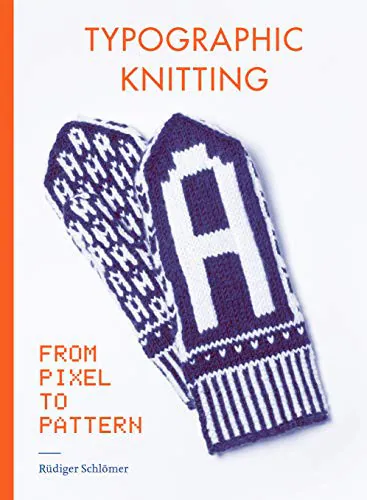 Typographic KnittingSee it on collecto.rs
You turn a page and the stitch pattern spells out a word. Not by changing yarn colors, but by shifting the geometry of the knit itself so shadows form letterforms. It reads like a manifesto and works like a grid. That double identity is precisely why this copy left the shelf.
Craft books usually suffer a predictable fate. They end up on coffee tables as display pieces, or they live beside a sofa with dog-eared corners and tea stains on the charts. Specialized titles from design presses sit right on that boundary between an art object and a working manual. Princeton Architectural Press produced books meant to be handled, yet their short print runs mean the supply vanishes almost immediately upon release.
When a book functions as a technical guide, the people who buy it actually use it. They do not trade it away when they finish a project. They keep it by the yarn stash for the next one. Like the Dornier 335 aviation monograph, where small research communities lock down every copy for decades, this manual settled into private reference shelves and stayed there. You do not find it at general estate sales because the previous owner usually handed it directly to another maker.
Finding a copy in the wild requires looking outside standard rare book channels. You end up checking estate sales of graphic designers, forum classifieds, and small craft guild library clear-outs. When one turns up, the condition usually tells you everything. The immaculate copies belonged to graphic designers who bought it for the typography. The copies with worn spines belonged to knitters who actually worked the charts. Both hold onto them with the same quiet stubbornness.
7. Alberto García-Alix, 1978-1983#
 Alberto García-Alix, 1978-1983See it on collecto.rs
A photographer hands out ninety copies of a exhibition booklet at a Madrid gallery in 1983. Half end up on coffee tables, sprayed with red wine or lost behind couches. The rest go home with friends who keep them on a shelf for forty years. When you look for one now, you are not competing with dealers at an auction. You are hunting down the heirs of Spanish punk artists who do not know the booklet is sitting in a cardboard box under a bed.
Ardora Ediciones printed Alberto García-Alix, 1978-1983 to document a specific moment in La Movida Madrileña. The black-and-white portraits capture raw, immediate scenes from the street, but the physical object was treat like temporary ephemera. Exhibition catalogs from small art presses exist in a strange space. They are not mass-market trade publications, nor are they indestructible leather-bound folios meant for institutional vaults. They are thin paperbacks sold at the door for the price of two drinks, printed in runs that match the room capacity rather than market demand.
Unlike Bobby Fischer Teaches Chess, which was produced by the thousands as a corporate manual and discarded when the format aged out, this catalog was scarce from the hour it binding dried. The corporate manual became rare through neglect and trash bins. García-Alix’s booklet was never available to the public in the first place.
When these small-run gallery prints disappear into private collections, they rarely come back out. The people who bought them at the show bought them because they were in the room. That emotional tether keeps the books locked on personal shelves longer than standard market inventory. To catalog a copy, you need to know the specific printer, the exact page count, and the exact variant cover. You can log those details in collecto.rs to keep track of provenance before the paper deteriorates further.
6. Bobby Fischer Teaches Chess (Xerox Edition)#
 Bobby Fischer Teaches ChessSee it on collecto.rs
You likely own a copy of this book, or at least you have seen one at a yard sale resting on a folding table next to a dented toaster. Millions of paperback copies exist. You can buy the standard mass-market edition online right now for the price of a cup of coffee. The version worth hunting down looks entirely different.
In 1966, Xerox Learning Systems produced a spiral-bound edition intended strictly for internal corporate training and programmed instruction. It was not built for retail shelves or personal bookshelves. Xerox distributed these spiral volumes directly to offices, where employees worked through the frames, filled in the answers, and eventually threw them away when the company updated its training materials. Corporate learning imprints face a specific kind of quiet destruction. They are tools, not keepsakes, and when the tool is superseded, it goes straight into the dumpster.
That functional lifecycle creates a scarcity profile distinct from art world ephemeral items. Consider the Alberto García-Alix exhibition catalog from 1978. That publication disappeared because a tiny run went directly into the hands of gallery attendees who kept them hidden in private collections. The Xerox edition of Fischer’s manual vanished because thousands of office managers systematically threw them out. One was protected to death; the other was discarded by routine.
Finding the Xerox Learning Systems spiral bound copy means looking in the places corporate assets go to die. Old file cabinets in defunct office parks, estate sales of retired human resources directors, and institutional surplus boxes yield better results than traditional antiquarian shops. The pages inside use programmed learning frames, hiding the answers until you flip the page. The content matches the mass paperback that sold millions, but the physical object remains one of the hardest chess items to track down.
5. A Guide to Equine Acute Laminitis#
 A guide to equine acute laminitisSee it on collecto.rs
What happens when a book is meant to be used on a wet barn floor? It dies in the field. Veterinary Learning Systems published this thin manual for working clinicians who needed quick answers beside a horse in distress. They did not keep it on a shelf. They stuffed it into medicine kits, set it on damp tailgates, and smeared it with ointment. When a reference guide lives in a truck bed, its lifespan is measured in months.
Most rare books survive because someone thought they were special the day they bought them. Practical field manuals face the opposite fate. They are treated as tools until they fall apart, then thrown away without a second thought. You see a similar pattern with the paperbacks from school book fairs, like the Carmen Sandiego guides from the same era. Children read those until the covers dropped off, but those books at least stayed indoors. A veterinary clinical manual endured mud, blood, and rain. The survival rate for working field guides is brutally low.
That difference in environment is what makes this manual so difficult to track down now. It was never a luxury printing, nor was it issued in small numbers to deliberately create scarcity. The publisher printed enough copies for the trade. The working world simply consumed them. Finding one today without split hinges, water damage, or heavy marginalia takes years of steady searching. When a copy does surface, it usually carries the physical history of its past life. That wear is not a flaw in the providence. It is the reason the rest of the print run no longer exists.
4. Where in the World Is Carmen Sandiego? (Troll Edition)#
 Where in the World Is Carmen Sandiego?See it on collecto.rs
A book printed for an eighteenth-century theological subscriber list survives because someone put it on a high shelf and left it alone for three hundred years. A cheap newsprint paperback sold to an eight-year-old at a Thursday afternoon school book fair faces a far harsher environment. It gets shoved into a backpack alongside an apple juice box, bent double during recess, rolled up, read four times in a bunk bed, and eventually tossed into a damp garage bin when the family moves house.
Troll Communications published this game-tie-in novelization during the height of the early-nineties educational software boom. It was never bound to last. Mass-market children's paperbacks used low-grade wood pulp paper and cheap glue that dried out within a decade. The pages yellowed, brittle hinges cracked, and covers fell off. Because they cost a couple of dollars, nobody treated them as objects to keep. School libraries stamped the endpapers, glued pocket sleeves inside the back cover, and taped over the spines until the plastic peeled away half the ink.
Finding a copy today without a child's name scrawled in blue ballpoint on the title page requires patience. Finding one with intact square corners and an uncreased spine is a genuine anomaly. Scarcity in this tier of collecting is rarely a matter of a tiny original press run. Millions of these paperbacks left the printer. Almost all of them were simply read to death by the exact audience they were made for.
3. Apparatus Biblicus (1727)#
 Apparatus BiblicusSee it on collecto.rs
Four London bookselling houses split the invoice for a single print run in 1727, and fewer than two hundred people put their names down to buy a copy beforehand. That subscription list was the entire safety net. James Bettenham ran the press, while James and John Knapton, Robert Gosling, Thomas Woodward, and John Clarke shared the retail risk. When a trade syndicate operated this way in the early eighteenth century, they printed precisely what was pledged, plus a few dozen extra for the shop counters in St Paul's Churchyard. They were not building inventory. They were covering costs.
Unlike William Wrede's Das Messiasgeheimnis in den Evangelien, which slipped quietly into institutional stacks and stayed there, Apparatus Biblicus was printed for private reference libraries that broke up within two generations. Academic monographs vanish into university systems because nobody ever cleans out the seminar rooms. Multi-partner folio projects like this one vanish because estate auctions scatter them one volume at a time. A copy sitting on a country house shelf in 1750 usually ended up in a damp London basement by 1880.
Finding one now means looking for a heavy folio in contemporary calfskin, often rebacked, with the telltale subscription page still intact. Most surviving examples are missing that list of names, torn out by nineteenth-century dealers making room for newer bookplates. The text itself is a exhaustive survey of biblical antiquities, but the physical object is a snapshot of early modern publishing economics. When four different shops had to share the cost of paper, nobody printed surplus copies. If you keep your early folio records on collecto.rs, you can track structural flaws like missing leaves or replaced spine labels alongside your provenance notes, keeping the paper trail clear.
2. Das Messiasgeheimnis in den Evangelien (1901)#
 Das Messiasgeheimnis in den EvangelienSee it on collecto.rs
An assistant professor at a German seminary opens a box of new releases from Vandenhoeck & Ruprecht, assigns William Wrede’s new study a shelf mark in black ink, and locks the library doors for the night. That volume stayed on that shelf for eighty years. It moved twice: once to a basement stack during air raids, and once to a regional university reserve after the faculty merged.
That is how academic German theology from 1901 vanished into plain sight. Commercial trade publishers did not handle these runs. Specialized academic houses printed small batches meant directly for institutional standing orders. Unlike the multi-bookseller ventures behind Apparatus Biblicus, where eighteenth-century subscription lists capped survival numbers from day one, Wrede’s work found immediate homes. The trouble for private collectors is that almost every home was a permanent library collection.
Institutional ownership is a black hole for print runs. A book in a university system rarely returns to the open market. It gets rebound in heavy cloth, stamped on the title page, checked out forty times, and retired to off-site storage. To find a first printing of Das Messiasgeheimnis in den Evangelien in its original paper wrappers, free of library marks, requires a specific kind of luck. You are waiting for a retired professor’s heirs to sell an uncataloged personal study, or for a small seminary to quiet quietly deaccession its duplicate holdings.
When these copies surface, they look unassuming. The grey or tan paper covers tear easily at the spine. The signatures were sold uncut, expecting the buyer to send them to a binder. If you hold a copy that survived unstitched and unstamped, you are holding something that evaded the very system built to preserve it. You can log the binding state, publisher notes, and paper condition of these institutional rarities on collecto.rs to keep your collection mapped.
1. Dass die Musik nicht ohne Wahrheit leben kann#
 Dass die Musik nicht ohne Wahrheit leben kann: Theater in Berlin nach 1945 - Musiktheater. Museum Nicolaihaus, 30. November 2001 bis 1. April 2002See it on collecto.rs
Two hundred visitors walk into the Museum Nicolaihaus on a cold Berlin afternoon in December 2001, pick up a small paper catalog at the door, and throw it in a recycling bin at the U-Bahn station twenty minutes later. That catalog was Dass die Musik nicht ohne Wahrheit leben kann, published by Henschel Verlag to accompany a four-month exhibition on post-war Berlin musical theater. It was never intended for bookstore shelves. It was designed to explain a temporary room, and when the exhibition closed in April 2002, the remaining stock vanished into administrative storage or the trash.
This is a different kind of scarcity than William Wrede’s Das Messiasgeheimnis in den Evangelien. Academic theological texts like Wrede’s disappeared because university libraries swallowed entire print runs, locking copies away in institutional stacks for a century. Exhibition documentation from municipal museums simply ceases to exist. Nobody bought thirty copies for a department seminar. No journal reviewed it to alert subject specialists. The publisher printed enough to cover the run of the show, plus a few dozen archivist courtesy copies, and closed the ledger.
Finding a copy now means hunting through the estates of retired German theater critics or waiting for a former museum staffer to downsize their home office. The text itself deals with the fragile, ideological reconstruction of Berlin’s stage life after 1945, making the physical booklet a double casualty of ephemeral history. If you hold one, you hold a record of a performance about performances, printed for a room that no longer exists. You can log it in your collecto.rs library under a custom tag for ephemera, export the record to CSV, and know that your copy is one of perhaps fifty still intact.
Collecting at this end of the shelf changes how you view a library. You stop looking for immaculate dust jackets and start looking for signs of weird survival. A worn spine on a trade printing of a chess guide or a stained cover on an equine veterinary manual is not a flaw. It is the reason the physical object still exists in the room with you.
Scarcity is rarely planned. It is the residue of short print runs, bad glue, hyper-specific audiences, and decades of silent attrition. The books that endure are often the ones nobody thought to save until almost all of them were gone.
If you have managed to track down one of these survivors, it deserves a record that lasts longer than the original paper. You can catalog your copies on collecto.rs, document their exact condition, and export your data whenever you want.
Frequently asked questions#
What makes a book scarce instead of just expensive?#
Price reflects market demand, while scarcity reflects physical supply. A book printed in millions can be expensive if a million people want it in fine condition. A scarce book might only exist in fifty copies tucked away in corporate archives or small regional print shops. True scarcity happens when print runs were small, copies were heavily used or discarded, or distribution was restricted at the time of release.
How can I track down out-of-print technical manuals or small-press books?#
Set up saved searches on specialty database networks rather than relying on standard retail sites. Search by publisher name and year rather than just the title, as small-press records often contain cataloging variations. Contacting former institutional libraries, industry trade associations, and specialized antiquarian dealers directly often yields copies that have never been indexed online.
Why are government and industrial reports so difficult to locate?#
Most industrial reports and government circulars were printed for immediate internal use with no intention of commercial sale or library preservation. They were usually bound in soft paper, distributed to a tiny list of specialists, and thrown away when an updated standard replaced them. Finding an intact copy years later requires locating an original recipient who never cleared their office shelves.