The short version#
True CD scarcity is physical and logistical: micro-label runs, regional distribution dead ends, master-tape pressings that never saw a second run, and pressings made for local events.
- Emerson Plays Emerson
- Ballets Russes De Serge Diaghilev. Historical Recordings 1916-1930
- Six Japanese Gardens & Trois Rivières Delta
- Ambiances Magnétiques En Concert - Une Théorie Des Ensembles
- Denny Brooks
- Bobo Jenkins Presents Big Star All Stars
- Kilingti (Kora Music By Jalli Lamin Kuyateh)
- Roy Rogers Jr. with special guest Dustin Roy Rogers ...Continuing the Legacy
- Thomas-Orgel Grote Kerk Vianen
- Skjetten Jente- Og Guttekorps 50 År
The compact disc was supposed to end scarcity. In 1982, the pitch was permanence and unlimited replication. Polycarbonate plastic would not warp, aluminum reflective layers would not degrade, and master digital files meant every copy was identical to the source. The factories in Hannover and Terre Haute were built to press millions of copies of the same album, distributing music across every mall in the hemisphere.
Scarcity happened anyway. It just stopped being about limited vinyl colors or hand-numbered sleeves. True CD scarcity is physical and logistical. It belongs to the short runs printed for a regional anniversary, the classical recitals paid for by a local church council, and the private pressings sold off the edge of a stage. It lives in master-tape pressings that exhausted their small manufacturing budget before a second order could be placed. When a micro-label in Montreal or a community band in Norway pressed five hundred discs in 1994, there was no digital backup waiting on a server. The physical objects were handed out, sold at the door, or packed into cardboard boxes that spent thirty years in a dry garage.
Finding these discs is not a matter of watching online auction sites with a saved search. Many of them lack bar codes. Some share catalog numbers with entirely different releases from the same local plant. Discogs entries for these titles often sit empty, waiting for someone to type in the matrix code engraved around the center hole. To collect at this edge of the format is to track physical objects through the specific geographic pockets where they were left behind.
Here are ten CDs that prove how fragile the promise of infinite copies really was. You are unlikely to stumble across them in a bargain bin, but every one of them exists in the wild.
| # | Item | Set / Year | Rarity |
|---|---|---|---|
| 1 | Emerson Plays Emerson | Keith Emerson | — |
| 2 | Ballets Russes De Serge Diaghilev. Historical Recordings 1916-1930 | Serge Diaghilev, Robert Schumann, Igor Stravinsky, Sergei Prokofiev, Pyotr Ilyich Tchaikovsky | — |
| 3 | Six Japanese Gardens & Trois Rivières Delta | Kaija Saariaho | — |
| 4 | Ambiances Magnétiques En Concert - Une Théorie Des Ensembles | Various | — |
| 5 | Denny Brooks | Denny Brooks | — |
| 6 | Bobo Jenkins Presents Big Star All Stars | Bobo Jenkins, Various | — |
| 7 | Kilingti (Kora Music By Jalli Lamin Kuyateh) | Jalli Lamin Kuyateh | — |
| 8 | Roy Rogers Jr. with special guest Dustin Roy Rogers ...Continuing the Legacy | Roy Rogers Jr. | — |
| 9 | Thomas-Orgel Grote Kerk Vianen | Jamie de Goei, Reitze Smits | — |
| 10 | Skjetten Jente- Og Guttekorps 50 År | Skjetten Jente- Og Guttekorps | — |
10. Skjetten Jente- Og Guttekorps 50 År#
 Skjetten Jente- Og Guttekorps 50 ÅrSee it on collecto.rs
Someone’s grandmother kept a copy in a sideboard drawer next to the linen napkins. When it was pressed, the audience for this disc sat in a gymnasium or a community hall in Akershus, holding paper programs and listening to a youth band play through their anniversary repertoire. It was never shipped to a distributor. It was never cataloged by a chain store. It was handed over a folding table at the door or brought home in the pocket of a raincoat.
That makes finding one decades later a matter of geography and patience. Commemorative municipal pressings exist in a category of scarcity that has nothing to do with commercial demand. Major label rarities usually exist somewhere in a warehouse or a retired rep’s basement. Local releases like this fifty-year retrospective simply dissolve into the community that built them. They move from school storage rooms to attic boxes, and eventually into regional thrift bins where the handwritten spine text means nothing to the person sorting the stock.
Where the organ recitals recorded at Vianen’s Grote Kerk survived because tourists bought them at the back of the nave, this Norway pressing stayed strictly local. The record label field reads Not On Label because there was no label to speak of, just a committee paying for a short run of glass-mastered compact discs to mark a date on a calendar.
If you track down a copy of Skjetten Jente- Og Guttekorps 50 År today, you are usually buying it from a seller living within thirty miles of where the band rehearsed. You are looking for a silver disc that left its ecosystem by accident. It takes a specific kind of persistence to look for classical recordings that were only ever meant to be heard by the parents of the people playing the instruments.
9. Thomas-Orgel Grote Kerk Vianen#
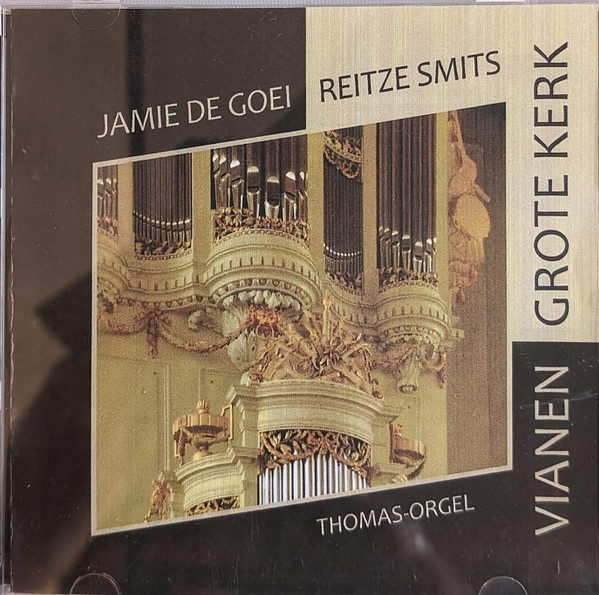 Thomas-Orgel Grote Kerk VianenSee it on collecto.rs
Zero copies on the market right now. That is the baseline for venue-specific classical recitals. A church in Utrecht prints a run for the gift shop, sells them to attendees after a Sunday afternoon concert, and never reorders. When the box under the table goes empty, the release disappears into private shelves.
Jamie de Goei and Reitze Smits recorded this disc on the 1783 Christian Müller organ in the Grote Kerk at Vianen. The label field in the database reads Not On Label. Nobody assigned a catalog number. It is a document of a specific instrument in a specific room, produced without a distributor or a press release.
Like the Skjetten Jente- Og Guttekorps anniversary disc, its geography is its firewall. A community wind band album stays in a Norwegian suburb; a Dutch organ recital stays in the church vestibule. The difference is intent. The band disc was a keepsake for parents. This organ disc was a serious acoustic document meant for anyone who cared about eighteenth-century pipe voicings. But without commercial distribution, both hit the same wall. Once the local audience buys their copies, primary access ends.
Tracking down self-released classical titles requires monitoring small-town secondhand shops and Dutch regional auction sites. Most music databases do not even list the track titles because nobody with a copy has sat down to type them in. You find it by searching for the builder of the organ rather than the names on the cover. If you manage to add this one to your shelf on collecto.rs, you are holding a physical record of a sound that otherwise exists only in that nave.
8. Roy Rogers Jr. – Continuing the Legacy#
 Roy Rogers Jr. with special guest Dustin Roy Rogers ...Continuing the LegacySee it on collecto.rs
Most rare records hide in dark archives or bottomless private vaults. This one spent its early life sitting on a folding table next to a stack of unboxed T-shirts. Self-released by Roy Rogers Jr. on a blank-label US pressing, Continuing the Legacy was sold at live shows to folks who had just watched him honor his father's music. Once the house lights came up and the venue emptied out, the remaining stock went into the trunk of a car, not a distribution center.
That complete absence of retail paper trail makes a CD exceptionally quiet in the secondary market. Much like the tour-only pressings of Jalli Lamin Kuyateh's Kilingti, this disc bypassed the inventory systems that usually capture a release. Major distributor databases never logged its barcode because it did not need one. It was built for a single physical room, passed hand-to-hand from the merchandise stand to a buyer's glove compartment.
When a country release stays entirely within that live performance circuit, it creates a specific kind of scarcity. It is not scarce because a label manufactured artificial demand or staged a limited drop. It is scarce because the people who bought it were fans at a show, not sellers looking to log a matrix number on the internet. Most copies simply stayed in those original cabinets and visors, being played until they scratched or quietly disappearing into household attics.
Finding a copy now means looking past the usual online channels. You are searching for the remnant of a specific evening in a specific hall. If you happen to hold one, cataloging the matrix details and track listing gives a ghostly merch-table release a permanent, visible home online.
7. Jalli Lamin Kuyateh – Kilingti#
) Kilingti (Kora Music By Jalli Lamin Kuyateh)See it on collecto.rs
Kilingti (Kora Music By Jalli Lamin Kuyateh)See it on collecto.rs
A touring musician steps off a stage in Utrecht, hands a plastic crate of freshly duplicated compact discs to the sound technician, and sells forty of them before the house lights come up full. By Tuesday, the band is in Hamburg. The remaining inventory travels in a duffel bag until it runs out somewhere near Copenhagen. No distributor receives a box. No clerk enters an inventory code into a retail ledger.
That is how Jalli Lamin Kuyateh distributed Kilingti. Released independently in the Netherlands without a commercial label, the disc captures the Gambian kora master performing traditional West African folk compositions. It was printed specifically for a European tour, packaged simply, and sold directly to the people who stood in front of the stage. When the tour ended, the supply vanished into private shelving across Western Europe.
Unlike the Roy Rogers Jr. live tour pressings, which operated within established North American country merchandise circuits, Kuyateh’s disc bypassed organized music retail entirely. Legacy country pressings often linger in regional thrift stores near old venue stops. Self-released kora music from a non-European tradition printed in small batches on the road leaves a much thinner trail. Distributor databases like Discogs or AllMusic depend on shop owners and cataloguers entering standardized release data. A disc sold out of a gig bag by a traveling soloist rarely makes it onto those desks.
The music itself is intimate and unadorned. The kora’s twenty-one strings carry the entire record, recorded with the direct clarity of a performance meant to be heard live that night. Finding a copy now requires searching physical bins in towns where the tour actually stopped, or waiting for an original concertgoer to clean out a cabinet. If you track down a copy, you can archive the tracklist and credits on collecto.rs so the data stays intact, even if the physical insert fades.
6. Bobo Jenkins Presents Big Star All Stars#
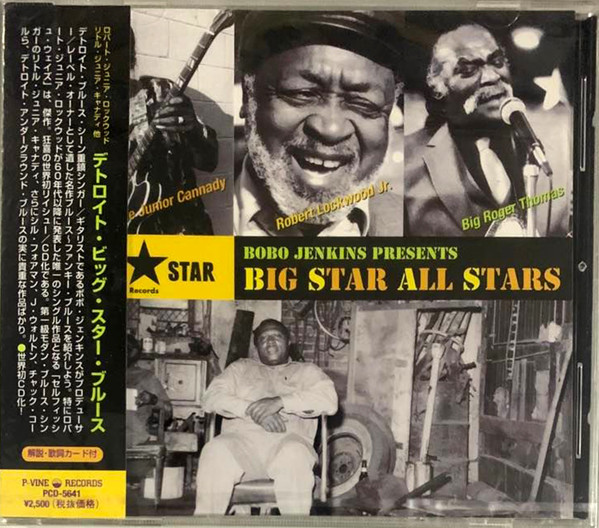 Bobo Jenkins Presents Big Star All StarsSee it on collecto.rs
A common misconception about obscure blues reissues is that they are always bootlegs cobbled together in a basement. P-Vine Records built a legacy in Japan doing the exact opposite. They tracked down original master tapes, licensed the material legally, and produced immaculate pressings for a tiny, deeply committed local audience. When they released Bobo Jenkins Presents Big Star All Stars, they were not looking to flood global record shops. They were catering to Japanese collectors who cared about Detroit blues singles that original American radio stations barely touched.
Like the Denny Brooks import reissue that lost its licensing almost immediately after a single short run, this disc vanished from distribution channels almost as soon as it hit the shelves. The difference is the hyper-specific focus of the material. Denny Brooks captured a brief moment of 1970s California singer-songwriter history, but this P-Vine release documented a fragile slice of independent Detroit blues history that might have otherwise disappeared when the original 45s wore out.
Finding a copy now means searching Japanese auction sites and hoping a collector decides to part with theirs. Most copies stayed in Japan, kept on shelf units away from direct sunlight, meticulously preserved in clear outer sleeves. The music itself is raw, direct, and pressing-wise, astonishingly clean. It sits at the intersection of extreme obscurity and archival care. You are not just looking for a rare CD; you are looking for a Japanese import of obscure American music that was manufactured once, in a quantity meant to satisfy a room, not a country.
5. Denny Brooks – Denny Brooks#
 Denny BrooksSee it on collecto.rs
Have you ever tried chasing down a mid-seventies American singer-songwriter record that only found its true home in Tokyo? Denny Brooks released his self-titled album on Warner Bros. in 1977, packed with country-rock arrangements and clean acoustic picking. It passed quietly in the States. Decades later, the Japanese label Vivid Sound picked up the licensing rights, remastered the tapes, and issued a limited CD edition for a dedicated local audience. Then the license expired, the pressing plant moved on, and the disc slipped into the shadows.
That brief window is what makes this disc so elusive. Unlike the micro-label jazz documentation of Ambiances Magnétiques, which begins its life as a tiny local press, Vivid Sound operated with full commercial intent inside a massive re-issue boom. They targeted deep-catalog American gems, produced precise jewel-case editions with faithful obi strips, and stopped production the moment the contract ended. The quality of the transfer was high, but the manufactured quantity remained low.
Finding one now means monitoring auction sites and hoping a Japanese seller decides to part with a copy. The disc rarely travels far from where it was bought. It sits in private shelves alongside other short-run imports, protected by thick outer sleeves. When a copy does surface online, it usually disappears before the afternoon is out, bought by someone who has had an automated keyword alert running for three years.
Cataloging these obscure releases keeps the history intact. If you have this Japanese pressing in your rack, log it on collecto.rs so you can track the catalog details, label matrix, and obi variation. You can export your full discography data whenever you want, keeping your record of rare pressings safe even if the physical artwork stays tucked away on the shelf.
4. Ambiances Magnétiques En Concert#
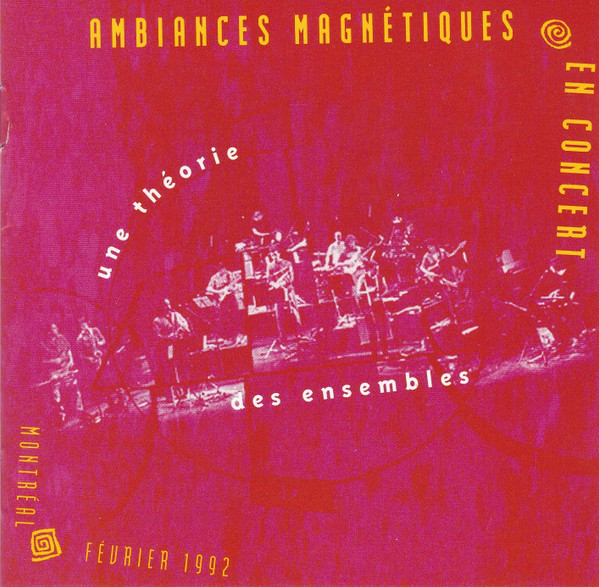 Ambiances Magnétiques En Concert - Une Théorie Des EnsemblesSee it on collecto.rs
A rainstorm hits a Montreal storefront in 1985 while three musicians improvise with a contact mic taped to an iron radiator. Someone hits record on a portable reel-to-reel deck resting on a milk crate. A few years later, that performance lands on a silver disc with a simple printed insert, distributed mostly from the trunk of a hatchback after gigs.
Micro-labels handling experimental jazz operate on narrow margins and short memories. Ambiances Magnétiques released this Canadian live document to capture a specific collective at a specific moment, not to maintain a deep back catalogue. Once the initial run sold at shows and local independent shops, the label moved on to the next session. They rarely pressed second runs for records like this. When the rights sit with a loose collective rather than a central estate, a reissue simply never happens.
Unlike early electroacoustic archive discs like Six Japanese Gardens & Trois Rivières Delta, which usually stay preserved inside university libraries, these live avant-garde releases spent decades in the wild. They sat in damp basements, moved between apartments in milk crates, or ended up in thrift shop bargain bins where the covers lost their crispness. Finding one now means tracking down a copy that survived thirty years of casual handling.
The music itself remains locked on those original compact discs. If you manage to find a copy with an unscratched playing surface and a clean tray card, hold onto it. You can log the pressing details, track condition notes, and archive your copy on collecto.rs so the record stays visible even when it is out of print.
3. Kaija Saariaho – Six Japanese Gardens & Trois Rivières Delta#
 Six Japanese Gardens & Trois Rivières DeltaSee it on collecto.rs
Three physical copies exist in public library catalogues worldwide. The rest sit on metal shelving inside electroacoustic research archives, accessioned under institutional classification systems that do not map to commercial databases. Kaija Saariaho wrote these pieces during her years at IRCAM in Paris, combining solo percussion with real-time computer processing. INA-GRM pressed a small batch in France to document the research output, distributed mostly to partner conservatories and radio stations.
Academic labels do not plan second runs. When a pressing runs out, the music returns to the status of an archival master file stored on a server in Radio France. Unlike the Ballets Russes historical restoration set, which at least saw distribution through university bookshops, this release was never intended for retail displays. It moved from the pressing plant directly into institutional mail sacks.
Finding a copy means monitoring surplus sales from university music departments or waiting for a retired radio programmer to thin out their personal shelves. The jewel case usually carries a library barcode or a red ink stamp on the booklet. The disc inside holds early work from one of the late twentieth century's most significant composers, recorded at a moment when computer music required dedicated mainframe hardware.
When a copy appears online, it often sits misfiled under general classical compilations because the cataloguer did not recognise the GRM serial number. If you spot that silver spine in a mixed lot, you hold something built for an archive that escaped into the wild. You can log it in your collecto.rs catalog under your electronic or contemporary classical sections, tag the pressing details, and export the file whenever you want.
2. Ballets Russes De Serge Diaghilev (1916-1930)#
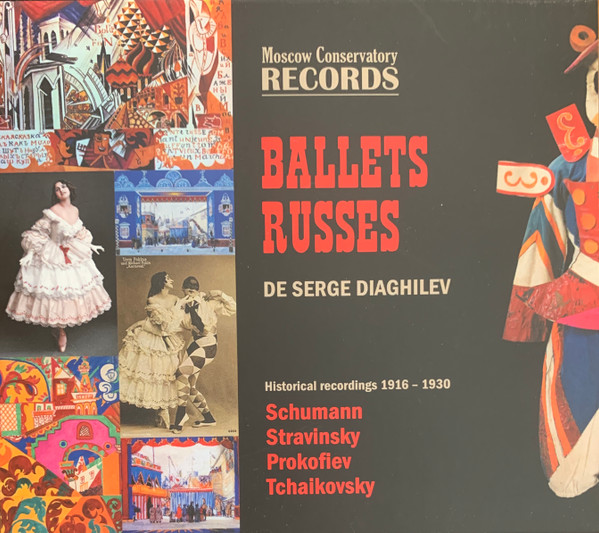 Ballets Russes De Serge Diaghilev. Historical Recordings 1916-1930See it on collecto.rs
Commercial record labels print music to sell it. Regional conservatories print music to document that it happened. That difference sounds small until you try to buy a copy of Ballets Russes De Serge Diaghilev (1916-1930) forty years after the Moscow Conservatory pressed it.
This four-disc set collects shellac restorations from the Ballets Russes era, featuring works by Stravinsky, Prokofiev, Schumann, and Tchaikovsky. Institutional presses like Moscow Conservatory Records operate on domestic state budgets. They do not print extra runs for export distributors, and they do not keep backstock in a warehouse for online orders. When a university press issues a set like this, most copies go straight to conservatory libraries, archivist shelves, and musicology faculty. The few copies that entered public hands were bought at performance hall desks in Russia during short production runs.
While early electroacoustic discs like Six Japanese Gardens stay hidden because they were locked inside academic research archives from day one, this set was technically a public release. The scarcity comes from institutional apathy toward the global retail market. The label fulfilled its academic mandate the moment the physical discs left the plant. Once those initial copies dispersed into private collections, the distribution line simply ended.
Finding one now requires monitoring estate sales from retired classical scholars or catching a rare turn on secondary forums. If you manage to track down a set, collecto.rs lets you document the press details, catalog the disc conditions, and store high-resolution scans of the Russian liner notes in a permanent digital library.
1. Keith Emerson – Emerson Plays Emerson#
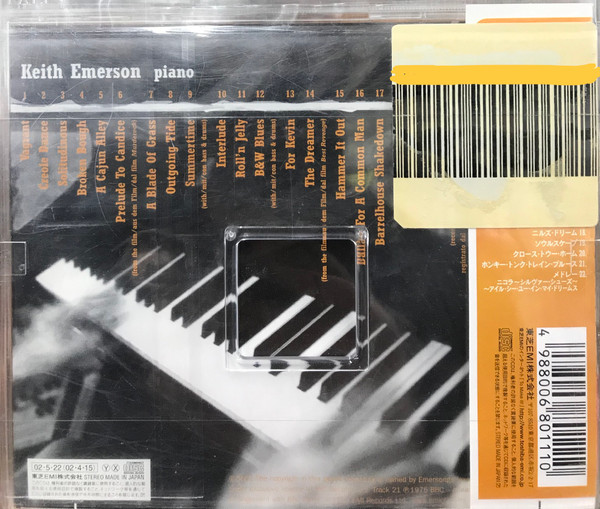 Emerson Plays EmersonSee it on collecto.rs
A Japanese record executive sat in a Tokyo mastering suite in 2002, listening to a set of solo piano tapes Keith Emerson had recorded at home over two decades. The music was lean, acoustic, and intimate. It sounded nothing like the roaring Moog synth solos that filled stadiums in 1973. The resulting disc, Emerson Plays Emerson, was pressed by Toshiba EMI Ltd specifically for the domestic market. It was meant as a quiet offering for local completists, not a global release.
Major artists frequently leave their most personal work behind in specific territories. When a major label handles a regional press run, international rights often get tangled in distribution contracts that never clear. The discs sit on shop shelves in Shinjuku, sell out to people who happen to walk in that week, and disappear. They do not get a second pressing because the licensing agreements expire the moment the original run finishes.
While archival sets like Ballets Russes De Serge Diaghilev languished in European institutional basements as academic reference material, this jazz disc vanished straight into private home shelves. The music on it was never intended to be an academic document; it was a legend playing piano in his living room. That combination of high-profile star power and locked-down regional rights creates a unique kind of scarcity. You cannot simply stream the master tracks when the label lacks the clearance to upload them globally.
Tracking down a copy means navigating Japanese secondary markets, looking for a sleeve that survived without shelf wear or sun fading. The music inside remains one of the few places to hear Emerson stripped of production walls. If you manage to find one, tag the pressing details and store it alongside your domestic pressings on collecto.rs so your shelf notes stay intact.
The survival of a rare CD relies on small, mundane miracles. A jewel case survives a move because it was slipped into the back of a shelf. An insert stays dry in a basement because it remained tucked inside the tray card. Unlike vinyl, which broadcasts its presence by its size, rare CDs often look identical to the millions of mass-market pressings sitting in thrift stores. They hide in plain sight, distinguished only by a localized label name, a strange matrix stamp, or a lack of a barcode.
cataloging these items requires a record of details that standard databases tend to strip away. The exact layout of the inner ring text, the weight of the paper stock in the booklet, and the specific distribution credits on the back tray are often the only markers that separate an unrecorded private press from a routine reissue.
If you hold one of these ten discs, or a micro-press release from your own hometown that nobody has documented yet, you have the physical evidence of a specific moment in recording history. We built collecto.rs so you have a place to document those details properly. You can catalog your collection, lay out the liner notes, and export your data whenever you want. The discs themselves might be hard to track down, but keeping a record of them shouldn't be.
Frequently asked questions#
Why are some CDs so hard to find if millions were pressed?#
Mass-market albums had huge runs, but thousands of independent releases saw pressings of just 100 to 500 copies. Many ended up sold at local gigs or given to family. When a specific master, label print, or regional variant never gets reissued, that original run becomes almost impossible to track down.
Are expensive CDs always the rarest ones?#
Price reflects current market demand, while scarcity reflects surviving physical copies. A popular album might cost a lot because ten people are bidding on it. A truly scarce CD might sell for five dollars simply because nobody knows the listing exists, even if only twenty copies remain.
How can I tell if a CD issue is rare?#
Check the matrix code stamped into the mirror band near the center ring of the disc. Label logos, catalog numbers, and country origins listed on the back insert give clues, but the matrix code identifies the specific pressing plant and batch.