The short version#
Scarcity in LEGO sets stems from restricted distribution, immediate shelf cancellation, or promotional giveaways meant for a single market rather than general retail production.
- Automatic Binding Bricks Small Brick Set (Lego Mursten)
- Passenger Plane - ANA version
- High-Speed City Express Passenger Train Set
- Deluxe Train Set with Motor
- Mania Magazine March - April 1998
- Ninja Fire Fortress
- Recon Mech RP
- 1x8 Brick #BrickLink25
- Witch-king Battle
- Bionicle Power Pack
Most LEGO sets leave the factory on wooden pallets, travel to distribution hubs, and sit on store shelves until someone buys them. You buy the box, open the bags, build the set, and throw away the plastic. The system is designed to produce thousands of identical copies for anyone with a credit card.
The sets on this list skipped that system. They never made it to a retail shelf. Some were handed out to employees at a single corporate event in Denmark. Others were packed into regional magazine mailers or distributed exclusively through a single airline's in-flight duty-free catalog. A few were canceled while the injection molds were still warm, leaving behind only the test runs meant for internal review.
Finding these sets is not a matter of saving up enough money. It is a matter of tracking down the specific historical friction that created them. Scarcity here is rarely about the piece count or the complexity of the build. A set with forty standard red bricks can be infinitely harder to acquire than a three-thousand-piece space station if those forty bricks were only given to attendees of a 1998 trade show in Tokyo.
When a set avoids standard retail distribution, it enters a different kind of market. The original packaging disappears quickly. The documentation vanishes. The people who received them often had no idea the items were unique, treating them as normal toys for children or conference schwag to be tossed into a drawer. The surviving copies exist because someone, somewhere, decided to hold onto a specific piece of cardboard or plastic for reasons they probably could not explain at the time.
Here are ten sets that proved almost impossible to buy when they were new, and remain remarkably difficult to find today.
| # | Item | Set / Year | Rarity |
|---|---|---|---|
| 1 | Automatic Binding Bricks Small Brick Set (Lego Mursten) | — | — |
| 2 | Passenger Plane - ANA version | — | — |
| 3 | High-Speed City Express Passenger Train Set | — | — |
| 4 | Deluxe Train Set with Motor | — | — |
| 5 | Mania Magazine March - April 1998 | — | — |
| 6 | Ninja Fire Fortress | — | — |
| 7 | Recon Mech RP | — | — |
| 8 | 1x8 Brick #BrickLink25 | — | — |
| 9 | Witch-king Battle | — | — |
| 10 | Bionicle Power Pack | — | — |
10. Bionicle Power Pack#
 Bionicle Power PackSee it on collecto.rs
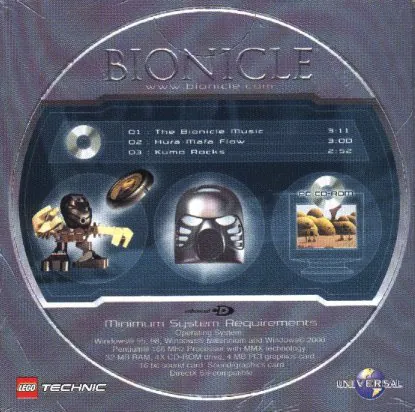
One CD-ROM, one cloth Toa poster, and three plastic masks. In 2001, this cardboard bundle sat on toy store shelves for a few short months as an introduction to the world of Mata Nui. Then it vanished. While boxed sets from core waves often survived in family basements, short-run promotional bundles like this were opened, used, and tossed into recycling bins before the year was out.
Finding a complete pack today means hunting for pieces that were built to be separated. The included Chrome Hau mask was only available in this set and through a separate mail-away offer in Europe. That single piece of molded plastic often dictates whether the pack remains intact or gets broken down for individual resale. The paper elements suffer an even worse fate. The poster was meant to be pinned to a bedroom wall, and the cardboard box used thin stock that crumpled under the slightest weight in storage.
This fragile, mixed-media composition creates a different kind of scarcity than something like the Witch-king Battle. Where that set lost its completeness because collectors wanted the unique minfigures for larger displays, the Bionicle Power Pack simply dissolved through normal use. The masks ended up in giant bins of mixed parts, the disc got scratched, and the box tore at the flaps.
When a complete, sealed example surfaces, it offers a clean snapshot of the exact moment LEGO shifted its financial trajectory. You are not just looking for a set. You are looking for a surviving piece of ephemera from a theme that kept the company afloat.
9. Witch-king Battle#
 Witch-king BattleSee it on collecto.rs
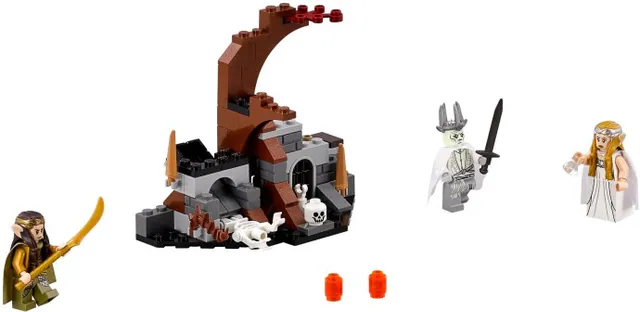
A grey horse, a single green plate, and three minfigures sit in a small cardboard box. In 2014, it cost fourteen dollars at retail. Today, finding one intact requires hunting through bulk bins or paying a premium for a sealed box that took five minutes to build. Set 79015 lasted less than a year on shelves before the Lord of the Rings and Hobbit lines closed down entirely.
Short production runs define licensed sub-themes, but this set faced a specific kind of attrition. Smaller sets from fantasy lines rarely survived the decade intact. Children built them, mixed the pieces into general storage, and lost the specific accessories that made the set complete. The Witch-king figure uses a distinct glow-in-the-dark head and a printed crown piece that appeared in no other set. Galadriel features a fabric cape and a clear hair element tailored to this specific release. When these parts separated, the set ceased to exist as a catalogued piece.
While the Bionicle Power Pack vanished because store buyers treated promotional bundles as temporary filler, this set disappeared through plain domestic drift. The parts were small, the box was easy to throw away, and the license expired before shelves needed a restock. The secondary market has plenty of loose Elrond or Orc figures, but a complete Witch-king Battle with its original minifigures, weapon elements, and the small ruin assembly intact is a different matter. Scarcity here is not about low factory output or event-exclusive distribution. It is the result of a short retail window combined with ten years of loose parts mixing together at the bottom of plastic tubs.
8. 1x8 Brick #BrickLink25#
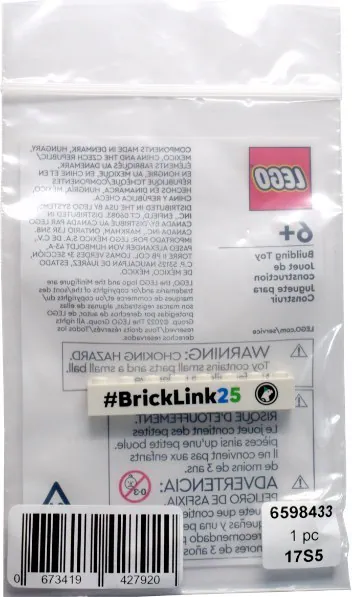 1x8 Brick #BrickLink25See it on collecto.rs
Most scarce sets hide inside massive boxes packed with hundreds of specialized elements. This single part goes the opposite direction. It is a plain one-by-eight red brick. It contains no complex geometry, no custom molding, and no rare pigments. Put it next to an ordinary brick from a standard bin, and it looks identical until you flip it over. On the side, a small white print marks the twenty-fifth anniversary of the BrickLink marketplace.
That single print changes everything about its distribution. Retail sets, even short-run licenses like the Witch-king Battle, pass through standard factory lines, shipping containers, and store shelves. Thousands of people buy them by accident because they like the characters on the box. Event parts do not touch retail channels. LEGO produced this brick for a specific gathering, handed it directly to attendees, and closed the run. No back stock sat in a warehouse waiting for a clearance sale. No online retailer received a restock crate.
The scarcity here is absolute rather than accidental. When a licensed set goes out of print, copies sit intact in closets for years until someone cleans out an attic. When a single promotional brick travels home in a gift bag, it usually ends up mixed into a general storage tub. Finding one requires a seller who recognized what it was the moment they received it and kept it separate from their working inventory ever since.
You cannot rebuild this item from your existing bulk bins. You can buy the standard red element for pennies, but the official anniversary mark exists on a finite, known quantity of plastic. That distinction makes it a persistent gap in completionist catalogs.
7. Recon Mech RP#
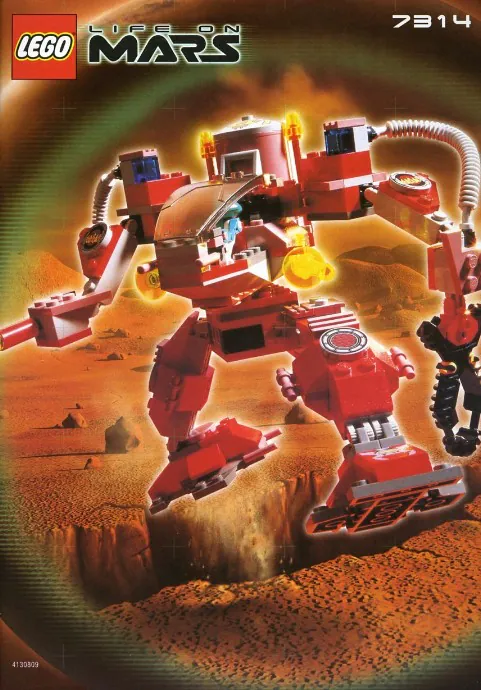 Recon Mech RPSee it on collecto.rs
A box landed on a shelf in a store outside Frankfurt in 2002, stayed there for three weeks, and then vanished forever. That is how entire lines from this era went away. They did not get a farewell tour or a clearance aisle blowout. They simply stopped arriving in shipping crates, leaving regional footprints so small that finding one sealed today feels less like shopping and more like archaeology.
Recon Mech RP belongs to a category of sets that collectors talk about in low voices. It came from an experimental, short-lived theme that Lego released without the massive global marketing push we expect today. Distribution was patchy. Certain countries received healthy stock, while entire continents missed out entirely. If you were not standing in the right toy shop in the right European territory during a tiny six-month window, your only evidence that this set existed was a tiny picture on the back of a folded paper catalogue.
While the Ninja Fire Fortress relies on large-scale theme packaging variations to confuse tracking efforts, this set is difficult to source for a much simpler reason. Almost nobody bought it to keep it in the box. It was a play set, built on a living room carpet, dismantled three weeks later, and swept into a plastic storage tub with a hundred other loose bricks. Finding the custom printed elements intact is hard enough. Finding a complete set with its original box intact requires patience that borders on resolve.
That local distribution pattern is what creates the chase twenty years later. The parts themselves tell the story of a specific moment when Lego was trying new ideas, before global distribution streamlined what appeared on shelves worldwide.
6. Ninja Fire Fortress#
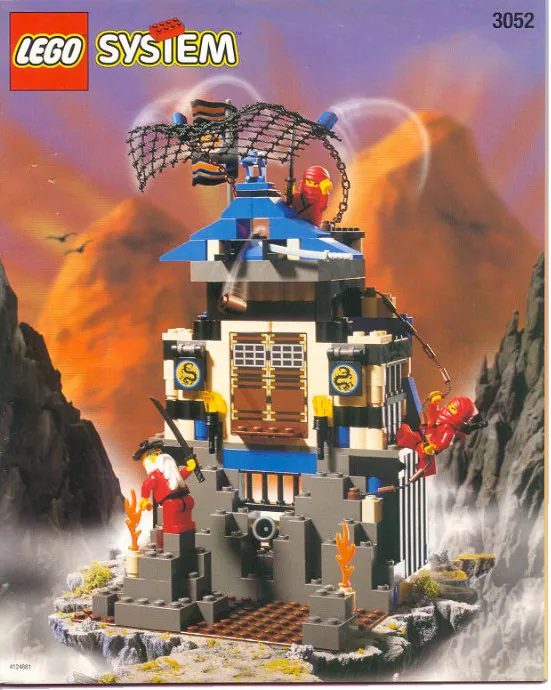 Ninja Fire FortressSee it on collecto.rs
What happens when a flagship set only gets a full release in a single territory? You get a hunt that stretches across continents and decades. Set 6093 came out in 1998 as the crowning piece of the Ninja line. It featured a sprawling black and red pagoda, three curved baseplates, and a full castle guard of minifigures. If you lived in North America, you could walk into a toy store and buy one off the shelf. If you lived anywhere else, finding a box with that specific regional packaging was almost impossible.
Unlike the Recon Mech RP, which vanished because the entire theme line folded before gaining traction, the Ninja theme was widely distributed. The scarcity here is not about the bricks inside the box. Every piece in the set appeared in other sets from the same year. The difficulty lies entirely in finding the original sealed box configured for non-North American markets. LEGO used different box art, set numbers, and piece count displays depending on where the item landed. Collectors who want a complete run of regional variations face a narrow market.
Most buyers in 1998 opened the box, threw away the cardboard, and built the fortress on the living room floor. That makes intact boxes extraordinarily scarce today. Water damage, crushed corners, and faded ink have claimed most of the surviving stock over twenty-six years. Finding one with the seals unbroken requires monitoring estate sales, regional auctions, and private forums. When a sealed box does appear, it usually changes hands quietly between veteran collectors who have held a saved search open for years. You are not just paying for plastic. You are paying for a piece of cardboard that survived a very specific distribution path.
5. Mania Magazine March - April 1998#
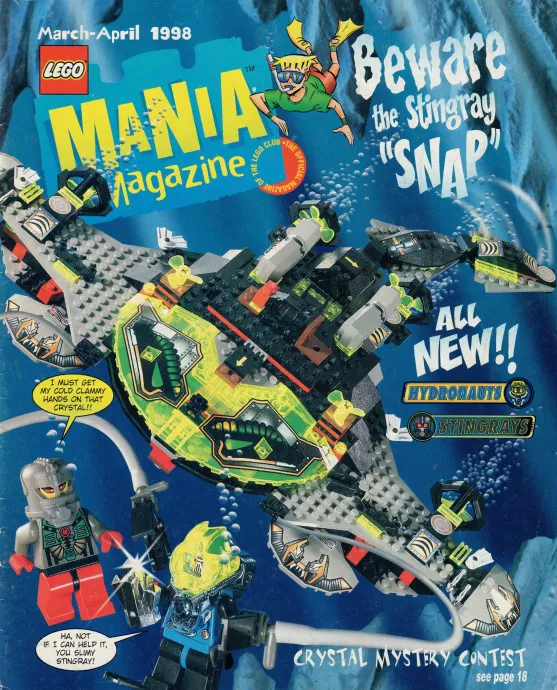 Mania Magazine March - April 1998See it on collecto.rs
Most people threw this away with the rest of the Tuesday junk mail. In early 1998, subscribers to Australia's Mania Magazine opened the March/April issue and found a small plastic bag tucked inside the pages. Inside were fifteen basic bricks and a tiny paper instruction sheet for a micro-scale space shuttle. It was not sold on a toy store shelf or featured in the official annual catalogue. It was a throwaway promotional freebie meant to keep a child occupied for eight minutes before the magazine landed in the recycling bin.
That disposition is precisely why finding one intact today requires serious patience. Unlike the Ninja Fire Fortress, which built its reputation on a massive box and a heavy piece of regional packaging, this set survived by total accident. Nobody put a magazine insert into a protective sleeve in 1998. The polybag split open in transit, the instruction slip got crumpled, or the parts merged into the household brick tub before the month was out.
Collecting sets from the broader, unclassified themes usually means hunting down these strange distribution anomalies. The bricks themselves are completely ordinary. You could dig through a bulk bin for twenty minutes and reconstruct the shuttle without spending a dime. But the set is not the fifteen bricks. The set is the sealed foil pouch, the cheap newsprint instructions, and the paper trail of a hyper-specific regional marketing campaign that ran for six weeks on one side of the planet.
When a set relies entirely on fragile materials that were designed to be discarded instantly, the survival rate drops to near zero. Tracking one down means looking in old magazine stacks, forgotten attic boxes, and estate sales halfway across the world. If you happen to have this polybag preserved in your collection, you can log the details, upload high-resolution photos of the original packaging, and keep your inventory organized on collecto.rs.
4. Deluxe Train Set with Motor#
 Deluxe Train Set with MotorSee it on collecto.rs
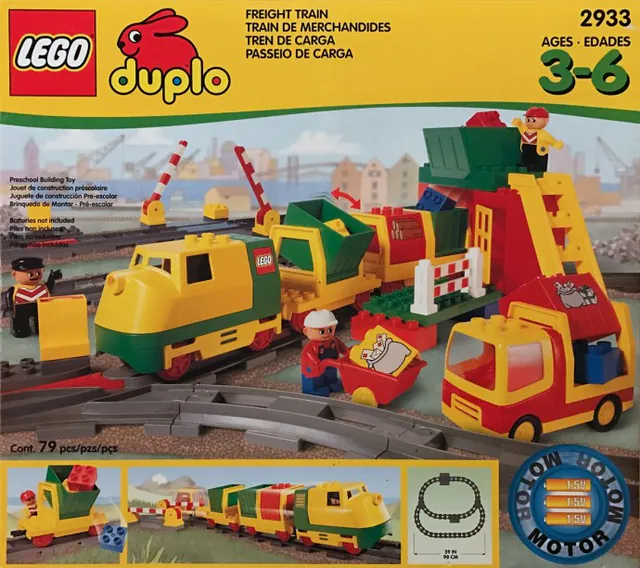
A heavy blue plastic motor block sits at the bottom of a cardboard tub, caked in dried battery acid. Nearby lies a length of curved red track with rounded studs. The train cars are long gone, traded away or buried under a mountain of mixed bricks in a suburban basement. Motorized Duplo sets from this era faced a unique kind of attrition. They were built for small hands, heavy use, and living room floors, which meant the mechanical parts took the brunt of the play.
Unlike the High-Speed City Express Passenger Train Set, which suffered primarily when opened and played with by older kids, this set lost its rarest pieces to simple physics and battery leakage. The motor unit housed a small electric drive that drained heavy D-cell batteries. When those batteries sat inside a closet for a decade, they corroded the brass contacts. If the motor survived the acid, the internal plastic gears often stripped after years of being forced across shag carpets.
Finding the oversized track pieces intact is hard enough. Finding a functional motor block with clean terminal leads and a working drive shaft is the real challenge. Most surviving examples exist today as inert display pieces, stripped of the movement that made them distinct in the first place. Complete boxes are almost unheard of because the packaging was designed to be ripped open on a living room rug, not saved on a shelf.
If you happen to have one of these motors in a box somewhere, check the battery compartment before you clean it up. When you record the details in your account, note whether the drive axle still turns by hand. That single functional detail is what separates a complete piece from a shelf ornament.
3. High-Speed City Express Passenger Train Set#
 High-Speed City Express Passenger Train SetSee it on collecto.rs
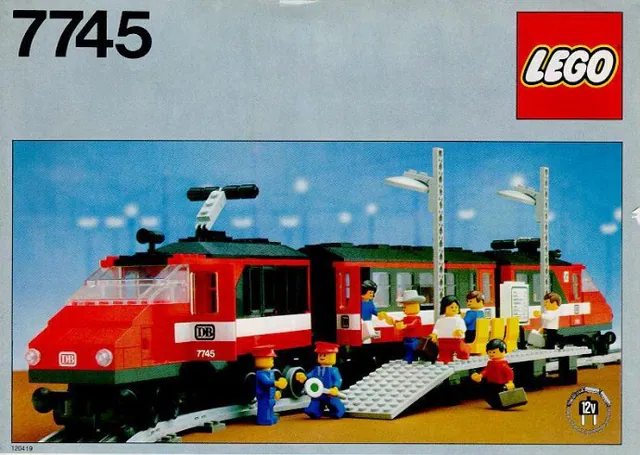
Three red cars, six curve tracks, and a battery box that ate C-cells by the dozen. Transport sets from this era were built to run across living room rugs, not to sit unopened on a shelf in a dark closet. Kids snapped the track pieces together until the lugs wore smooth, and parents tossed the crushed cardboard packaging into the bin on Christmas morning.
That high-utility reality creates a harsh survival curve for the set today. While the motorized components of the Deluxe Train Set broke down through decades of heavy use, the High-Speed City Express suffered a different fate. Entire shipments vanished into playrooms, making intact boxes nearly impossible to locate decades later. Finding one with bright unscratched canopy elements, crisp instruction manuals, and an uncorroded battery terminal requires wading through hundreds of incomplete part lots.
Short production runs compounded the problem. LEGO produced this regional variant in limited quantities before moving on to the next track standard, leaving a narrow window for original purchase. Most surviving examples exist today as loose piles of red slopes and grey wheel assemblies scattered across larger mixed bins. Finding every original piece in one place, backed by a box that survived the 1990s, requires patience and a fair bit of luck.
2. Passenger Plane - ANA version#
 Passenger Plane - ANA versionSee it on collecto.rs
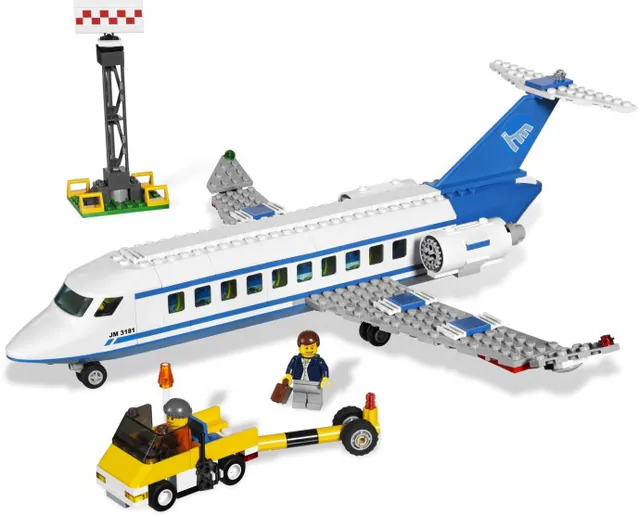
You usually chase a scarce set through specialty shops or late-night auction listings. This set required a ticket on a specific carrier flying out of Japan in 1999. All 237 pieces arrived in a box carrying the All Nippon Airways logo, sold only from the in-flight shopping catalog aboard ANA jets.
Underneath the branded packaging sits a straightforward white and blue passenger aircraft from the City theme. The build itself relies on standard elements from the late nineties. The scarcity is entirely a function of the distribution model. Most promotional items hit regional retail chains or show up as mail-in offers on cereal boxes. Airline exclusives exist in a different tier of friction. You had to book the flight, notice the listing in the seatback magazine, and buy it before landing. Many ended up opened immediately on tray tables to keep children quiet for three hours between Tokyo and Osaka. Finding one intact means finding a traveler who bought a toy at thirty thousand feet and decided to leave it sealed in their luggage.
That distribution barrier separates this aircraft from nearby sets on this list like the High-Speed City Express Passenger Train Set. Where the train vanished because kids assembled it on the living room floor until the motor burnt out, the ANA jet simply never hit a toy store shelf in the first place. It is a snapshot of a brief corporate partnership that left behind a few surviving boxes in the hands of persistent flight crews and international travelers.
When you track down a set this specific, keeping track of its history matters as much as the bricks inside. You can log the origin, provenance, and box condition of your regional promos on collecto.rs, then export your complete catalogue data whenever you want.
1. Automatic Binding Bricks Small Brick Set (Lego Mursten)#
) Automatic Binding Bricks Small Brick Set (Lego Mursten)See it on collecto.rs
Automatic Binding Bricks Small Brick Set (Lego Mursten)See it on collecto.rs
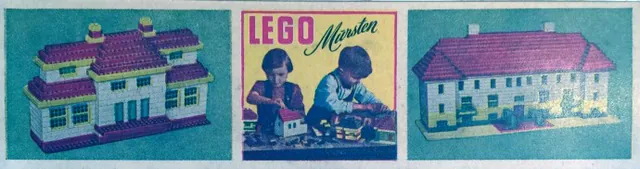
An old wooden box sitting in a attic in Billund held forty red and white cellulose acetate blocks, each slotted with a tiny side lug. They looked like medical supplies or architectural samples, not toys. In 1949, Christiansen called them Automatic Binding Bricks, dropping the Lego name from the front of the box entirely. Almost every single one of those early boxes went straight into back gardens to be burned, or into the bin once the corners warped from the sun.
Most scarce sets hide inside massive boxes packed with hundreds of specialized elements, or rely on short-run regional distribution like the ANA Passenger Plane handed out in mid-air above Tokyo. This set is different. It is hard to find simply because the material itself was an experiment that nearly failed. Cellulose acetate absorbed moisture, lost its shape, and refused to clutch after a few seasons in a warm room. Finding a complete box today with all thirty-two original bricks unwarped is an exercise in checking estate sales across Southern Jutland and hoping no one left the lid off in 1952.
The theme for this entry sits simply under other, because the modern system of themes did not exist yet. There were no minifigures, no instruction booklets with numbered bags, and no specialized windshields. You received a handful of solid plastic blocks with hollow bottoms and a card displaying three possible houses you could build if you had enough patience. If you happen to own one of these early boxes, the plastic has likely gone brittle, but the mold marks on the underside still show the exact origin of the modern stud. You can catalog the set on collecto.rs to keep track of the specific mold variations across your early Danish pieces, and export your inventory data whenever you want.
The impulse to track down sets like these usually starts with a simple gap in a catalog. You realize a specific variant exists, or you trace a set number that jumps from seven to nine without an eight in between. The search that follows is rarely about the plastic itself. It is about understanding why the production line stopped, or why a regional distributor decided to print a custom box for a single weekend.
When you track these items down, keeping record of them becomes its own challenge. Factory sealed boxes, promo polybags, and internal test builds demand different kinds of care. They also need a place to exist digitally, with the right metadata attached, so the context of why they exist is not lost over time.
That is why we built collecto.rs. It gives you a clean place to document what you have found, attach the hyper-specific notes that explain its origin, and keep your data completely exportable whenever you want it. Whether your collection sits on steel shelving in a climate-controlled room or inside a single acid-free archive box, you can set up your catalog for free today.
Frequently asked questions#
Why are some LEGO sets so much harder to find than others?#
Retail sets sit on store shelves globally for months or years. True scarcity happens when a set bypasses traditional retail entirely. Promotional items handed to airline passengers, regional exclusives produced for a single country, regional mail-in offers, and early historical tests never had wide distribution. When production runs cap out in the low hundreds or thousands, surviving complete sets become difficult to track down decades later.
What makes a LEGO set scarce instead of just expensive?#
Price reflects current buyer interest. Scarcity measures physical availability. A large retail Star Wars set might cost thousands of dollars secondary because many people want it, yet dozens remain listed online at any time. A scarce set might rarely surface for sale at all. If a set was distributed exclusively to employees or bundled briefly with a regional CD-ROM, finding one complete in box is a matter of patience rather than budget.
How can you verify an original vintage set is complete?#
Check part inventories against contemporary catalogs and instruction booklets rather than modern generic lists. Vintage sets often contained specific mold variations, original box inner trays, unique sticker sheets, or printed elements that changed during production runs. Seals, original instruction print codes, and correct part colors from that specific era help confirm authenticity.