The short version#
Scarcity comes down to short print runs, specific set distributions, and the quiet passage of time.
- Rayquaza V
- Reshiram & Zekrom-GX
- Ultra Ball
- Black Kyurem-EX
- Riolu
- Gengar LV.X
- Shiftry ex
- Jirachi ex
- Porygon2
- Alakazam
A card gets hard to find in a few distinct ways. Sometimes a print run ended early because a set sold poorly, leaving thousands of booster boxes to rot in warehouses before being landfilled. Sometimes a set was distributed through a grocery store promotion that ran for three weeks in 1999, where half the stock ended up sticky with juice and tucked under a car seat. More often, it is just time. Twenty years of move-in days, flood basements, and binder sleeves made of cheap PVC that slowly turned holo foil into soup.
Scarcity in Pokémon is rarely about the iconic monsters on the cover of the box. Charizard gets printed until the plates wear down. The cards that vanish are the awkward middle children. They are the stage-one evolutions sitting in the middle of an experimental e-Reader set, or the secret rare Trainer card from a Sun & Moon expansion that came out right before everyone pivoted to vintage. They are the cards nobody sleeved on release day because nobody knew they would need to.
When you hunt these cards down today, you are not just fighting the odds of the original pull rate. You are fighting the decades between then and now. A card printed in a batch of ten thousand copies can easily become a card with fifty clean copies left in existence. The rest were traded on school lunch tables, clipped into bike spokes, or lost to the bottom of a plastic tub in an attic.
Here are ten cards where short print runs, strange distribution decisions, and simple attrition worked together to turn standard cardboard into something you might search years to spot in the wild.
| # | Item | Set / Year | Rarity |
|---|---|---|---|
| 1 | Rayquaza V | Evolving Skies | ultra-rare |
| 2 | Reshiram & Zekrom-GX | Cosmic Eclipse | ultra-rare |
| 3 | Ultra Ball | Sun & Moon | secret-rare |
| 4 | Black Kyurem-EX | Plasma Storm | ultra-rare |
| 5 | Riolu | POP Series 6 | uncommon |
| 6 | Gengar LV.X | Arceus | holo-rare |
| 7 | Shiftry ex | Crystal Guardians | ultra-rare |
| 8 | Jirachi ex | Crystal Guardians | ultra-rare |
| 9 | Porygon2 | Neo Revelation | holo-rare |
| 10 | Alakazam | Expedition Base Set | rare |
10. Expedition Base Set Alakazam#
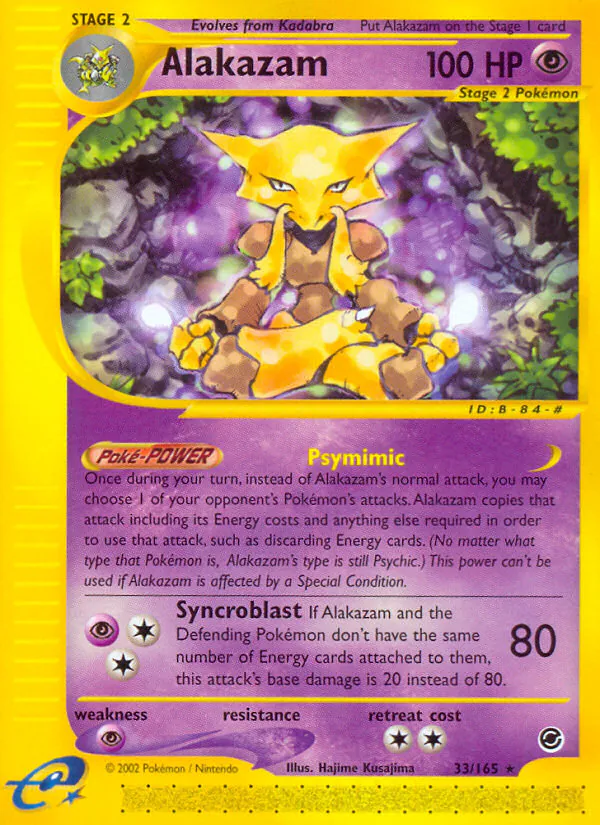 AlakazamSee it on collecto.rs
One in every thirty-six packs contained a non-holographic rare from Expedition Base Set. That sounds reasonable until you try to isolate a single card from the thirty-two possible hits in that slot. If you want the non-holo Alakazam, you are looking at odds worse than one in a thousand packs.
Expedition marked the start of the e-Card era in 2002. Wizards of the Coast added dot-code strips to the borders so players could scan cards into a Nintendo e-Reader accessory. To fit the new tech, card layouts changed drastically. The artwork shrank, the borders widened, and print runs dropped as interest waned near the end of the original Wizards license. Many packs were opened, scanned, and handled without sleeves, damaging the delicate e-Card borders before collectors realized the era was ending.
While vintage holos from smaller sets like Porygon2 are notoriously scarce due to low total print volumes, non-holo rares from Expedition face a different problem. They sat in an awkward middle ground. Players wanted the competitive Trainer cards, and collectors wanted the holographic versions. Plain rares like Alakazam were often tossed into unsleeved storage boxes or traded away without a second thought. Finding a copy today without edge wear along those thick yellow side borders requires patience.
That makes this specific Alakazam a quiet challenge. It lacks the rainbow foil that pulled cards straight from foil wrappers into protective top-loaders twenty years ago. Instead, it survived by pure chance. When you find one with clean edges and unscratched e-Reader strips, you are holding a survivor from a short-lived experiment in Pokémon history. If you have one sitting in a binder, add it to your collecto.rs catalog so you can track its condition alongside the rest of your e-Card set.
9. Neo Revelation Porygon2#
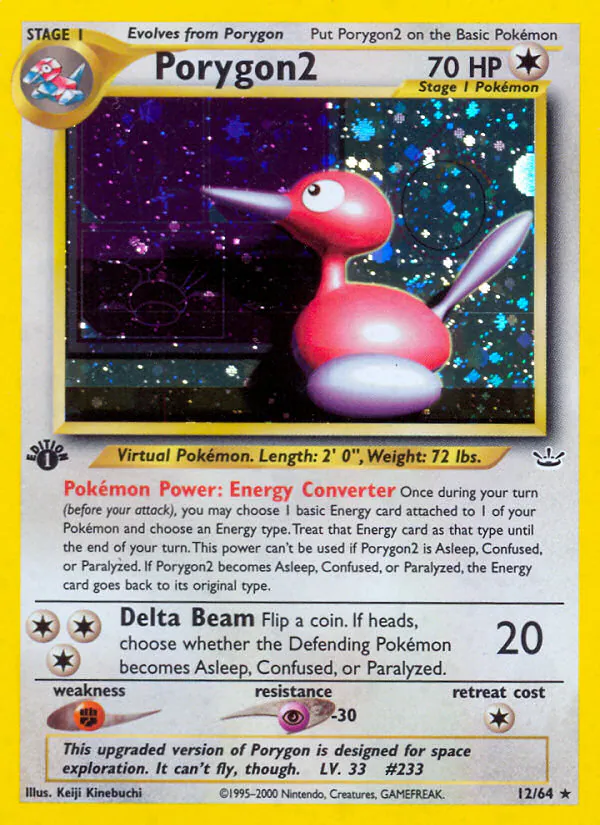 Porygon2See it on collecto.rs
Prices get all the press, but scarcity is the real ghost in the room. You can buy a Charizard before lunch if you have the funds. Finding a clean Neo Revelation Porygon2 is a different problem entirely.
Neo Revelation sits at a strange moment in the game's timeline. It was a smaller third-generation set, printed after the initial late-nineties boom had cooled off. Fewer booster boxes were opened at launch, which set a hard ceiling on the total number of holos that ever entered the world. Porygon2 landed as item number twelve in that set, complete with a silver foil background and some delightfully pragmatic flavour text about a space-faring duck that cannot fly.
While early e-Card era cards like the non-holo Alakazam face supply shortages because distribution models shifted overnight, Porygon2 simply suffered from quiet disinterest. Collectors were moving on, kids were playing with the cards rather than sleeving them, and nobody was stashing sealed cases in climate-controlled closets. The survivors spent twenty years sliding around in cardboard shoe boxes or sitting loose in three-ring binders. Finding any specific holo from this set in top condition requires endless patience. Finding this one means hunting down a card that people forgot to preserve.
If you have one sitting in a binder, add it to your collecto.rs catalog. High-resolution scans help you track print lines and corner wear over time, and your data stays yours to export whenever you want.
8. Crystal Guardians Jirachi ex#
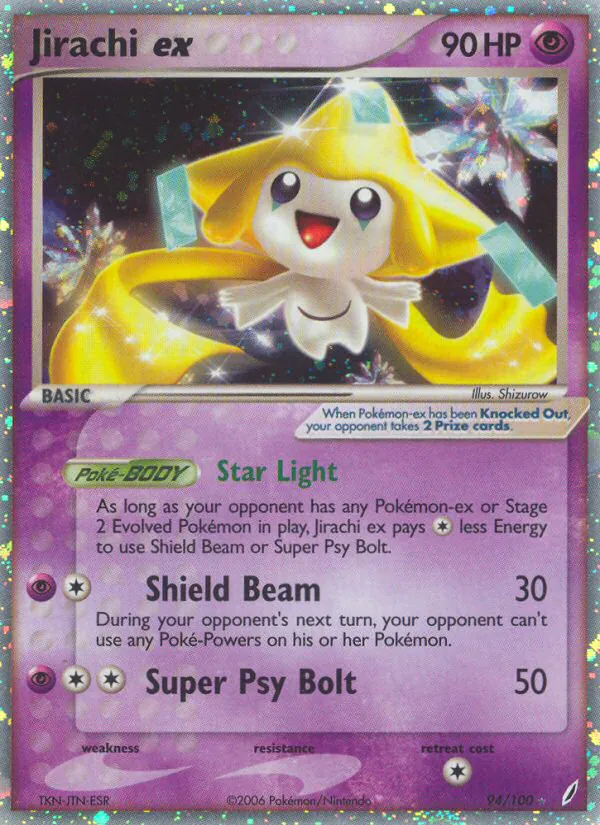 Jirachi exSee it on collecto.rs
You crack a fresh booster pack from 2006, slide the first four cards aside, and check the bottom right corner. A silver foil border catches the light, but the pull rates for ultra-rares in the EX series were notoriously unforgiving. Booster boxes back then did not come with guaranteed hit counts or structured secret rare slots. You could open an entire thirty-six pack display and come away without a single ex-era ultra-rare.
Jirachi ex sits squarely in this void. Released within EX Crystal Guardians, it represents a period when printer runs were shrinking and retail shelf space for TCGs was quietly contracting. Unlike the earlier third-generation sets where holos like Porygon2 were produced in higher baseline quantities, late ex-era cards faced a double squeeze: lower total print runs and abysmal pull odds. Tracking down a clean copy today means fighting against the sheer lack of unopened product that was ever cracked in the first place.
Condition makes the search harder. The foil surfaces from this era chip along the edges if you so much as look at them wrong, and the heavy silver borders show every microscopic flaw. Most copies were played on kitchen tables without sleeves, long before people started slipping raw hits straight into semi-rigids.
When you find one with clean edges and intact surface foil, you are looking at a survivor from a narrow window in the game's manufacturing history. It is not scarce because of artificial serial numbers stamped on the front. It is scarce because almost nobody was opening these packs, and fewer people were saving what came out of them. If you have one logged in your collection on collecto.rs, take a close look at that silver border. You are holding a piece of an era that almost slipped by unrecorded.
7. Crystal Guardians Shiftry ex#
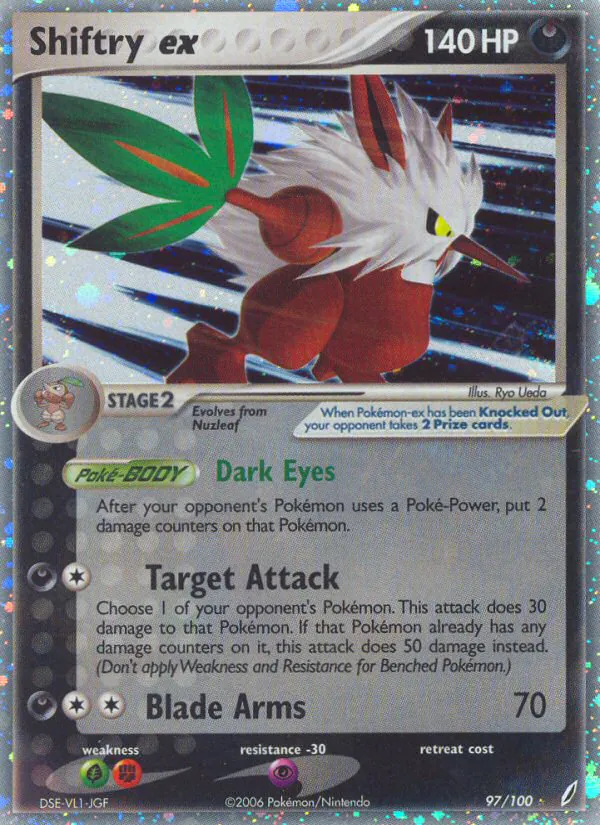 Shiftry exSee it on collecto.rs
A binder opens at a regional tournament in 2006. The pages of delta species cards are full, but the space for Shiftry ex stays empty all weekend. Two decades later, that empty slot remains a common story.
By the time Crystal Guardians arrived, the EX series was in its twilight. Total print runs for late ex-era sets dropped as interest shifted, leaving far fewer booster boxes on store shelves compared to the early Nintendo printings. Pulling an ultra-rare like Shiftry ex required opening packs from a pool that was already small. The card itself did not need a secret rare designation to become scarce; the sheer math of the distribution took care of that.
While cards like Jirachi ex draw attention for their tight pull rates within a single box, Shiftry ex faces a different hurdle. Its scarcity comes from the total volume of product printed for the set as a whole. You are not just fighting the odds of the pack in your hand. You are looking for a card from a set that simply exists in smaller numbers than the sets before it.
Condition adds another layer to the search. The foil on EX-era cards scratches if you look at it wrong, and the dark borders show edge wear immediately. Finding one that spent the last eighteen years in a sleeve rather than an unsleeved deck box requires patience. When you do spot one, it is usually tucked into a personal collection rather than sitting in a display case.
6. Arceus Gengar LV.X#
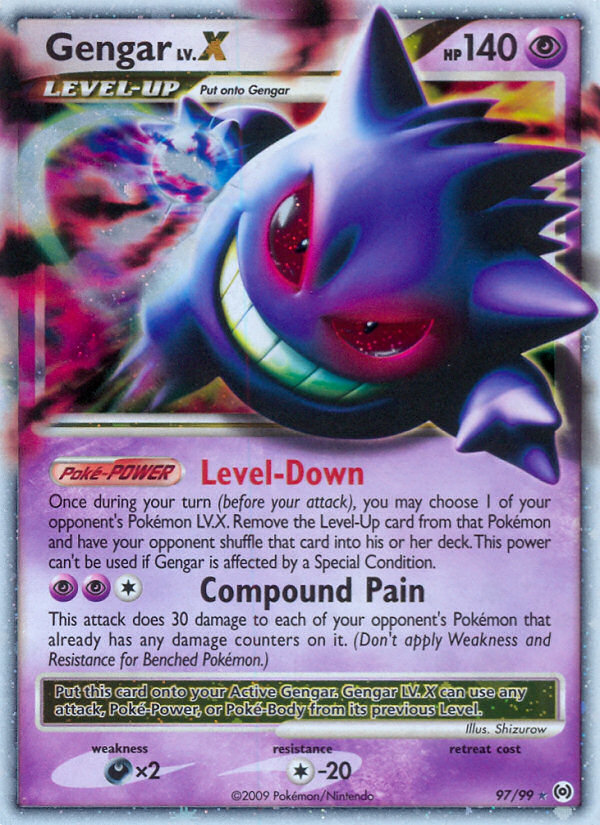 Gengar LV.XSee it on collecto.rs
People usually talk about the Platinum era like it was a quiet interlude between Diamond & Pearl and HGSS. That is a mistake. The late 2009 release of Arceus hit retail shelves right when print runs hit a structural low point across the entire TCG, leaving high-tier hits much scarcer than the set's standard distribution math suggests. Finding a crisp copy of the Arceus Gengar LV.X today is less about budget and more about basic availability.
As a holo-rare pull from an era where booster boxes were opened far less frequently, this card sits in a strange pocket of the hobby. While Shiftry ex suffered a similar fate due to the tail-end fatigue of the ex era, Gengar LV.X presents a different kind of chase. The LV.X mechanic required players to stack the card directly on top of an active Gengar during matches. That design choice meant the vast majority of copies went straight into unsleeved competitive decks, getting shuffled, slid across rough table mats, and bent in deck boxes long before anyone thought to grade them.
That practical history creates a steep drop in surviving condition. A raw copy might turn up in a forgotten binder, but it usually bears the light scuffs and edge silvering typical of a card that saw real play in 2009. Finding one with clean foil and sharp corners requires patience. If you are cataloging your Platinum set on collecto.rs, this is often one of the final empty slots in the binder. You can export your set data whenever you want, but filling that specific spot usually takes months of quiet searching through secondary markets and trade tables.
5. POP Series 6 Riolu#
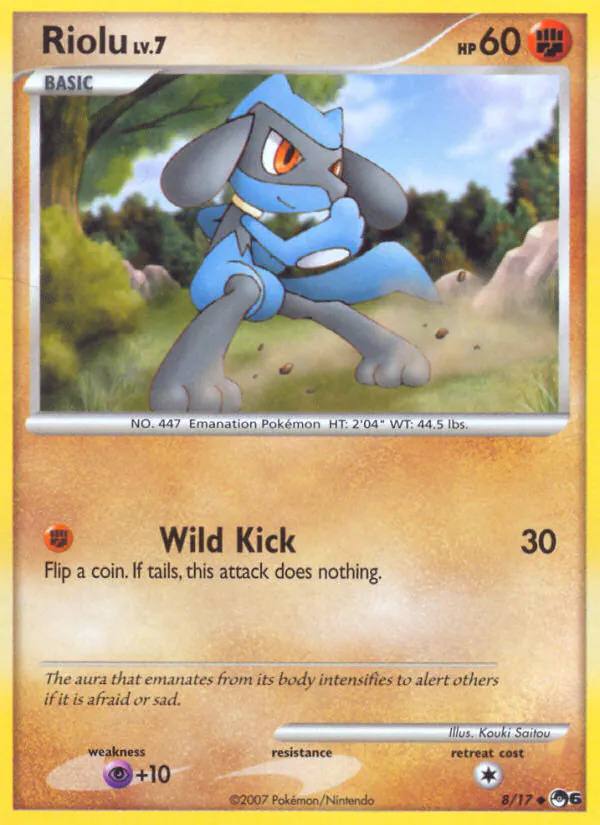 RioluSee it on collecto.rs
Where do you store a card that came out of a two-card paper pack eighteen years ago? POP Series 6 packs were distributed exclusively through Organized Play events between September 2007 and March 2008. Pokémon League venues handed them out as participation prizes. You showed up, played a few matches, and walked away with a foil wrapper holding exactly two cards. Most were opened on the spot. Many ended up tucked into gym bags, creased in pockets, or traded across tables for whatever binder hit a ten-year-old needed that afternoon.
That distribution format created an unusual bottleneck. Unlike set hits like Gengar LV.X, which arrived in traditional thirty-six-pack booster boxes with guaranteed pull rates, Riolu lived inside a tiny, time-gated promotional window. You could not buy a display case to chase it. You had to attend leagues during those seven months and roll the dice on a two-card pull. To make matters harder, Riolu was printed as an uncommon in the set. Collectors chasing the rare Lucario or the holographic Starters often overlooked it entirely.
Its card text records a simple detail from the Sinnoh region: The aura that emanates from its body intensifies to alert others if it is afraid or sad. Today, finding one without silvering along the edges or impression marks from a tight binder strap is a test of patience. The paper stock from this era was prone to chipping, and the thin POP Series packaging offered almost no protection against handling.
If you hold a clean copy from this run, catalog it under POP Series 6 in your collection log so your set completion data reflects the exact print variation.
4. Plasma Storm Black Kyurem-EX#
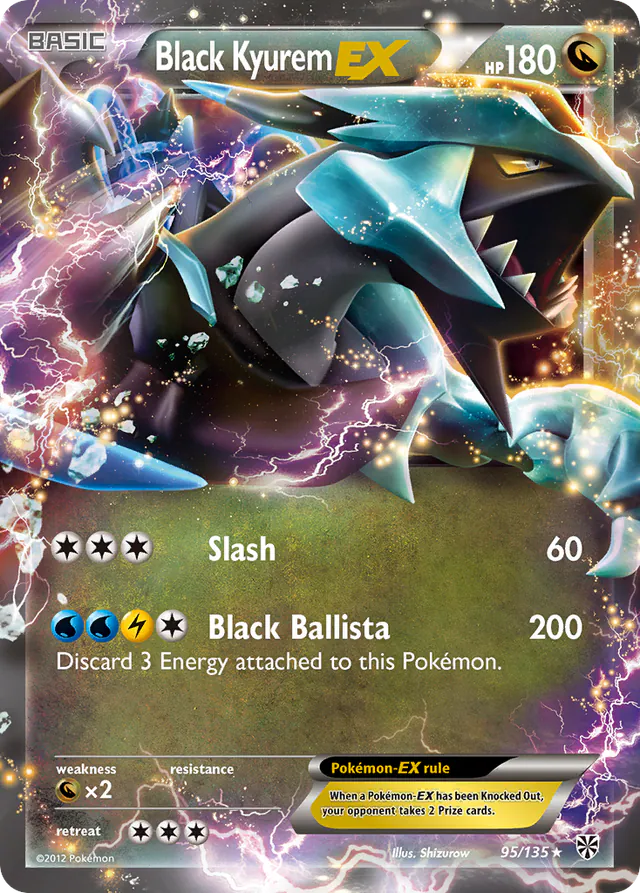 Black Kyurem-EXSee it on collecto.rs
Pulling a full-art ultra-rare from a 2013 Plasma Storm booster meant beating odds that look almost absurd by modern standards. The Black & White era reshaped how rarity worked in the TCG, introducing full-art layouts right before print runs expanded to meet global demand. Black Kyurem-EX sits squarely in that shift. It was rare enough when packs were on store shelves, but finding a copy now that survived a decade without corner wear is the real challenge.
Unlike the Plasma Storm Ultra Ball—which faced a brutal dual pressure from competitive players cramming four copies into every tournament deck—Black Kyurem-EX spent most of its life inside binders or unsleeved deck boxes. Players needed the card for its heavy-hitting attacks, while the distinct blue-textured foil border meant every edge scrape showed up immediately. The card features deep silver embossing over a matte background, a design choice that looks striking when pristine but shows micro-scratching if a sleeve so much as catches a piece of dust.
That combination of low initial distribution and high physical vulnerability makes a clean Black Kyurem-EX a true ghost in the market. The artwork extends to the absolute edge of the card stock, leaving zero margin for error during factory cutting or handling. When you handle one today, you notice the weight of the card stock right away; it feels different from modern Secret Rares, stiffer and far less forgiving of humidity. Collectors who track down this era are usually after that specific texture. It represents the exact moment Pokémon cards became visually complex without relying on astronomical print numbers to fill the demand.
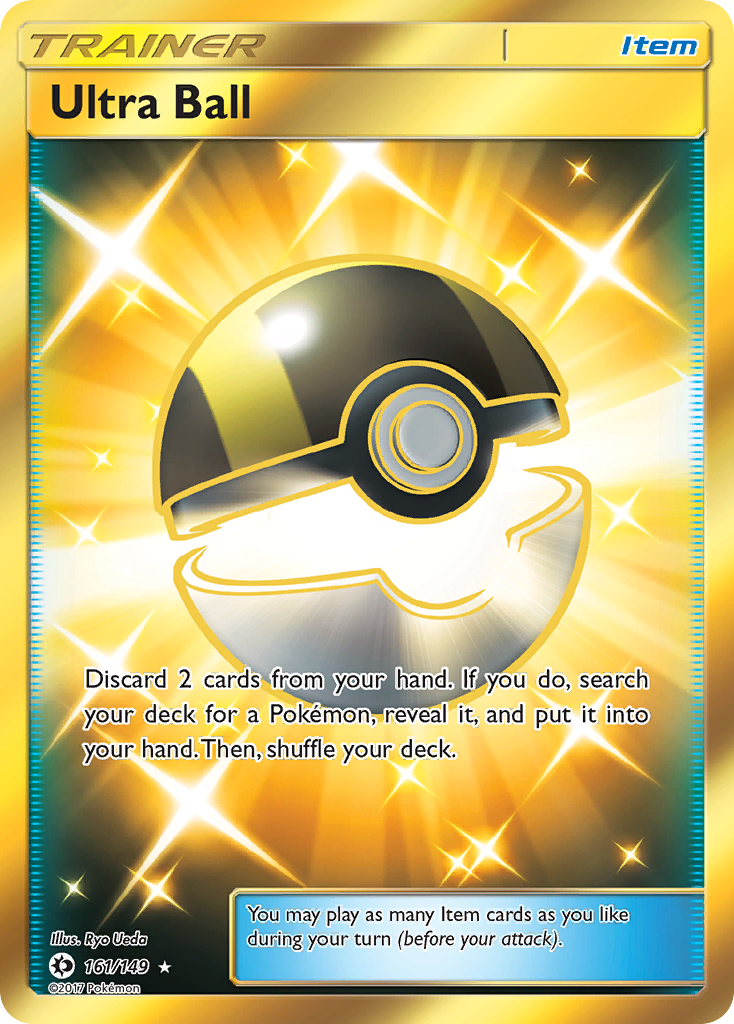
3. Sun & Moon Ultra Ball#
 Ultra BallSee it on collecto.rs
Most cards on this list got scarce by staying inside a binder. This one got scarce by getting thrown into a deckbox and dragged across four different continents.
When the Sun & Moon base set arrived in early 2017, it marked the first time the Pokémon Trading Card Game printed item cards as secret rares. Until that point, golden borders and textured foil were reserved for legendary Pokémon like Black Kyurem-EX, where player demand was split across different deck builds. Ultra Ball was different. Every competitive deck ran four copies. No exceptions. That meant the single rarest card in the entire set was also the single most played card in the format.
Players did not store these in top-loaders. They unsleeved them on dirty convention tables, shuffled them eight hundred times a weekend, and shoved them into plastic deck boxes. The print run was split between collectors who wanted a pristine copy for their set binder and players who needed four of them to play at the highest level. The tournament circuit systematically ate away at the supply of mint copies for three straight years.
Finding a secret rare Ultra Ball today isn't just about finding someone who pulled it from a pack six years ago. It is about finding someone who pulled it, looked at the most playable card in the entire game, and somehow decided to leave it untouched.
2. Cosmic Eclipse Reshiram & Zekrom-GX#
 Reshiram & Zekrom-GXSee it on collecto.rs
A booster box sits on a kitchen table, thirty-six packs heavy. You cut the seal, pull the foil open, and sort the bulk into neat piles of commons and uncommons. After three dozen packs, the Secret Rare tray remains untouched. That was the reality of opening Cosmic Eclipse in late 2019.
This set closed out the Sun & Moon series by sheer weight of numbers. The main checklist ran to 236 cards before counting secret rares. To pack that many full-art trainers, Tag Team pairings, and rainbow foils into a single print run, the factory had to stretch the hit rates thin. Reshiram & Zekrom-GX sits right at the center of that math. As an Ultra-Rare Tag Team card, it required beating odds that made even standard Secret Rares look accessible. Pulling this specific pair meant rolling the dice against one of the largest set lists the game had ever printed.
Where an Ultra Ball from Sun & Moon base set became scarce because players shoved copies into deck sleeves without inner protection, this Dragon-type duo faced a different bottleneck entirely. It was hard to find on day one simply because so few came out of the wrapper. Thousands of packs went straight into landfill before a single copy hit the trade tables. Finding one today with clean edges and centered borders means finding a pack that beat those bloated pack odds five years ago.
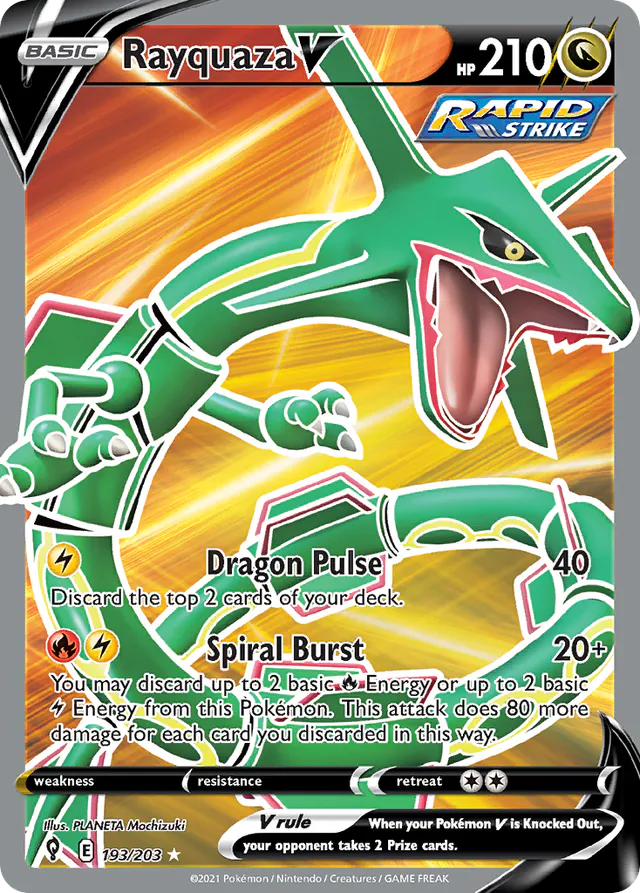
1. Evolving Skies Rayquaza V#
 Rayquaza VSee it on collecto.rs
You buy three booster boxes of Evolving Skies off a table at a local shop, set them beside a stack of penny sleeves, and start opening. Two hours later, you are staring at three hundred and twenty-four foil wrappers, a small mountain of common Energy cards, and not a single alternate-art Dragon-type in sight. That pull fatigue is the defining memory of modern Pokémon collecting. Modern print runs are massive compared to the early Wizards of the Coast years, but set sizes grew right along with them. Evolving Skies packed over two hundred cards into its main set before you even counted the secret rares, pushing individual hit odds into the thousands.
Rayquaza V sits at the absolute peak of that design shift. The card is an ultra-rare alternate art, a designation that replaced traditional secret rares with hand-painted, full-frame illustrations that frame the Legendary Pokémon swooping through a dense forest canopy. The artwork is distinct, but the math is what makes it a nightmare to find. In older sets like Cosmic Eclipse, hit odds were squeezed by late Sun & Moon set climaxes that packed massive card lists into single releases, driving individual pull rates down. Evolving Skies took that pressure and multiplied it across multiple alternate-art Secret Rares in the same set. You were not just trying to hit a rare tier; you were trying to hit one specific card out of dozens sharing that same microscopic pull rate.
That makes finding one in raw, clean condition a entirely different challenge than pulling a vintage holo. Modern cards move from pack to sleeve in seconds, but factory print lines, off-center borders, and rough edge cuts on full-art foil stock mean even fresh pulls rarely clear a high bar. When you log a card like this on collecto.rs, tracking the centering details and print flaws matters just as much as recording the set number.
The hardest cards to track down are rarely the ones sitting under glass at every convention. Those cards have market values, dedicated dealers, and predictable supply lines. You can buy one today if you have the balance for it.
True scarcity looks different. It is the missing card from a mid-era set that hasn't surfaced on a forum in six months. It is the promo card distributed at a single tournament where nobody saved the wrapper. When one of these appears, it usually happens quietly. A collector decides to thin out a binder, or a seller clears out a box from a closet without knowing what sits inside the second row.
That search is most of the work. Keeping track of what you have, what you are still hunting for, and the exact condition of the binder sitting on your shelf is the rest of it. Collecto.rs gives you a place to catalog your cards, organize your sets, and export your complete record whenever you want. It is free to use, built for the long haul, and ready for your collection whenever you are.
Frequently asked questions#
What makes a Pokémon card genuinely rare?#
Rarity comes from physical supply rather than pure market demand. Early promotional prints, short-lived set expansions, limited distribution sets, and ultra-rare pull slots naturally limit how many copies exist in the wild.
Are set ultra-rares harder to find than promos?#
It depends on the specific release. Certain set-based ultra-rares required opening hundreds of booster packs to pull, whereas promo cards vary from mass retail inserts to limited tournament prizes.
Why do older mid-rarity cards become so scarce?#
Cards printed decades ago were meant to be played, traded, and carried in pockets. Outside of high-tier chase cards, fewer unweighted, well-kept copies of standard set singles were preserved.