The short version#
True vinyl scarcity is rarely about mainstream fame or runaway demand. The hardest records to find are those shaped by micro-pressings, lost master tapes, regional distribution, and decades of silent attrition.
- Das Löschen Der Lichter Der Städte / Zwischen Zwiespalt Und Zwielicht
- Univerzitet U Novom Sadu, Akademija Umetnosti - Zvučni Letopis 1975-1985.
- Pete Wittig
- Fujita Scale
- Chömäd Zäme / Zrugg Zu Dä Wurzlä
- Let Me Fall: Old Time Bluegrass From The Virginia-North Carolina Border
- Lunemex Undo-Ground Soundtrack EP
- Fasola: 53 Shape-Note Folk Hymns: Recorded at an All-Day Sacred Harp Singing, Stewart's Chapel, Houston, Mississippi, by Amelia and Frederic Ramsey, Jr. With Historical Notes on the Sources of Shape-Note Singing by Amelia Ramsey
- Piccadilly Sunshine Part One (British Pop Psych And Other Flavours 1965 - 1970)
- Expreso Trans Europa = Trans-Europe Express
Most conversation about rare records defaults to the same three suspects. A Beatles sleeve printed with the wrong cover. A Prince album recalled on the eve of distribution. A single-copy Hip-Hop release bought by a disgraced pharma executive. These stories are clean, neat, and predictable. They equate rarity with cultural friction and high-stakes auctions.
The actual landscape of hard-to-find vinyl is much quieter and far more chaotic. Scarcity is rarely a product of fame. More often, it is the result of logistical indifference. A local band presses three hundred copies of a session to sell from the trunk of a sedan during a rainy midwestern tour. A municipal archive puts out a limited run of regional choral music for a local festival and vaults the remaining stock. A small electronic label prints a run on cheap wax, bankrupts itself three months later, and leaves the unsold stock in a damp basement in Rotterdam.
Time takes care of the rest. Jackets warp in unheated garages. Vinyl gets left on rear dashboards in July. Tastes change, collections get surrendered to thrift stores, and obscure pressings slip into obscurity without anyone noticing they left.
What makes these records difficult to locate is not that thousands of people are outbidding you for them right now. It is that nobody kept track of where they went in the first place. You can search discographies for years without coming across a single physical copy. Finding them requires setting up saved searches that sit dormant for months, sifting through crate edges under flickering fluorescent lights, or relying on the memory of a dealer who swears they saw a copy in 1994.
These ten releases represent that specific, stubborn tier of vinyl collecting. They span private-press bluegrass, experimental Swiss punk, forgotten Serbian compilations, and early synth experiments. None of them were designed to be rare. They simply survived.
| # | Item | Set / Year | Rarity |
|---|---|---|---|
| 1 | Das Löschen Der Lichter Der Städte / Zwischen Zwiespalt Und Zwielicht | Narsaak, Planks | — |
| 2 | Univerzitet U Novom Sadu, Akademija Umetnosti - Zvučni Letopis 1975-1985. | Various | — |
| 3 | Pete Wittig | Pete Wittig | — |
| 4 | Fujita Scale | NxxxxxS | — |
| 5 | Chömäd Zäme / Zrugg Zu Dä Wurzlä | Psycho Clan | — |
| 6 | Let Me Fall: Old Time Bluegrass From The Virginia-North Carolina Border | Cullen Galyean, Bobby Harrison (3) | — |
| 7 | Lunemex Undo-Ground Soundtrack EP | Unit Moebius | — |
| 8 | Fasola: 53 Shape-Note Folk Hymns: Recorded at an All-Day Sacred Harp Singing, Stewart's Chapel, Houston, Mississippi, by | Various | — |
| 9 | Piccadilly Sunshine Part One (British Pop Psych And Other Flavours 1965 - 1970) | Various | — |
| 10 | Expreso Trans Europa = Trans-Europe Express | Kraftwerk | — |
10. Kraftwerk — Expreso Trans Europa#
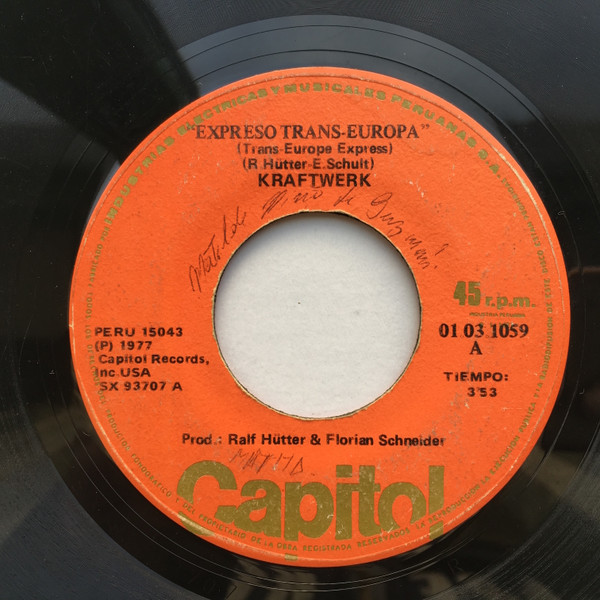 Expreso Trans Europa = Trans-Europe ExpressSee it on collecto.rs
Kraftwerk is one of the most widely pressed electronic acts on the planet. Finding a copy of Trans-Europe Express takes five minutes and twenty dollars. Finding the Peruvian pressing takes years.
In 1977, Capitol Records issued the album in Peru as Expreso Trans Europa. The title track became a single with Spanish text on the label. South American pressings from this era were manufactured in small quantities for local distribution. Vinyl quality varied wildly depending on the regional plant, and domestic demand was low compared to rock or salsa releases. Most copies were played heavily on local turntables, making well-preserved examples almost nonexistent today.
While compilation sets like Piccadilly Sunshine Part One rely on obscure tracklists to justify their scarcity, this record relies entirely on geography. The music on the vinyl is identical to the German or American pressings. The scarcity lives in the paper and the ink. A collector chasing this single is not looking for a different audio mix. They are looking for a specific translation on a piece of red Capitol cardstock that spent forty years in Lima.
Regional language variants turn a ubiquitous record into a ghost. You can know every note of the title track by heart and still feel the pull of a copy where the tracks are listed as Expreso Trans Europa and Europa Sin Fin. It is a reminder that vinyl history is local history, printed one country at a time.
If you own a copy, you can log the pressing details, upload photos of the Spanish label, and track your vinyl collection on collecto.rs.
9. Various — Piccadilly Sunshine Part One#
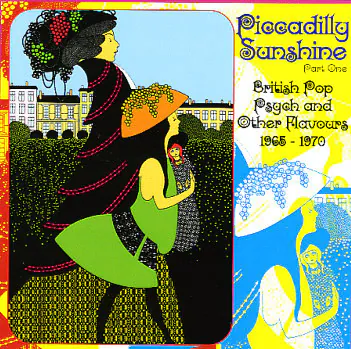) Piccadilly Sunshine Part One (British Pop Psych And Other Flavours 1965 - 1970)See it on collecto.rs
Piccadilly Sunshine Part One (British Pop Psych And Other Flavours 1965 - 1970)See it on collecto.rs
One hundred copies on vinyl. That was the entire first run when Past & Present Records issued Piccadilly Sunshine Part One in the UK. Bootleg comps mapping the edges of sixties British pop-psych are notoriously flighty, but this specific LP vanished almost before the ink on the sleeve dried. While field recordings like the Fasola Shape-Note Folk Hymns found quiet homes in university libraries, Piccadilly Sunshine disappeared straight into private hands. You do not stumble onto this LP in a bargain bin. You track it down through word of mouth, or you wait for a estate sale where someone’s family did not know what they had.
The music itself explains the chase. The late sixties produced hundreds of British studio bands who recorded one studio session, pressed a few demo acetates, and dissolved before their twentieth birthdays. Past & Present gathered sixteen of those lost tracks onto a single LP, capturing a very specific moment when British pop was mutating into something stranger. You hear brass bands mixed with fuzz pedals, tape flanging over orchestral arrangements, and lyrics about suburban eccentrics. These were not hits. Most never even made the radio. They exist because someone kept a master tape in a box under a bed for thirty years.
Finding a physical copy of Part One is hard because the people who own it tend to keep it. The cardboard sleeve is thin, typical for small UK pressings from that era, which means surviving copies often show ring wear or seam splits. If you find one with a clean spine and quiet play surfaces, you are looking at a minor miracle of preservation. It remains one of the hardest compilation LPs to add to a shelf.
8. Various — Fasola: 53 Shape-Note Folk Hymns#
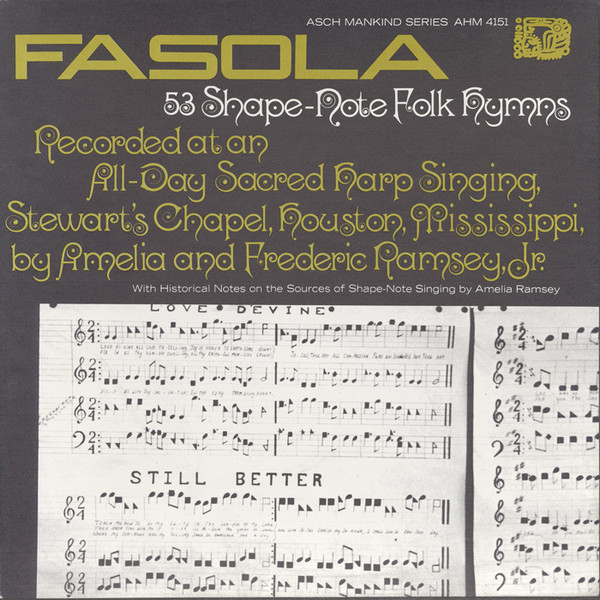 Fasola: 53 Shape-Note Folk Hymns: Recorded at an All-Day Sacred Harp Singing, Stewart's Chapel, Houston, Mississippi, by Amelia and Frederic Ramsey, Jr. With Historical Notes on the Sources of Shape-Note Singing by Amelia RamseySee it on collecto.rs
An August afternoon in Houston, Mississippi. Wooden pews, open windows, and a room full of people singing four-part harmony at full tilt, reading from four-shape notation rather than standard staves. Amelia and Frederic Ramsey, Jr. set up microphones to capture the day. The result was a 1970 release on the Asch Mankind Series, complete with historical documentation on the roots of sacred harp music.
Academic field recordings were never meant for record store bins. They were pressed in small batches, sent to university libraries, and stored in archives for research. That intent makes a record like this scarce in a completely different way than the Piccadilly Sunshine Part One compilation. Where pop-psych compilations were printed in small runs for a niche commercial audience that bought them, folk field recordings often bypassed the retail market entirely. Most copies went straight onto library shelves, stamped, cataloged, and eventually worn down or lost during institutional cleanouts.
Finding a copy in the wild means tracking down an LP that spent fifty years moving between university archives, estate sales, and private collections. The cover carries heavy text, detail, and scholarship. The vinyl inside holds the raw, unpolished acoustics of a Mississippi chapel recorded in real time. It sits at a quiet intersection of American musicology and physical record collecting.
When a copy turns up outside an archive, you catalog it with its full history attached. The label, the series, the condition of the sleeve, and the notes inside all matter equally. You can add the Asch Mankind Series pressing to your record shelf on collecto.rs, log the details, and keep the full provenance intact alongside the rest of your vinyl.
7. Unit Moebius — Lunemex Undo-Ground Soundtrack EP#
 Lunemex Undo-Ground Soundtrack EPSee it on collecto.rs
A courier van pulled up outside a Hague tenement in 1994, dropped off two unprinted cardboard boxes, and drove away. Inside were three hundred stamped white labels. By midnight, most of them were sitting in the bottom of worn nylon flight cases, slated for basement sound systems across South Holland. That was the entire distribution strategy.
Unit Moebius released the Lunemex Undo-Ground Soundtrack EP on Bunker Records, the label run out of squat houses and warehouse parties. Underground Dutch electronic releases from this era were made for dark rooms and heavy needles, not display shelves. DJs played them until the grooves turned grey, then stacked them without sleeves next to cracked monitor speakers. While field recordings like the Amelia and Frederic Ramsey shape-note pressings were tucked safely into university archives, Bunker vinyl survived through sheer luck and careful handling by people who were usually too tired to care.
Finding a copy now means hunting for a record that was never meant to last past the weekend it was pressed. White labels rarely carry clear spine text, so they tend to hide in plain sight, misfiled inside generic black sleeves at the bottom of crates. Most surviving copies bear the scars of their era: cue burns, marker pen scribbles on the centre label, and surface noise from cheap turntables. A pristine copy is a contradiction in terms.
Tracking down these surviving Dutch pressings takes patience and a high tolerance for faded felt-tip handwriting. If you manage to pull one out of a box, you can keep the matrix numbers and press details clear in your collecto.rs catalog, so you never have to pull it out of its sleeve just to check which pressing you hold.
6. Cullen Galyean & Bobby Harrison — Let Me Fall#
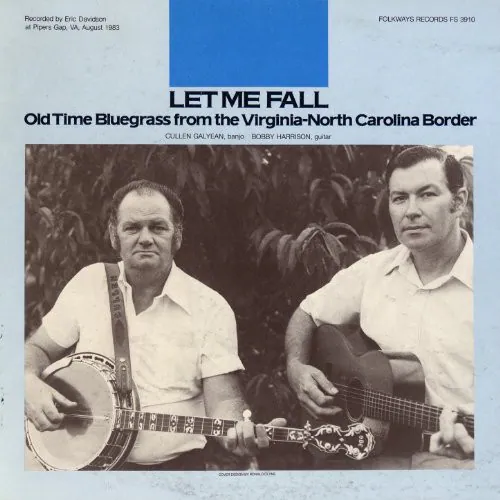 Let Me Fall: Old Time Bluegrass From The Virginia-North Carolina BorderSee it on collecto.rs
You do not find this record by waiting for someone to list it online. It spreads the way Appalachian bluegrass always did: from the back of a car after a show, hand to hand along the Virginia-North Carolina border. Big record stores in Chicago or London never ordered it because the distribution network was a man driving a sedan with fifty pressings in the trunk.
Cullen Galyean and Bobby Harrison recorded these tracks for Folkways Records in 1984. Folkways was a New York institution dedicated to preserving regional roots music, but putting a performance onto tape is only half the battle. Getting the physical vinyl into a listener's hands requires a network. German hip hop pressings like Chömäd Zäme stayed scarce because the artist chose a tiny run for a local dialect. This record stayed scarce because its distribution route was a stretch of Interstate 77.
Regional country and folk LPs from the mid-eighties exist in a strange quiet zone. They were pressed long after the golden age of 78rpm field recordings, but just before the internet archived every minor catalog number. Most copies went home with people who bought them at community centers, played them until the grooves wore down, and kept them on a shelf next to the family bible. They were not treated as investments or pristine artifacts. They were souvenirs of a Thursday night.
When one of these 12-inch records appears in a crate today, it usually means an estate sale happened somewhere between Galax and Mount Airy. The music inside is sparse, fast, and entirely unconcerned with whatever was happening on commercial radio in 1984. If you own a copy, log the sleeve condition and matrix numbers in your collecto.rs catalog so the provenance stays intact.
5. Psycho Clan — Chömäd Zäme / Zrugg Zu Dä Wurzlä#
 Chömäd Zäme / Zrugg Zu Dä WurzläSee it on collecto.rs
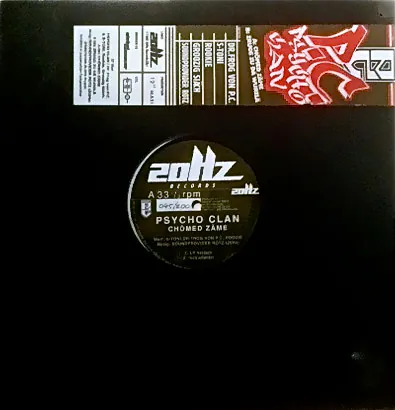
Have you ever tried tracking down a Swiss rap record from the late nineties? Regional hip hop pressed in local dialects sits in a strange corner of record collecting. Major labels rarely touched it, national radio ignored it, and the artists usually sold copies directly out of the trunks of their cars or at local youth centers. Psycho Clan dropped Chömäd Zäme / Zrugg Zu Dä Wurzlä through 20Hz Records in Switzerland, capturing a hyper-specific moment in Zurich dialect rap on a format that was already losing shelf space to compact discs.
That hyper-local distribution model mirrors the struggle to find Let Me Fall: Old Time Bluegrass From The Virginia-North Carolina Border. Both records existed entirely outside the traditional music supply chain. While bluegrass bands sold their pressings to concertgoers along the Appalachian trail, Swiss rap crews handed theirs to a tiny circle of heads who actually spoke the dialect. The difference is that early Swiss rap vinyl runs were small by necessity rather than tradition. A standard press might have yielded a few hundred copies total. Most went straight into worn tote bags, got spun at house parties, and stayed within a twenty-mile radius of where they were recorded.
Finding a copy of this LP today means navigating private Swiss networks rather than general marketplace listings. The people who bought it when it came out kept it because it documented their specific scene, not because they anticipated future resale value. When one does surface, the sleeve usually bears the marks of an actual life spent near turntables. That localized scarcity is what makes the chase so persistent. It is a physical artifact of a subculture that recorded itself in its own language, printed just enough wax to cover the neighborhood, and moved on.
4. NxxxxxS — Fujita Scale#
 Fujita ScaleSee it on collecto.rs
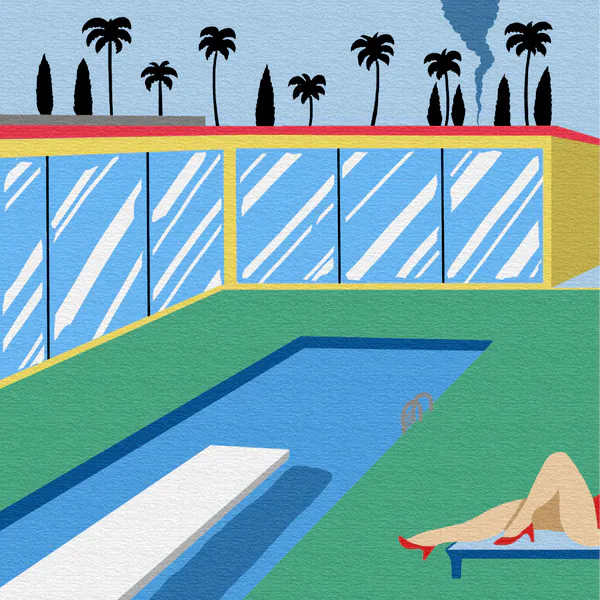
Zero copies sat on shop shelves in 2014. Headcount Records pressed Fujita Scale in the UK, put the LP online, and watched the stock counter hit single digits before most people refreshed the page. Modern vaporwave runs do not linger. The music lives online first, so by the time a physical record drops, the entire listener base is already standing at the door.
That instant sellout changes where the record ends up. Most vintage scarcity comes from neglect or tiny original budgets, like the forgotten stage-edge sales of Pete Wittig’s 1970s folk LPs. NxxxxxS represents a different kind of hard-to-find. Fujita Scale went straight from the press into personal collections that rarely open back up. The genre runs on small batches and deep loyalty. When a beatmaker release sells out in minutes, it moves off the public market almost immediately. The secondary market for these releases is not a steady stream of used copies. It is a series of quiet, occasional trades between people who intend to keep the sleeve on their shelf.
Electronic records from this era sit in an odd space. The files are everywhere, but the physical slab of wax is a closed door. The sleeve artwork and the physical weight of the pressing turn a digital beat tape into a tangible object. Finding a copy of Fujita Scale outside a private trade takes patience, precise notification alerts, and a bit of luck. You are not hunting through dusty crates at a car boot sale for this one. You are watching forum threads, waiting for a collector to change their mind.
3. Pete Wittig — Pete Wittig#
 Pete WittigSee it on collecto.rs
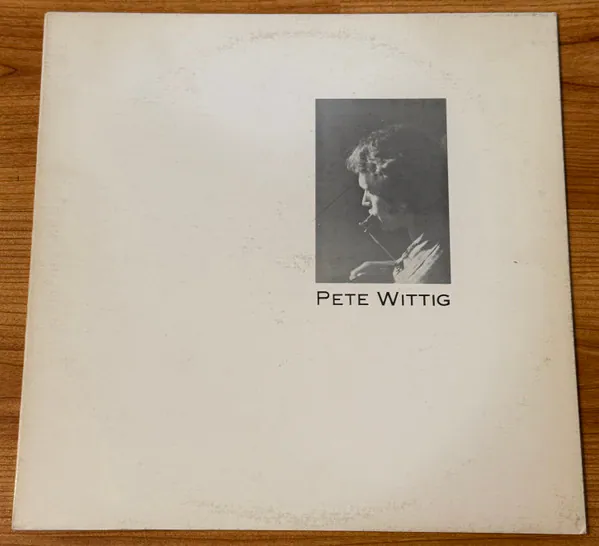
A folding chair collapses against the back wall of a midwestern coffeehouse, and the musician packs his acoustic guitar into a chipboard case before the applause fully dies down. On a small table by the door sits a cardboard box holding fifty copies of a self-titled record. By midnight, twelve of them have left in canvas tote bags. The rest go into the trunk of a 1971 Ford Pinto, where they will stay until a basement flood thirty years later turns the cardboard to pulp.
That is the standard life cycle of a 1970s American private press folk LP. Pete Wittig released his self-titled album in 1975 without a record label, a distributor, or a marketing plan. The sleeve carries no catalog number because there was no catalog to join. It is an artifact of a specific afternoon in a local studio, paid for out of pocket and handed directly to whoever happened to be sitting in the front row.
While institutional releases like the Akademija Umetnosti retrospective vanished into university archives by design, Wittig’s record simply drifted away through plain neglect. It was never tracked by a distributor or reviewed in a national magazine. When an artist operates completely outside the commercial music industry, scarcity is not a deliberate strategy. It is the default state.
Finding a copy now depends entirely on chance. You do not monitor online storefronts for a restock; you flip through crate after crate of unsorted folk titles at estate sales in towns where Wittig might have played a Thursday night set. When a copy does surface, the vinyl is often clean, preserved by decades spent untouched in an attic. The cover tells the rest of the story: plain paste-on artwork, faint ring wear, and a handwritten name in the top corner that matches no one in your search history.
2. Various — Zvučni Letopis 1975-1985#
 Univerzitet U Novom Sadu, Akademija Umetnosti - Zvučni Letopis 1975-1985.See it on collecto.rs
Most records exist because a label wanted to sell them to as many people as possible. Institutional retrospectives exist because a university needed to document a decade of work for its own archive. PGP RTB pressed this double album in Yugoslavia to mark ten years of the Academy of Arts at the University of Novi Sad. It was never delivered to record shops, never sent to radio station libraries for general rotation, and never offered through mail-order catalogues. Every copy went directly into university storage, academic hands, or the archival collections of regional institutions.
While private press folk records like Pete Wittig’s vanished because their artists sold them out of car trunks to whatever small crowd turned up on a given night, this release was locked away before it even had a chance to disperse. That makes finding a copy today a completely different kind of challenge. You are not hunting for a record that passed through half a dozen living rooms before landing in a bargain bin. You are waiting for an institutional library to clear out its back rooms, or for a former music professor’s personal estate to be catalogued after decades on a high shelf.
The music itself covers a decade of classical performances and modern compositions recorded within the academy between 1975 and 1985. Because it served as an official retrospective rather than a commercial product, the sleeve and pressings were treated with serious care. Copies that do surface tend to be in remarkable condition, having spent forty years untouched in climate-controlled storage rather than being dragged to house parties. If you happen to pull one from an estate sale, log the matrix details and track its provenance on collecto.rs. Your collection is the right place for it to finally be documented properly.
1. Narsaak / Planks — Split Single#
 Das Löschen Der Lichter Der Städte / Zwischen Zwiespalt Und ZwielichtSee it on collecto.rs
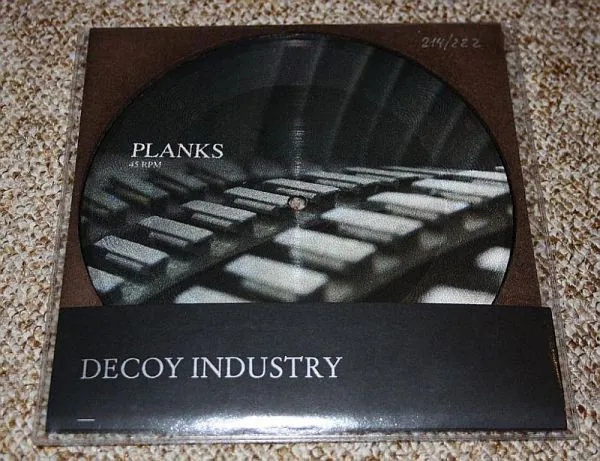
A touring band leaves four copies of a seven-inch on the merch table in Leipzig, drives five hours to Munich, and forgets where the rest of the box went. That is how records like this disappear. Decoy Industry put out this split single between Narsaak and Planks in Germany in June 2011. It arrived in the brief window when hardcore press runs had shrunk to low three figures, but before the vinyl resurgence pushed plant turnaround times out to a year.
DIY punk splits operate on a specific kind of scarcity. Unlike the university archive pressing of Zvučni Letopis 1975-1985, which sat forgotten in institutional storage for decades, these seven-inches were handed directly to people who wanted them. Nobody bought this single to flip it. They bought it at a show, brought it home, played it until the sleeve frayed at the top edge, and put it on a shelf between two other records from the same scene.
Both bands play a dense, abrasive style of rock that built small, dedicated audiences across Europe. When a record enters a scene where every copy lands in a permanent collection on day one, the secondary market simply starves. You cannot buy what nobody is willing to trade away. The music itself stays locked on seven inches of black wax, preserved by the very people who were in the room when the amps were still cooling down.
A collection built around records like these looks different from one built on consensus classics. It moves at a slower pace. You do not buy these records off a wall display or pull them from a newly restocked bin on a Saturday morning. You wait for them to surface, often in places that have nothing to do with record stores.
When one of these pressings finally turns up, the condition is rarely pristine. The sleeves carry the marks of where they spent the last forty years: price sticker residue, seam splits, radio station call letters scrawled across the artwork in permanent marker. That wear is not a flaw; it is the evidence that the record existed in the physical world while the rest of the run disappeared.
Tracking these releases demands a specific kind of record-keeping. Memory fails, mental wishlists get hazy, and details about pressing plants, matrix numbers, and sleeve variations blur over time. Having a clear record of what you are looking for—and what you already have—is the only way to navigate the long gaps between finds.
We built collecto.rs so you have a place to document those details. You can catalog your shelves, track condition notes and matrix info, and export your data whenever you want. It is free for the core features, because the focus should always be on the search itself, no matter how long it takes.
Frequently asked questions#
What makes a vinyl record genuinely hard to find?#
Genuinely scarce records usually suffered from tiny initial pressings, hyper-local distribution, or accidental destruction. Many were custom pressings or promotional runs never meant for store shelves.
Is an expensive record always hard to find?#
No. High price often reflects high demand rather than low supply. Common records from famous bands can cost hundreds of dollars while sitting on dozens of online seller shelves simultaneously.
How can I tell if a regional pressing is actually rare?#
Look at the record label, matrix numbers, and distribution notes. Small regional labels without major distribution networks often pressed fewer than five hundred copies, making physical survival rare.