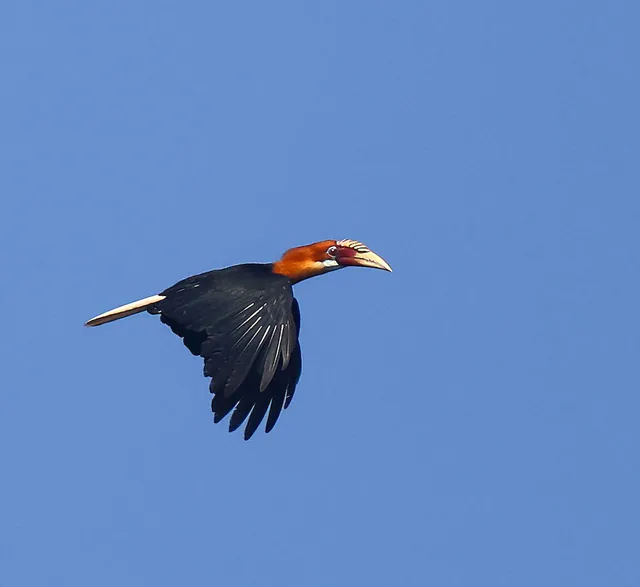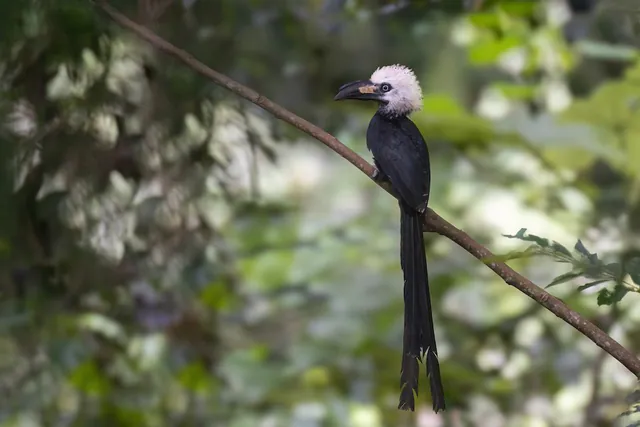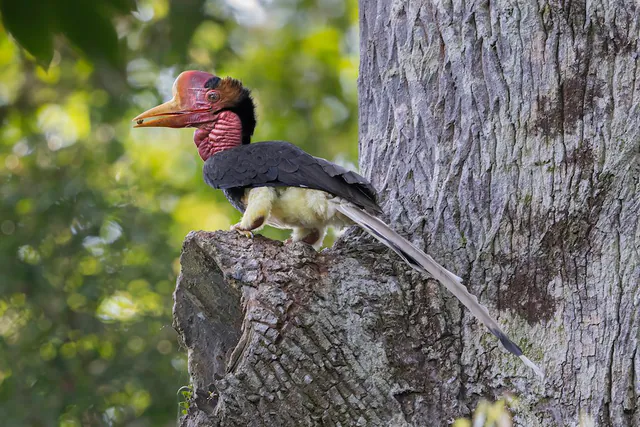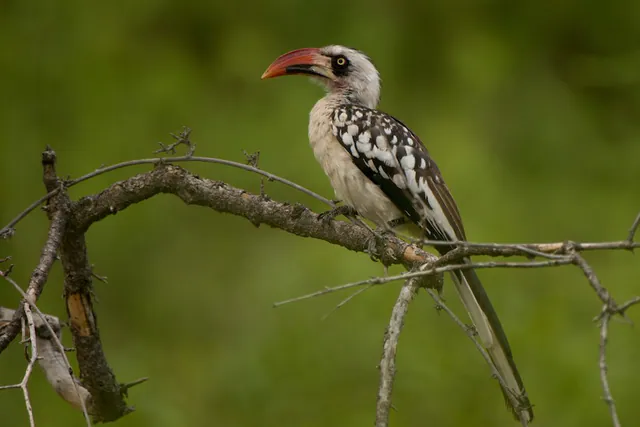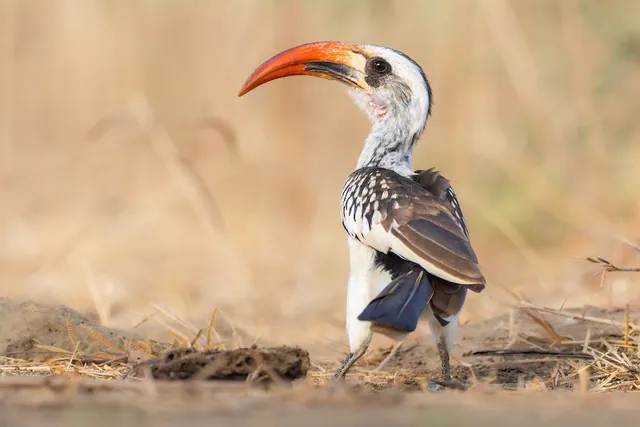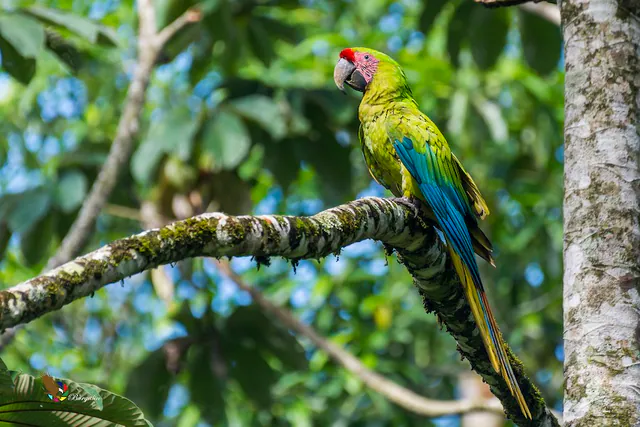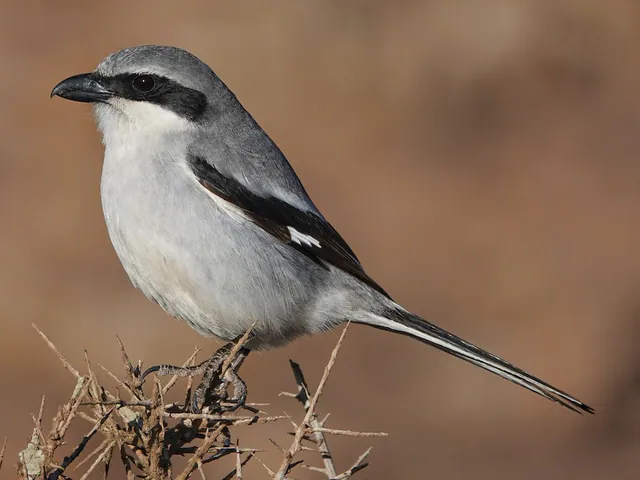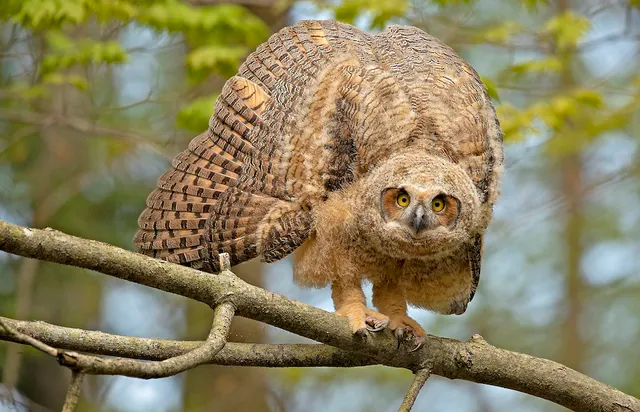
Image via Macaulay Library
Great Hornbill
- Scientific name
- Buceros bicornis
- Family
- Bucerotidae
- Conservation status
- Near threatened
- Habitat
- Forest deciduous
- Wing shape
- Broad
- Tail shape
- Rounded
Where it came from
The Great Hornbill (Buceros bicornis) has long held a significant place in the cultural and ecological landscapes of the Indian subcontinent and Southeast Asia. Within the scientific community, it was formally described by Carl Linnaeus in 1758, marking its integration into the Western taxonomic tradition. The species represents a pinnacle of evolutionary adaptation, characterized by its iconic casque—a hollow, keratinous structure atop the bill—which has fascinated naturalists for centuries as a testament to specialized sexual selection and structural biology.
The design of the Great Hornbill, shaped by millennia of environmental pressures, emphasizes its broad wings and rounded tail, both of which are essential for navigating the dense, layered canopies of tropical forests. Ornithological illustrators throughout the 19th and 20th centuries, most notably John Gould, frequently captured the species in lithographic plates, aiming to document its imposing silhouette and vibrant plumage. These depictions were received as essential references for natural history, helping to elevate the bird from a regional curiosity to an internationally recognized emblem of biodiversity.
Written by Pi, the helpful collecto.rs AI
Who's collecting this
Real birds collectors on collecto.rs who have this in their public collection.
About Great Hornbill
Great Hornbill is a bird in the Birdwatching catalog on collecto.rs. Catalog data is sourced from eBird. No public birds collectors track this one yet — adding yours would make you the first on collecto.rs.
How many collectors track Great Hornbill on collecto.rs?
Great Hornbill doesn't have any public collectors on collecto.rs yet. Sign up to add it and become the first.
Can I track my own copy of Great Hornbill?
Yes. collecto.rs is free — sign up to log your bird, upload photos, record condition, edition, and acquisition cost, and connect with other birdwatching collectors. Your collection stays private by default.
Where does the Great Hornbill catalog entry come from?
The catalog entry for Great Hornbill is sourced from eBird. Catalog-level facts stay consistent across every collector; your own data (condition, edition, acquisition notes) is yours.
Is collecto.rs birds tracking free?
Yes. Tracking your birds is free — no paid tier required to catalog items, upload photos, or share your collection.
Track every bird you own
Free. Fun. Collection photos, notes, organization, value tracking, friends — all in one place.
Sign up free