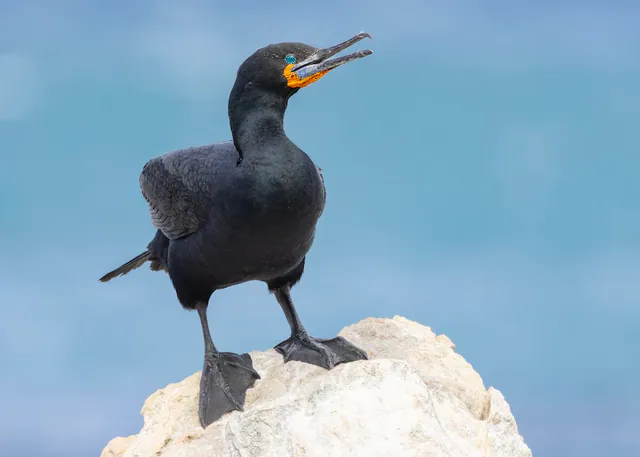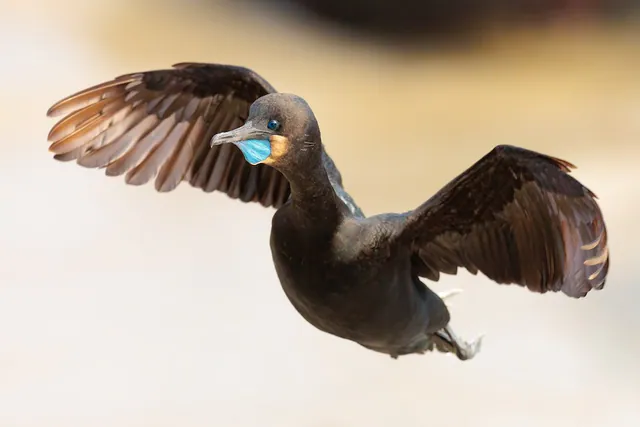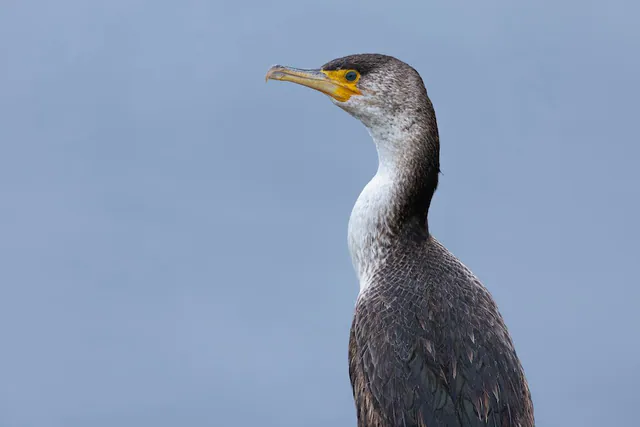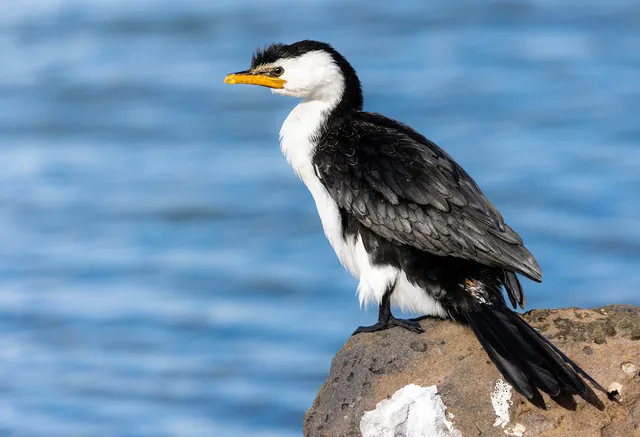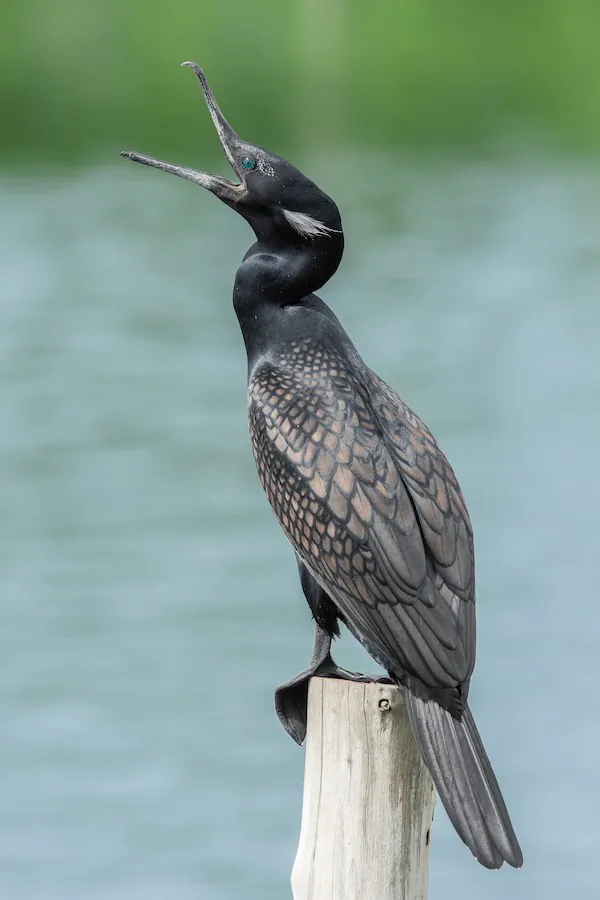
Image via Macaulay Library
Indian Cormorant
- Scientific name
- Phalacrocorax fuscicollis
- Family
- Phalacrocoracidae
- Conservation status
- Least concern
- Habitat
- Aquatic lake
- Wing shape
- Broad
- Tail shape
- Pointed
Where it came from
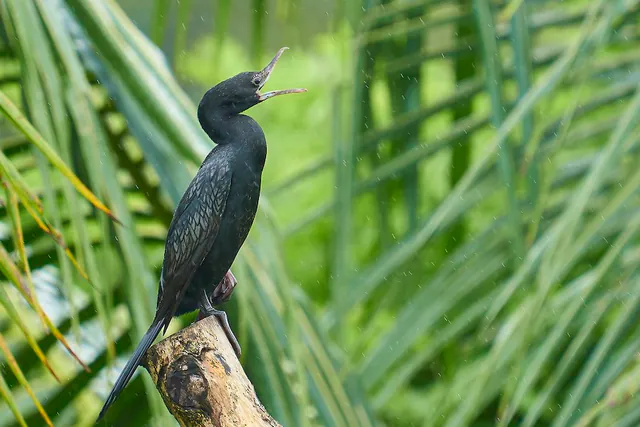
The Indian cormorant, scientifically classified as Phalacrocorax fuscicollis, is a member of the Phalacrocoracidae family, native to the Indian subcontinent and parts of Southeast Asia. Historically, these birds have been observed in diverse wetland habitats, ranging from large freshwater lakes and rivers to coastal estuaries. They are ecologically significant as piscivores, having evolved specialized features such as their broad wings for efficient flight and a distinctively pointed, long tail that acts as a rudder during submerged pursuit of prey.
The species was first formally described by the German naturalist James Francis Stephens in 1826. Ornithological documentation from the 19th and 20th centuries focused on their social structure, noting that they often nest in colonies alongside other waterbirds. Their physical design is an adaptation to their amphibious lifestyle; their feathers are less water-repellent than those of other birds, allowing them to swim deeper and more effectively, a physiological characteristic that has long been a subject of study in avian evolutionary biology.
Written by Pi, the helpful collecto.rs AI
Who's collecting this
Real birds collectors on collecto.rs who have this in their public collection.
About Indian Cormorant
Indian Cormorant is a bird in the Birdwatching catalog on collecto.rs. Catalog data is sourced from eBird. No public birds collectors track this one yet — adding yours would make you the first on collecto.rs.
How many collectors track Indian Cormorant on collecto.rs?
Indian Cormorant doesn't have any public collectors on collecto.rs yet. Sign up to add it and become the first.
Can I track my own copy of Indian Cormorant?
Yes. collecto.rs is free — sign up to log your bird, upload photos, record condition, edition, and acquisition cost, and connect with other birdwatching collectors. Your collection stays private by default.
Where does the Indian Cormorant catalog entry come from?
The catalog entry for Indian Cormorant is sourced from eBird. Catalog-level facts stay consistent across every collector; your own data (condition, edition, acquisition notes) is yours.
Is collecto.rs birds tracking free?
Yes. Tracking your birds is free — no paid tier required to catalog items, upload photos, or share your collection.
Track every bird you own
Free. Fun. Collection photos, notes, organization, value tracking, friends — all in one place.
Sign up free