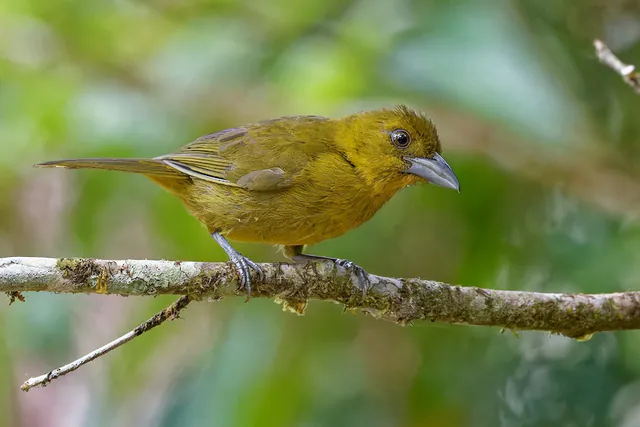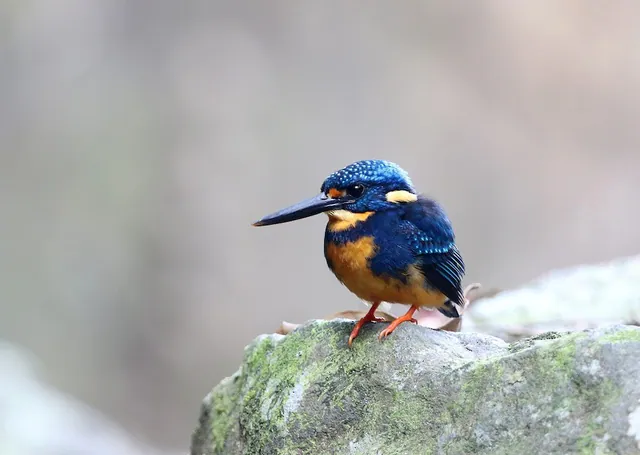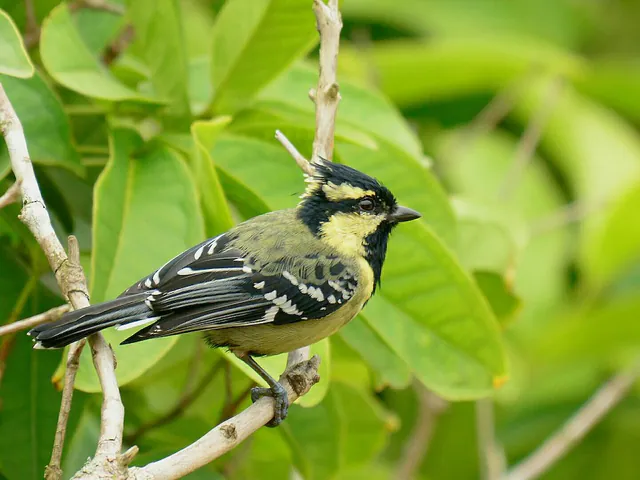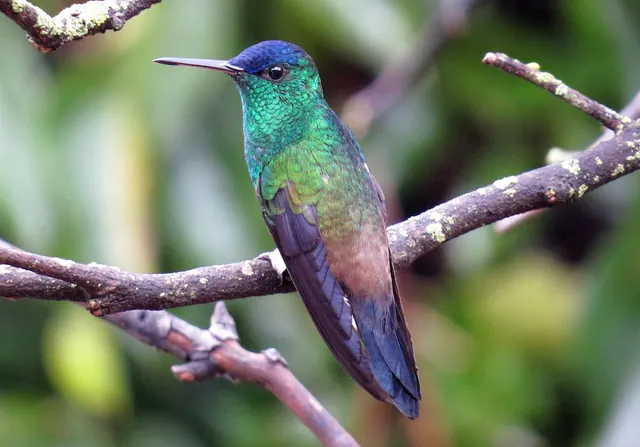
Image via Macaulay Library
Indigo Bunting
- Scientific name
- Passerina cyanea
- Family
- Cardinalidae
- Conservation status
- Least concern
- Habitat
- Shrubland
- Wing shape
- Pointed
- Tail shape
- Notched
Where it came from
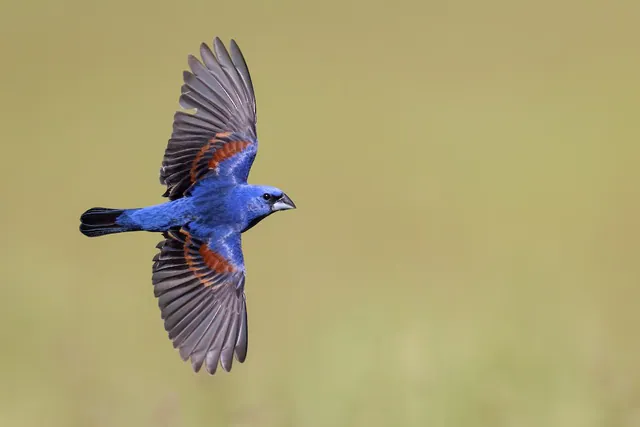
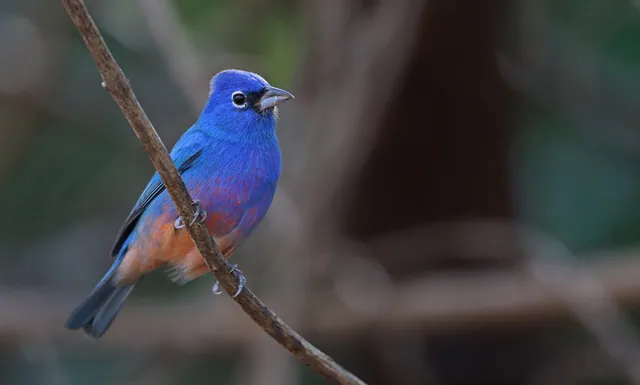
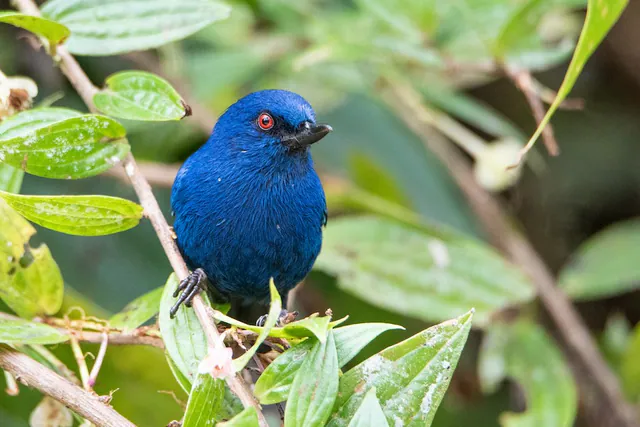
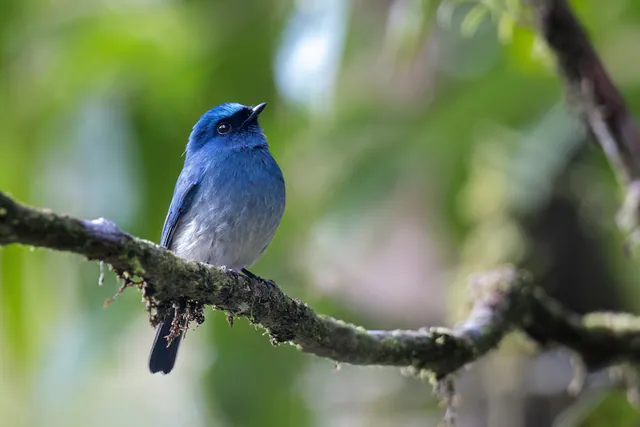
The Indigo Bunting, scientifically identified as Passerina cyanea, is a small migratory bird native to North America, known for the striking, deep blue plumage of the breeding male. Its evolutionary history is tied to the transition between forest and scrubland habitats, where it has historically thrived as a bridge species in successional ecosystems. The bird's unique characteristics, including its pointed wings and notched tail, are specific adaptations for its agile flight patterns during migration and its maneuvering within dense vegetation.
The ornithological documentation of the Indigo Bunting gained momentum in the 18th and 19th centuries as naturalists cataloged the species' unique molting process, in which the male transitions from a brown juvenile appearance to its characteristic vibrant blue. The design and morphology of the bird have long been subjects of study for avian specialists, who observe how the species utilizes night-sky navigation during its long-distance migrations. It remains a representative example of New World bunting evolution, prized by observers for its specific color-changing lifecycle and clear, persistent song.
Written by Pi, the helpful collecto.rs AI
Who's collecting this
Real birds collectors on collecto.rs who have this in their public collection.
About Indigo Bunting
Indigo Bunting is a bird in the Birdwatching catalog on collecto.rs. Catalog data is sourced from eBird. No public birds collectors track this one yet — adding yours would make you the first on collecto.rs.
How many collectors track Indigo Bunting on collecto.rs?
Indigo Bunting doesn't have any public collectors on collecto.rs yet. Sign up to add it and become the first.
Can I track my own copy of Indigo Bunting?
Yes. collecto.rs is free — sign up to log your bird, upload photos, record condition, edition, and acquisition cost, and connect with other birdwatching collectors. Your collection stays private by default.
Where does the Indigo Bunting catalog entry come from?
The catalog entry for Indigo Bunting is sourced from eBird. Catalog-level facts stay consistent across every collector; your own data (condition, edition, acquisition notes) is yours.
Is collecto.rs birds tracking free?
Yes. Tracking your birds is free — no paid tier required to catalog items, upload photos, or share your collection.
Track every bird you own
Free. Fun. Collection photos, notes, organization, value tracking, friends — all in one place.
Sign up free