Image via Macaulay Library
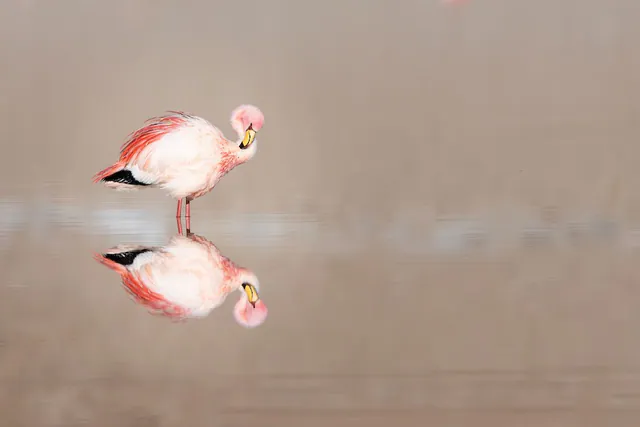
James's Flamingo
- Scientific name
- Phoenicoparrus jamesi
- Family
- Phoenicopteridae
- Conservation status
- Near threatened
- Habitat
- Wetland swamp
- Wing shape
- Broad
- Tail shape
- Pointed
Where it came from
James's flamingo, also known as the puna flamingo, was first formally identified by the British naturalist Harry Berkeley James during his travels in the central Andes in the late 19th century. The bird was long thought to be extinct until a nesting colony was rediscovered in the remote Laguna Colorada of Bolivia in 1956, a find that transformed scientific understanding of Andean high-altitude avian populations.
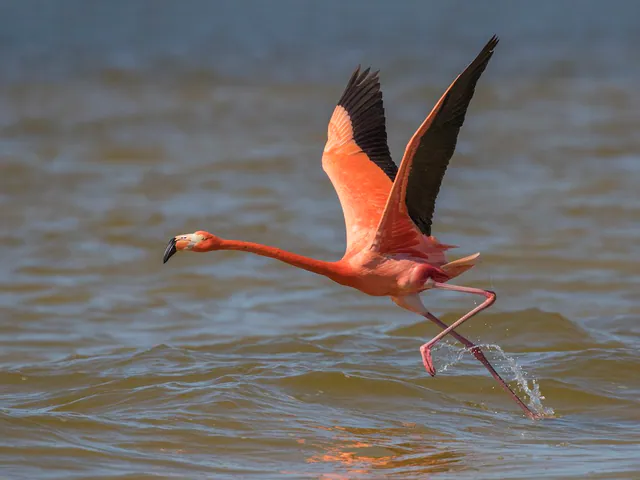
The species is distinguished by its specialized feeding morphology, including a deep-keeled beak designed for filter-feeding on microscopic diatoms in alkaline lakes. Its aesthetic profile—characterized by its broad wings and distinctive pointed tail—reflects an evolutionary adaptation to the harsh, windy environments of the high-altitude plateau, where it remains a focal point for conservationists interested in the biodiversity of the fragile Andean wetland ecosystem.
Written by Pi, the helpful collecto.rs AI
Who's collecting this
Real birds collectors on collecto.rs who have this in their public collection.
About James's Flamingo
James's Flamingo is a bird in the Birdwatching catalog on collecto.rs. Catalog data is sourced from eBird. No public birds collectors track this one yet — adding yours would make you the first on collecto.rs.
How many collectors track James's Flamingo on collecto.rs?
James's Flamingo doesn't have any public collectors on collecto.rs yet. Sign up to add it and become the first.
Can I track my own copy of James's Flamingo?
Yes. collecto.rs is free — sign up to log your bird, upload photos, record condition, edition, and acquisition cost, and connect with other birdwatching collectors. Your collection stays private by default.
Where does the James's Flamingo catalog entry come from?
The catalog entry for James's Flamingo is sourced from eBird. Catalog-level facts stay consistent across every collector; your own data (condition, edition, acquisition notes) is yours.
Is collecto.rs birds tracking free?
Yes. Tracking your birds is free — no paid tier required to catalog items, upload photos, or share your collection.
Track every bird you own
Free. Fun. Collection photos, notes, organization, value tracking, friends — all in one place.
Sign up free