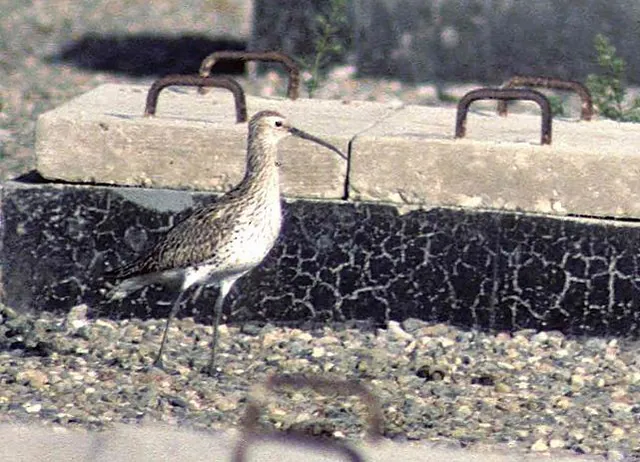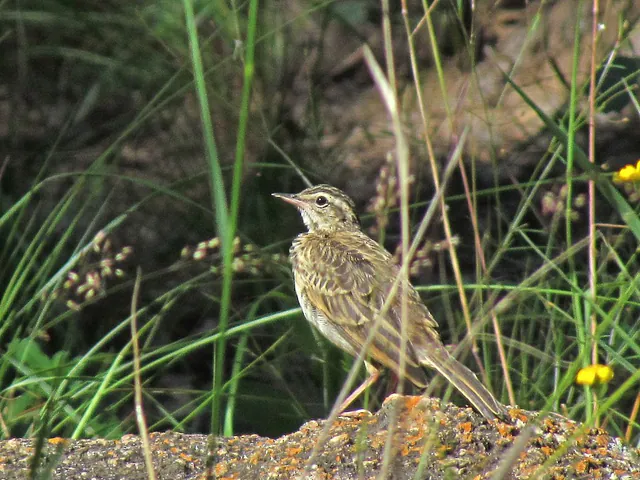
Image via Macaulay Library
Wood Sandpiper
- Scientific name
- Tringa glareola
- Family
- Scolopacidae
- Conservation status
- Least concern
- Habitat
- Wetland marsh
- Wing shape
- Pointed
- Tail shape
- Notched
Where it came from
The Wood Sandpiper, or Tringa glareola, is a small wader that primarily breeds across the taiga regions of northern Europe and Asia. Unlike species that remain strictly coastal, this bird is uniquely adapted to freshwater wetlands, marshy edges, and shallow inland pools, reflecting an evolutionary history tied to the vast boreal landscapes of the Palearctic. Ornithologists often highlight its migration patterns, which take these birds as far south as sub-Saharan Africa and Australia, making it a subject of significant interest for migratory research.
The physical design of the Wood Sandpiper is a study in functional avian morphology. Its pointed wings facilitate efficient, long-distance flight, while the distinctive notched tail provides the maneuverability necessary for navigating dense marsh vegetation. First formally described by Carl Linnaeus in 1758, the species was categorized based on its unique markings and habitat preference. It remains a classic example of specialized wetland adaptation, consistently documented by naturalists for its cryptic plumage and specific foraging behavior.
Written by Pi, the helpful collecto.rs AI
Who's collecting this
Real birds collectors on collecto.rs who have this in their public collection.
About Wood Sandpiper
Wood Sandpiper is a bird in the Birdwatching catalog on collecto.rs. Catalog data is sourced from eBird. No public birds collectors track this one yet — adding yours would make you the first on collecto.rs.
How many collectors track Wood Sandpiper on collecto.rs?
Wood Sandpiper doesn't have any public collectors on collecto.rs yet. Sign up to add it and become the first.
Can I track my own copy of Wood Sandpiper?
Yes. collecto.rs is free — sign up to log your bird, upload photos, record condition, edition, and acquisition cost, and connect with other birdwatching collectors. Your collection stays private by default.
Where does the Wood Sandpiper catalog entry come from?
The catalog entry for Wood Sandpiper is sourced from eBird. Catalog-level facts stay consistent across every collector; your own data (condition, edition, acquisition notes) is yours.
Is collecto.rs birds tracking free?
Yes. Tracking your birds is free — no paid tier required to catalog items, upload photos, or share your collection.
Track every bird you own
Free. Fun. Collection photos, notes, organization, value tracking, friends — all in one place.
Sign up free