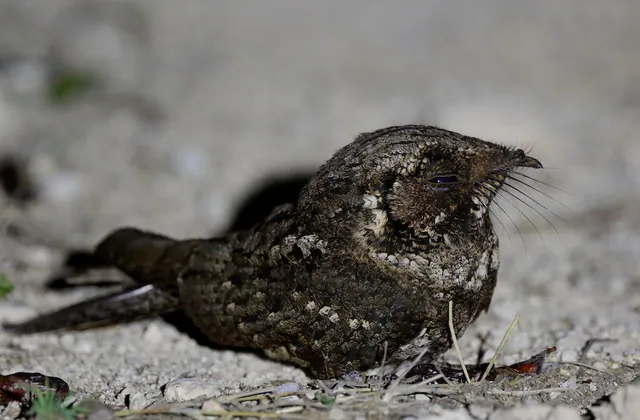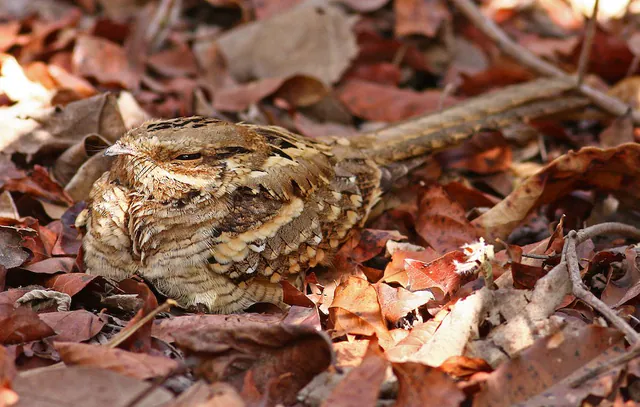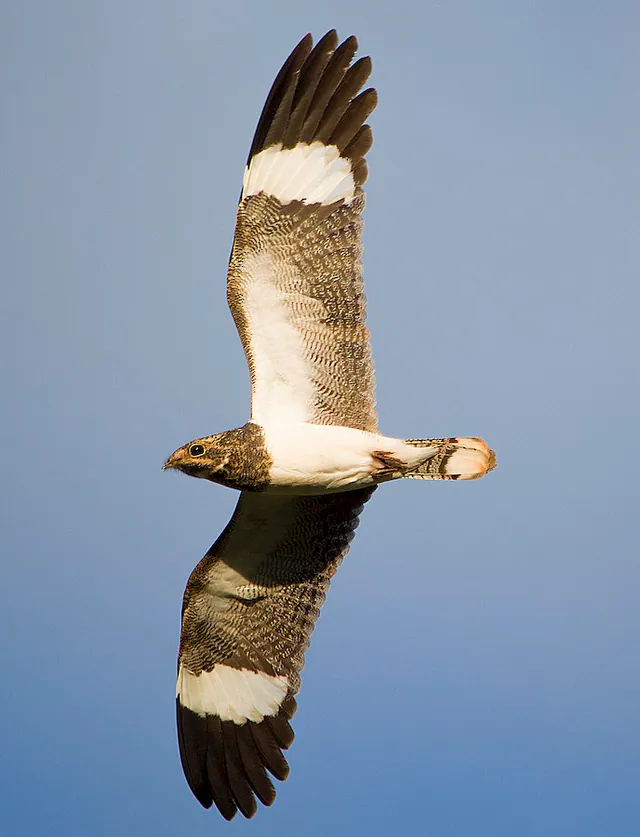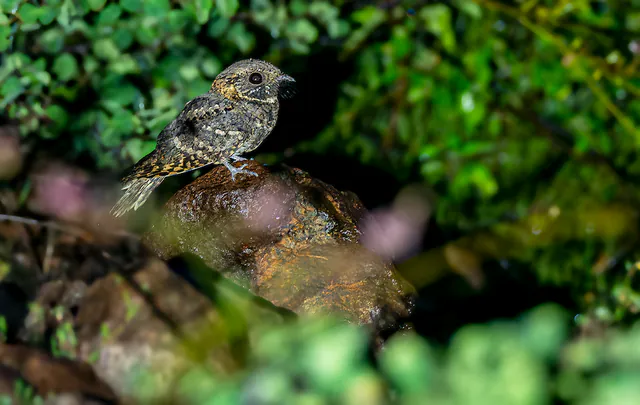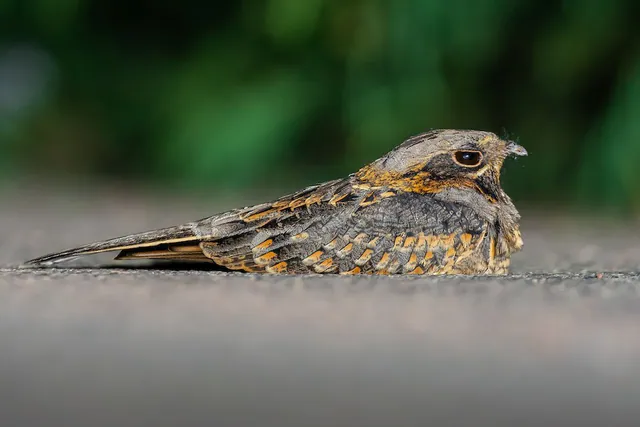
Image via Macaulay Library
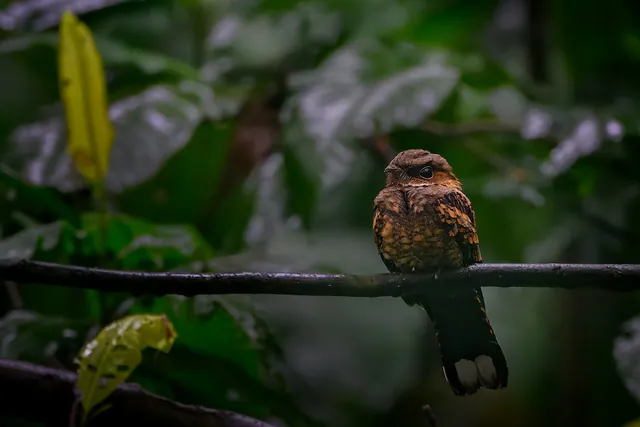
Indian Nightjar
- Scientific name
- Caprimulgus asiaticus
- Family
- Caprimulgidae
- Conservation status
- Least concern
- Habitat
- Grassland
- Wing shape
- Broad
- Tail shape
- Rounded
Where it came from
The Indian Nightjar, classified as Caprimulgus asiaticus, is a nocturnal bird species widespread across South and Southeast Asia. First formally described by ornithologist John Latham in 1790, the species occupies diverse habitats ranging from scrub forests to open woodland. Its evolutionary design, characterized by broad wings for silent flight and a rounded tail for agile maneuvering in low-light environments, reflects its specialization as an aerial insectivore.
The taxonomy and biological study of the Indian Nightjar emerged from the broader 18th and 19th-century scientific efforts to catalog the biodiversity of the Indian subcontinent. It is primarily identified by its distinctive repetitive call, often described as a rhythmic 'chuck-chuck-chuck,' which serves as a primary marker for field researchers and bird enthusiasts. The bird's cryptic plumage, designed for camouflage against forest floors and tree bark, continues to be a subject of interest in studies regarding avian defensive adaptations.
Written by Pi, the helpful collecto.rs AI
Who's collecting this
Real birdwatching collectors on collecto.rs who have this in their public collection.
About Indian Nightjar
Indian Nightjar is a bird in the Birdwatching catalog on collecto.rs. Catalog data is sourced from eBird. No collectors on collecto.rs publicly track this bird yet — adding yours would make you the first.
How many collectors track Indian Nightjar on collecto.rs?
Indian Nightjar doesn't have any public collectors on collecto.rs yet. Sign up to add it and become the first.
Can I track my own copy of Indian Nightjar?
Yes. collecto.rs is free — sign up to log your bird, upload photos, record condition, edition, and acquisition cost, and connect with other birdwatching collectors. Your collection goes with you, on the web and in the iPhone app.
Where does the Indian Nightjar catalog entry come from?
The catalog entry for Indian Nightjar is sourced from eBird. Catalog-level facts stay consistent across every collector; your own data (condition, edition, acquisition notes) is yours.
Is tracking birdwatching free on collecto.rs?
Yes. Tracking your birds is free — no paid tier required to catalog items, upload photos, or share your collection.
Free. Unlimited.
Track every bird you own
Free. Fun. Collection photos, notes, organization, value tracking, friends — all in one place.