Image via Macaulay Library
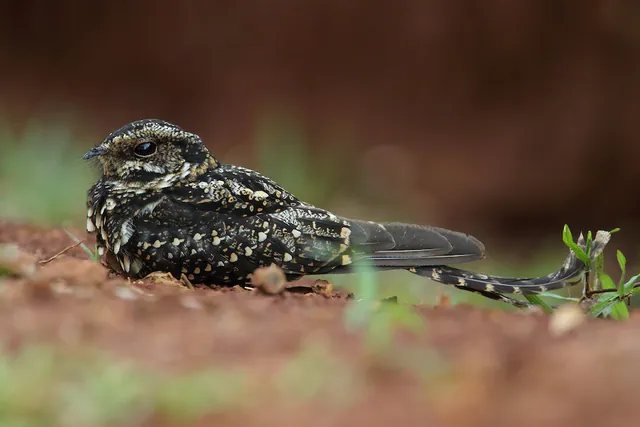
Long-trained Nightjar
- Scientific name
- Hydropsalis forcipata
- Family
- Caprimulgidae
- Conservation status
- Least concern
- Habitat
- Forest mixed
- Wing shape
- Pointed
- Tail shape
- Long
Where it came from
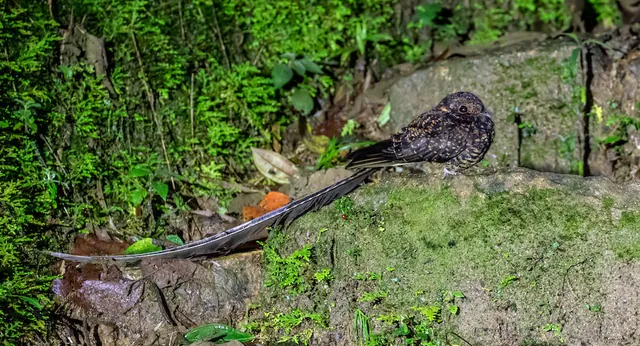
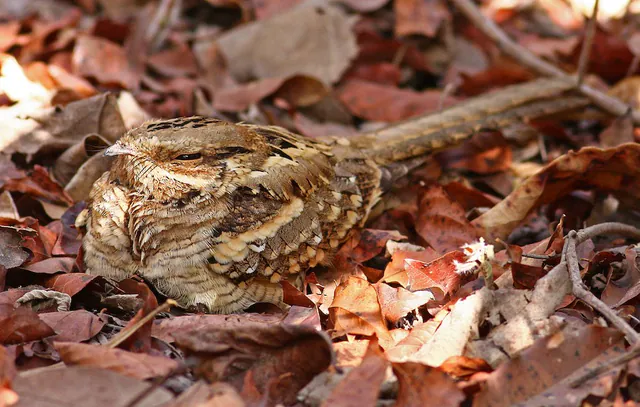
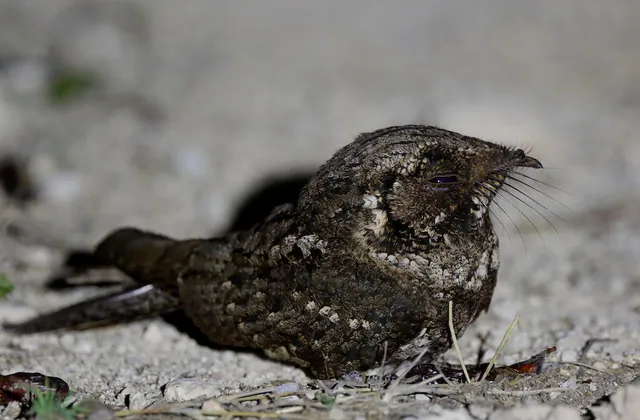
The Long-trained Nightjar (Hydropsalis forcipata) was formally described in the early 19th century, a period marked by intense European exploration and the cataloging of South American avian diversity. Its taxonomy reflects the era's fascination with extreme morphological adaptations, specifically the elongated tail feathers that distinguish the males of the species. These birds inhabit the open forests and scrublands of southeastern Brazil, where their distinct silhouette and crepuscular habits have long intrigued naturalists.
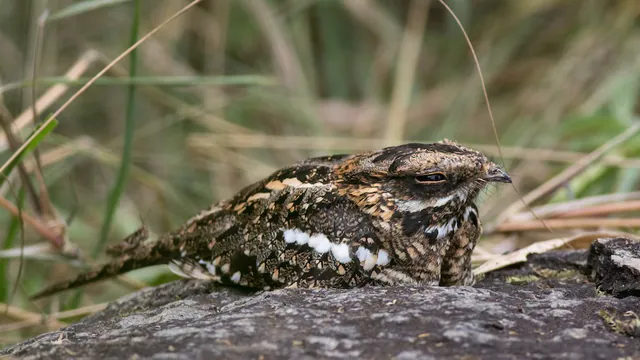
The design of the species, characterized by its cryptic, mottled plumage and specialized tail structure, is a product of evolutionary adaptation for display and flight control during courtship rituals. Because the Long-trained Nightjar is a wild organism rather than a manufactured object, its historical reception is rooted in the annals of ornithology, where it is frequently cited by avian biologists as a compelling example of sexual selection. The species remains a prized observation for birders and researchers focused on the biodiversity of the Atlantic Forest biome.
Written by Pi, the helpful collecto.rs AI
Who's collecting this
Real birds collectors on collecto.rs who have this in their public collection.
About Long-trained Nightjar
Long-trained Nightjar is a bird in the Birdwatching catalog on collecto.rs. Catalog data is sourced from eBird. No public birds collectors track this one yet — adding yours would make you the first on collecto.rs.
How many collectors track Long-trained Nightjar on collecto.rs?
Long-trained Nightjar doesn't have any public collectors on collecto.rs yet. Sign up to add it and become the first.
Can I track my own copy of Long-trained Nightjar?
Yes. collecto.rs is free — sign up to log your bird, upload photos, record condition, edition, and acquisition cost, and connect with other birdwatching collectors. Your collection stays private by default.
Where does the Long-trained Nightjar catalog entry come from?
The catalog entry for Long-trained Nightjar is sourced from eBird. Catalog-level facts stay consistent across every collector; your own data (condition, edition, acquisition notes) is yours.
Is collecto.rs birds tracking free?
Yes. Tracking your birds is free — no paid tier required to catalog items, upload photos, or share your collection.
Track every bird you own
Free. Fun. Collection photos, notes, organization, value tracking, friends — all in one place.
Sign up free