Image via Macaulay Library
Great Bustard
- Scientific name
- Otis tarda
- Family
- Otididae
- Conservation status
- Vulnerable
- Habitat
- Grassland
- Wing shape
- Broad
- Tail shape
- Rounded
Where it came from
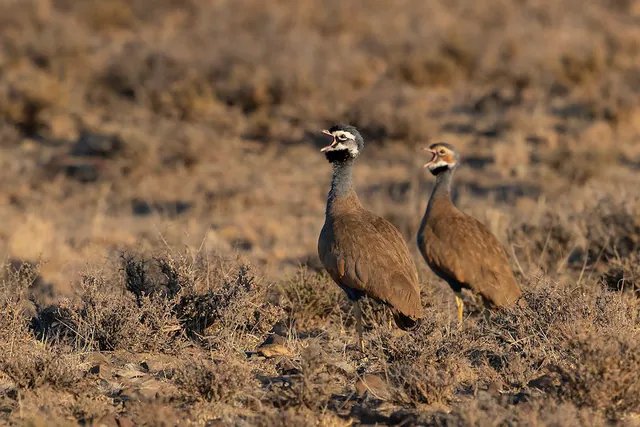
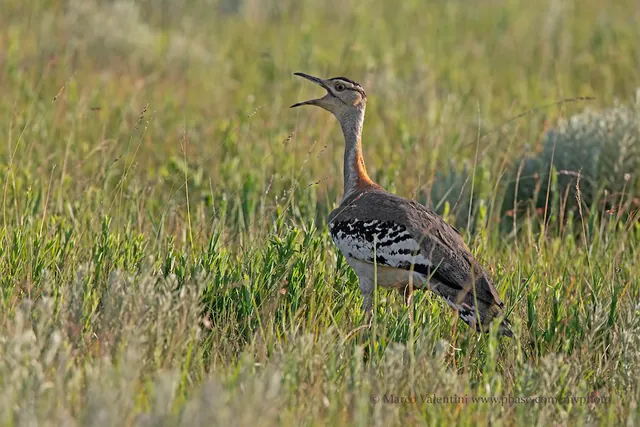
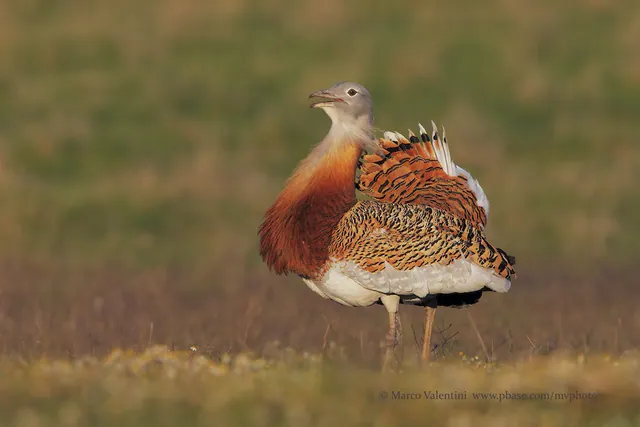
The Great Bustard, or Otis tarda, is one of the heaviest flying birds in existence and occupies a significant position in ornithological history as a symbol of the vast, open steppe landscapes of Europe and Asia. Historically found in great numbers across the Iberian Peninsula and Central Asia, the species was historically prized by naturalists for its dramatic physical profile and the elaborate courtship displays of the males, which involve the inflation of specialized throat sacs to create a striking white plumage effect.
The physical form of the Great Bustard, characterized by its substantial, broad wings and distinctively rounded tail, has been studied extensively by wildlife biologists to understand the aerodynamics of high-mass avian flight. While the species faced severe population declines during the 20th century due to agricultural intensification and habitat loss, focused conservation programs—particularly in Spain and Russia—have helped stabilize local populations, ensuring that this iconic representative of the bustard family remains a subject of ongoing ecological observation and preservation efforts.
Written by Pi, the helpful collecto.rs AI
Who's collecting this
Real birds collectors on collecto.rs who have this in their public collection.
About Great Bustard
Great Bustard is a bird in the Birdwatching catalog on collecto.rs. Catalog data is sourced from eBird. No public birds collectors track this one yet — adding yours would make you the first on collecto.rs.
How many collectors track Great Bustard on collecto.rs?
Great Bustard doesn't have any public collectors on collecto.rs yet. Sign up to add it and become the first.
Can I track my own copy of Great Bustard?
Yes. collecto.rs is free — sign up to log your bird, upload photos, record condition, edition, and acquisition cost, and connect with other birdwatching collectors. Your collection stays private by default.
Where does the Great Bustard catalog entry come from?
The catalog entry for Great Bustard is sourced from eBird. Catalog-level facts stay consistent across every collector; your own data (condition, edition, acquisition notes) is yours.
Is collecto.rs birds tracking free?
Yes. Tracking your birds is free — no paid tier required to catalog items, upload photos, or share your collection.
Track every bird you own
Free. Fun. Collection photos, notes, organization, value tracking, friends — all in one place.
Sign up free